Resistant Dextrin
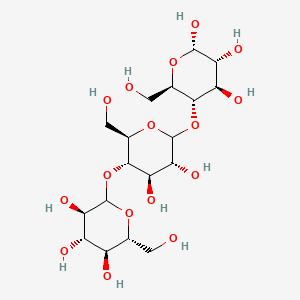
Identifiers
Functions
Where is resistant dextrin used, and what role does it play in each application?
Resistant dextrin is used across food, beverage, cosmetic, and pharmaceutical applications. In foods and beverages, it functions as a dietary fiber, bulking agent, humectant, texturizer, and formulation aid, appearing in products like baked goods, cereals, bars, dairy, sauces, meal replacements, and plant-based proteins. It also serves as a prebiotic fiber in low-glycemic foods, meal replacement powders, and nutritional supplements. In cosmetics, it acts as an absorbent, binding, bulking, and viscosity-controlling agent. In pharmaceuticals, it is used as a wall material for colon-targeted microcapsules and as an active component in compositions for osteoporosis prevention.
Which product or formulation problem does resistant dextrin address?
Resistant dextrin addresses formulation problems related to fiber fortification, glycemic control, texture, and stability. It provides a source of dietary fiber without compromising taste or texture, as seen in its use in baked goods, beverages, and nutrition bars. It helps lower the glycemic index of foods like noodles and whole-grain products, often in combination with other fibers or proteins to maintain structure. As a bulking agent and humectant, it improves moisture retention and mouthfeel. It also acts as a stabilizer and thickener, and in encapsulation systems, it serves as a wall material to protect sensitive ingredients and enable targeted release.
What supports the main commercial or clinical uses of resistant dextrin?
The main uses of resistant dextrin are supported by regulatory filings and patent applications. FDA notices indicate its intended use as a dietary fiber, bulking agent, humectant, texturizer, and formulation aid across a wide range of food categories, with maximum use levels specified per serving. JECFA has established specifications for dextrins, and the EPA lists dextrin as a low-concern chemical. Patent applications demonstrate its use in low-glycemic foods, meal replacements, nutritional supplements, and as a wall material for encapsulation. These sources collectively support its functional roles, though clinical efficacy evidence is not detailed.
Which formulation trade-offs should researchers consider for resistant dextrin?
Formulation trade-offs for resistant dextrin include balancing its fiber contribution with texture and structure. In low-glycemic noodles and whole-grain foods, it is often combined with proteins or gums like konjac to maintain dough integrity and mouthfeel. Its use as a bulking agent may require adjustments in moisture and sweetener levels. In encapsulation, its molecular weight and solubility affect release profiles, as seen in colon-targeted systems. High inclusion levels (up to 74% in some compositions) may impact viscosity and require careful processing, such as homogenization and drying, to achieve desired product characteristics.
What are the physicochemical properties of Resistant dextrin?
| Property | Value | Category |
|---|---|---|
| Physical Description | Light yellow powder; [Sigma-Aldrich MSDS], Solid | Appearance |
| XLogP3 | -6.9 | Computed Molecular Properties |
| Exact Mass | 504.16903493 | Computed Molecular Properties |
| Monoisotopic Mass | 504.16903493 | Computed Molecular Properties |
| Topological Polar Surface Area | 269.0 | Computed Molecular Properties |
| Complexity | 641.0 | Computed Molecular Properties |
| Hydrogen Bond Donor Count | 11 | Computed Molecular Properties |
| Hydrogen Bond Acceptor Count | 16 | Computed Molecular Properties |
| Rotatable Bond Count | 7 | Computed Molecular Properties |
| Heavy Atom Count | 34 | Computed Molecular Properties |
Which formulation benchmark best contextualizes resistant dextrin, and what differs?
A relevant formulation benchmark is inulin, another prebiotic fiber commonly used in low-glycemic and high-fiber products. Both are used to increase dietary fiber and support gut health, but resistant dextrin is often used at higher concentrations (e.g., 18-25% in meal replacements) and may offer better process stability in extrusion and encapsulation. Unlike inulin, which is often used for its sweetness and gelling properties, resistant dextrin is more versatile as a bulking agent and wall material, as evidenced by its use in microencapsulation and as a carrier in compressed candies.