Sarsasapogenin
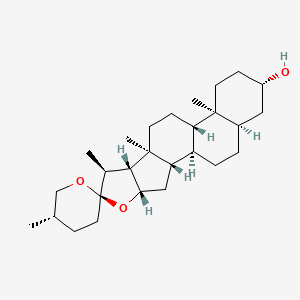
Identifiers
Functions
Where is Sarsasapogenin used, and what role does it play in each application?
Sarsasapogenin is used as a skin-conditioning agent in cosmetics and as a bioactive compound in nutraceutical and pharmaceutical compositions. In cosmetics, it functions to condition the skin. In nutraceuticals, it is claimed as a constituent of fenugreek extracts for improving sexual desire, stamina, athletic performance, muscle mass, and other health outcomes. In pharmaceuticals, it is claimed as an active ingredient for preventing or treating diabetic retinopathy, with effects on reducing reactive oxygen species and inhibiting inflammatory pathways.
Which product or formulation problem does Sarsasapogenin address?
Sarsasapogenin addresses formulation needs for skin conditioning in cosmetic products, providing a functional ingredient for skin care. In nutraceutical and pharmaceutical applications, it is positioned to solve health-related problems such as fatigue, low stamina, reduced muscle mass, high blood sugar, and diabetic retinopathy. The patent claims indicate it may help reduce oxidative stress and inflammation in retinal cells under hyperglycemic conditions, addressing a specific disease mechanism.
What supports the main commercial or clinical uses of Sarsasapogenin?
Evidence for sarsasapogenin's uses comes from its listing in the European cosmetics ingredient database with the function 'skin conditioning' and from patent applications. One patent claims its use in fenugreek extract compositions for various health benefits, while another claims it as an active ingredient for diabetic retinopathy. These patents describe proposed mechanisms, such as inhibiting ROS production and NF-κB/NLRP3 inflammasome activation, but they do not constitute proof of clinical efficacy or market adoption.
Which formulation trade-offs should researchers consider for Sarsasapogenin?
Formulation trade-offs for sarsasapogenin are not well-documented in the available evidence. The cosmetic listing shows no restrictions or maximum concentration limits, suggesting regulatory flexibility in the EU. However, the lack of safety or toxicity data means researchers must consider potential unknown risks. In nutraceutical and pharmaceutical compositions, it is often combined with other bioactive compounds, which may require compatibility assessments. The absence of concentration guidance in patents indicates that dosage optimization is not yet established.
What are the physicochemical properties of Sarsasapogenin?
| Property | Value | Category |
|---|---|---|
| Physical Description | Solid | Appearance |
| Melting Point | 200 - 201.5 °C | Handling Relevant Properties |
| XLogP3 | 6.5 | Computed Molecular Properties |
| Exact Mass | 416.32904526 | Computed Molecular Properties |
| Monoisotopic Mass | 416.32904526 | Computed Molecular Properties |
| Topological Polar Surface Area | 38.7 | Computed Molecular Properties |
| Complexity | 694.0 | Computed Molecular Properties |
| Hydrogen Bond Donor Count | 1 | Computed Molecular Properties |
| Hydrogen Bond Acceptor Count | 3 | Computed Molecular Properties |
| Rotatable Bond Count | 0 | Computed Molecular Properties |
Which formulation benchmark best contextualizes Sarsasapogenin, and what differs?
A relevant formulation benchmark is the fenugreek extract composition described in a patent, where sarsasapogenin is one of several bioactive constituents including diosgenin, gitogenin, and flavonoids. This benchmark is useful because it shows sarsasapogenin is not typically used alone but as part of a multi-component extract. The difference is that in the diabetic retinopathy patent, sarsasapogenin is the sole active ingredient, indicating a different formulation strategy. Researchers should consider whether to formulate it as a standalone active or as part of a synergistic blend.