Regulations of Sarsasapogenin
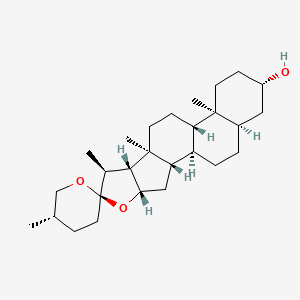
Identifiers
Functions
How does the regulatory treatment of Sarsasapogenin differ by market or product category?
The regulatory treatment of Sarsasapogenin differs primarily by product category rather than by market. In the EU, it is listed as an active cosmetic ingredient with the function of skin conditioning, with no specific restrictions, conditions, or maximum concentration limits recorded. For non-cosmetic applications, the only EU-level regulatory signal is an ECHA C&L notification summary, which aggregates GHS information from two company reports. This indicates that while the substance is recognized in cosmetics, its broader chemical regulatory status is limited to hazard communication notifications, not market-specific approvals or bans. No other market-specific regulatory data is available.
Which conditions, limits, and use contexts most affect a compliance assessment for Sarsasapogenin?
The compliance assessment for Sarsasapogenin is most affected by the absence of specific conditions, limits, or use restrictions. In the EU cosmetic database, the substance has no annex number, no restrictions, no conditions wording, no maximum concentration, and no body part limitations, meaning it is not subject to cosmetic-specific use constraints. The only regulatory condition identified is the general ban on substances that deplete the ozone layer, which applies broadly and is not ingredient-specific. For hazard communication, the ECHA C&L notification indicates GHS information exists but no classification details are provided, so no exposure limits or precautionary measures can be confirmed.
What should be in place before a product containing Sarsasapogenin is assessed for launch?
Before assessing a product containing Sarsasapogenin for launch, the key documentation to have in place is confirmation of its cosmetic ingredient status, including its INCI name, CAS number 126-19-2, and EC number 204-776-3, as these identifiers establish regulatory recognition. The substance is listed as active with a skin conditioning function, so a formulation dossier should reflect that intended use. Since no restrictions or concentration limits are recorded, the compliance file should document that the ingredient is not subject to cosmetic-specific constraints, but should also include a hazard communication review because the ECHA C&L notification indicates GHS data exists, even though classification details are not specified.
Where does the available regulatory position stop short of supporting a decision on Sarsasapogenin?
The available regulatory position stops short of supporting a full decision because it lacks substantive hazard and safety data. While the EU cosmetic listing confirms Sarsasapogenin is an active skin-conditioning ingredient with no restrictions, the ECHA C&L notification only indicates that GHS information was submitted by companies, without providing any actual classification, hazard statements, or precautionary codes. This means a compliance assessment cannot confirm whether the substance requires specific labeling, risk phrases, or exposure controls. Additionally, the absence of any exposure limits or toxicity test results means that safety conclusions cannot be drawn from the evidence, leaving a material gap for any regulatory submission.
Which recent regulatory changes or effective dates are material for Sarsasapogenin?
No recent regulatory changes or effective dates are identifiable for Sarsasapogenin from the available evidence. The EU cosmetic database lists the substance as active with an official journal reference, but no opinion, opinion URLs, or annex number are provided, indicating no recent amendment or restriction has been recorded. The ECHA C&L notification summary does not include dates of submission or updates. Therefore, there is no evidence of any material regulatory change that would affect a current compliance assessment, and the regulatory position appears static based on the information available.