Sarsasapogenin Patent Landscape
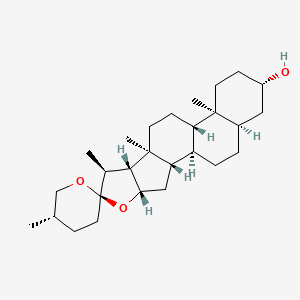
Identifiers
Functions
Which organizations and claims shape current development around Sarsasapogenin?
Two organizations shape current development: Specnova LLC, which claims a fenugreek extract composition containing sarsasapogenin among other bioactives for a wide range of performance and health benefits, and Dong Eui University Industry Academic Cooperation Foundation, which claims sarsasapogenin as an active ingredient for diabetic retinopathy with mechanistic effects on ROS and inflammasome pathways. The university's claim is more targeted and disease-specific, while the corporate claim is broader and lifestyle-oriented. This split suggests divergent R&D priorities: academic research focusing on pathological mechanisms versus commercial development of multi-benefit nutraceuticals.
How is Sarsasapogenin innovation changing?
Monthly patent filings
Which technical problems do recent patents address with Sarsasapogenin?
Recent patents address two distinct technical problems: (1) managing diabetic retinopathy by inhibiting mitochondrial ROS production, NF-κB/NLRP3 inflammasome activation, and cell death in retinal pigment epithelial cells under hyperglycemic conditions, and (2) improving a broad range of physiological outcomes—including sexual desire, sperm production, stamina, athletic performance, muscle mass, protein synthesis, lactation, and hair growth—while reducing fatigue, cholesterol, triglycerides, blood sugar, renal calcification, thyroid hormone levels, cancer cell growth, and menstrual cramps. These claims position sarsasapogenin as a multi-target bioactive, but the diabetic retinopathy application is more specific and mechanistically defined.
How do recent patents change the role or application of Sarsasapogenin?
Sarsasapogenin's role shifts from a passive constituent in botanical extracts to a primary active ingredient in one patent, where it is explicitly claimed for preventing or treating diabetic retinopathy. In another patent, it remains a co-ingredient within a fenugreek extract composition, contributing to a synergistic blend of steroidal saponins and flavonoids. This dual positioning suggests the ingredient is being explored both as a standalone therapeutic agent and as part of complex nutraceutical formulations, reflecting a transition from traditional use to targeted disease-modifying applications.
Which product categories and formulation strategies emerge in recent work on Sarsasapogenin?
Emerging formulation strategies include: (1) pharmaceutical and food compositions for diabetic retinopathy, using sarsasapogenin as the sole active ingredient, with sources from Anemarrhena asphodeloides, Tribulus terrestris, or Asparagus cochinchinensis; and (2) nutraceutical compositions combining sarsasapogenin with diosgenin, gitogenin, dioscin, protodioscin, apigenin, luteolin, niacin, and kaempferol to address multiple health outcomes. The product categories span food/beverage and pharmaceuticals, indicating a crossover between dietary supplements and therapeutic applications. No concentration ranges are disclosed, suggesting formulation specifics remain proprietary.
Where is the evidence-backed white space for further development of Sarsasapogenin?
Evidence-backed white space exists in combining sarsasapogenin's mechanistic role in diabetic retinopathy with the broader nutraceutical claims. Specifically, no patent currently links sarsasapogenin to other diabetic complications (e.g., neuropathy, nephropathy) or to metabolic syndrome endpoints beyond blood sugar and lipid reduction. Additionally, while the university patent focuses on retinal cell protection, there is no disclosed work on oral bioavailability, targeted delivery, or combination with standard-of-care therapies. These gaps suggest opportunities for formulation development that bridges the mechanistic and lifestyle applications.