Silicon Oxide Environmental Fate & Ecotoxicity
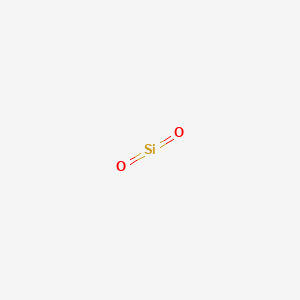
Identifiers
Functions
What is the environmental fate of Silicon oxide?
Transport, degradation, persistence and exposure pathways
Natural Pollution Origins
Amorphous silica is widespread in nature as biogenic silica and non-biogenic silica glass. Silica glass forms as volcanic glass (obsidian) from extrusive magmas, as lechatelierite within tektites associated with meteorite impact craters and as fulgurite resulting from lightening strikes on unconsolidated sand or soil. Silica of biological origin is produced by diatoms, radiolarians and sponges which extract silica dissolved in water to form their structures or shells. Biogenic silica is also produced by a variety of plants. Internal silicification of plant tissues promotes structural integrity and affords protection against plant pathogens and insects. The silica content is especially high in grasses. Plant biogenic silica is released to the soil through burning or normal decay; soil concns are typically in the range of <1 to 3%
Silicon is the second most abundant chemical element, after oxygen, in the earth's crust accounting for 28.15% of its mass. Silicate minerals (such as plagioclase, alkali feldspars, pyroxenes, amphiboles, micas and clays, excluding silica) comprise together 80% by volume of the earth's crust, while quartz, by far the most common form of silica in nature, comprises 12% by volume of the crust
Silica-bearing deposits are found to some degree in every land mass and strata from every era and period of geological time. Silica deposits are almost uniformly quartz or derived from quartz, formed by metamorphism, sedimentation or through igneous activity. The majority of deposits mined for silica sand consist of free quartz, quartzites and quartzose sedimentary deposits, such as sandstone. /Silicon dioxide/
Silicon is the second most abundant chemical element, after oxygen, in the earht's crust accounting for 28.15% of its mass. Silicate minerals (such as plagioclase, alkali feldspars, pyroxenes, amphiboles, micas and clays, excluding silica) comprise together 80% by volume of the earth's crust, while quartz, by far the most common form of silica in nature, comprises 12% by volume of the crust
Quartz in its alpha form is abundant in most rock types, sand, and soils
Silica occurs naturally in crystalline (quartz, cristobalite and tridymite), cryptocrystalline (eg, chalcedony) and amorphous (eg, opal) forms, and the specific gravity and melting point depend on the ... form
Probable Routes of Human Exposure
Occupational exposure to amorphous silica dust contained in diatomaceous earth may occur during its extraction, its treatment by calcinations and through the handling of the calcined product in a variety of end-use industries as filtration agent, mineral charge, refractory, abrasive, carrier or adsorbant. Additionally, small amounts of quartz originating from sand may be present, but this rarely exceeds the level of 4%. Cristobalite formed from amorphous silica during calcining operations has been reported to represent 10-20% of the respirable fraction of the dust of the calcined product and 20-25% in the case of the flux-calcined product. Bagging and bulk handling occupations are considered the dustiest
Occupational exposure to the various forms of synthetic amorphous silica may occur during their production and use as fillers and carriers in a variety of industries. The substance is usually present as a dust of high purity. Exposure levels are highest in job categories involved with packing, weighing, reprocessing and cleaning
Workers may be exposed to crystalline silica in a large variety of industries and occupations. Respirable quartz is present in 255 industries, 48% of these exceeding overall permissible exposure levels. Job categories include mining, foundries, metallurgical operations, ceramics, cement, and glass industries, construction, sandblasting, agriculture, and denture manufacture
Exposure to silicon dioxide sufficient to result in pneumoconiosis occurs in persons in a wide variety of occupations, including foundry workers, granite workers, miners of gold and silver, workers in ceramics industry and in the manufacture of grinding wheels and in diatomaceous workers
IT IS COMMON AIR CONTAMINANT
DUST CONTAINING SILICA IS PRODUCED DURING ROCK CUTTING, DRILLING, CRUSHING, GRINDING, MINING, ABRASIVE MFR, POTTERY MAKING, & PROCESSING OF DIATOMACEOUS EARTH
NIOSH (NOES Survey 1981-1983) has statistically estimated that 944,731 workers (112,888 of these are female) are potentially exposed to silica crystalline quartz in the US(1). NIOSH (NOES Survey 1981-1983) has statistically estimated that 31,369 workers (2,228 of these are female) are potentially exposed to silica crystalline cristobalite in the US(1). NIOSH (NOES Survey 1981-1983) has statistically estimated that 2,042 million workers (351 of these are female) are potentially exposed to silica crystalline tridymite in the US(1). NIOSH has estimated that as many as 3.2 million workers in the United States are exposed to silica from occupations from mining and quarrying of coal and minerals, to stone cutting and construction to production of glass, ceramics, and foundry molds during sandblasting, polishing, and grinding(2)
What ecotoxicity evidence is reported for Silicon oxide?
Reported endpoints by species, duration and observed effect
Ecotoxicity Values
LC50 Carp >10,000 mg/l/72 hr /Conditions of bioassay not specified/
Where has Silicon oxide been measured in the environment?
Measured occurrences across water, soil, sediment, air and effluent
Effluent Concentrations
Silica fume, generated unintentionally and emitted from electric arc furnaces may contaminate work environments in silicon, ferrosilicon and other silicon-containing alloy production
Fly ash from power stations and various manufacturing facilities (e.g., silicon, silicous carbide, silicon nitride, ferrosilicon industries) may contain significant amounts of amorphous and crystalline silica
Amorphous silica fibers were identified as smoke constituents in three of seven area samples located near burning sugar cane fields in HawaiiAmorphous silica fibers were observed in samples collected /near/rice farming operations in California
Food Survey Values
Amorphous silica (such as fumed silica) is incorporated in a variety of food productsas anti-caking agent at levels up to 2% by weight ... also as an anti-caking agent and as an excipient in pharmaceuticals