Products & Brands Using Silicon Oxide
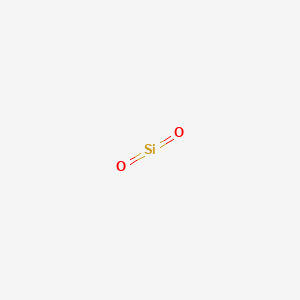
Identifiers
Functions
How broadly is Silicon oxide used across tracked brands and products?
Brands
1
Across 1 product types
Products
1
Product Types
1
Distinct formulation categories
Functions
0
Known functional-use labels
What does product breadth indicate about the commercial maturity of silicon oxide?
The commercial maturity of silicon oxide is mixed: patent activity is extensive (81 patents) and spans multiple decades, indicating a mature technology base, especially in packaging barriers. However, commercial product evidence is extremely sparse—only one product from 1992—suggesting that silicon oxide is not widely marketed as a standalone ingredient in consumer products. The patent landscape shows ongoing innovation in specialized formats (e.g., low-methanol organosols, spherical particles for dielectric applications), indicating that the ingredient is mature in industrial applications but not broadly commercialized in consumer goods.
How is silicon oxide positioned across the market?
Silicon oxide is positioned primarily as a functional barrier material in packaging, with patent claims emphasizing oxygen and moisture barrier properties in films, paper, and molded pulp. In cosmetics, it is positioned as a surface treatment for zinc oxide in sunscreens, improving compatibility. The only commercial product evidence—a 1992 carpet deodorizer—suggests historical use as an absorbent or carrier, but this is not representative of current market positioning. Overall, the ingredient is positioned as a technical enabler in packaging and specialty coatings rather than a consumer-facing active.
Top companies using Silicon oxide in their products
Ranked by number of tracked products that list silicon oxide, out of 1 total.
Where is Silicon oxide covered by tracked regulatory lists?
Jurisdictions
Markets where this ingredient appears on tracked ingredient regulation lists.
Japan
22 tracked lists
Regulatory Bodies
Authorities cited most often across the tracked ingredient lists.
Ministry of Health, Labour and Welfare
Which product categories, formats, and functions use silicon oxide?
Commercial product evidence shows silicon oxide in a single carpet deodorizer format at 1.35% w/w, introduced in 1992. Patent evidence, however, reveals a much broader functional landscape: silicon oxide is predominantly claimed as a barrier layer or coating in packaging (e.g., barrier films, molded pulp articles, flexible barrier paper), and also appears in cosmetics as a coating on zinc oxide for sunscreens, in toner compositions, and as spherical particles in resin compositions. The commercial product evidence is too limited to establish category breadth, but patent activity indicates primary use in packaging barrier applications.
Which product categories contain Silicon oxide?
Tracked product categories ranked by distinct products containing this ingredient.
Which formulation and co-ingredient patterns recur around silicon oxide?
Recurring formulation patterns center on silicon oxide as an inorganic barrier layer or coating, often paired with aluminum oxide in multilayer packaging systems. Patent claims also show silicon oxide used as a coating on zinc oxide particles in sunscreens, with magnesium, calcium, or barium silicates to replace alkali metals. In packaging, silicon oxide is frequently combined with polymers like polyethylene terephthalate, polypropylene, and biodegradable polymers such as polylactic acid. The single commercial product pairs silicon oxide with alumina in a carpet deodorizer, but this is insufficient to establish broader co-ingredient trends.
Which product spaces around silicon oxide appear crowded or differentiated?
Packaging barrier applications appear crowded, with many patents claiming silicon oxide as a barrier layer in films, paper, and molded pulp, often alongside aluminum oxide. Differentiation opportunities exist in specialized niches: low-methanol organosols for resin compositions, spherical silicon oxide particles for dielectric properties, and surface-treated colloidal silicon oxide for toner compositions. In cosmetics, silicon oxide as a coating for zinc oxide in sunscreens is a distinct space with limited patent evidence, suggesting potential for differentiation in UV-filter surface treatments.