Squalane
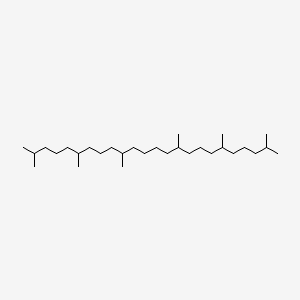
Identifiers
Functions
Where is SQUALANE used, and what role does it play in each application?
Squalane functions primarily as an emollient and skin-conditioning agent across personal care applications, with regulatory classifications listing it for skin conditioning, hair conditioning, and refatting. Market data show its broad use in face creams, hand and body lotions, foundations, lip colors, and eye creams, indicating a versatile role in moisturizing and texture enhancement. Patent filings further demonstrate its use as an anti-dusting agent in hair bleach powders, a primary oil-phase component in lip serums, and a solvent in microcapsule encapsulation systems. This breadth suggests squalane is a foundational oil-phase ingredient rather than a niche active, supporting its integration across skincare, color cosmetics, and hair care formats.
Which product or formulation problem does SQUALANE address?
Squalane addresses formulation problems related to skin barrier function and sensory performance. Patent evidence shows it is used to prevent epidermal moisture loss in cleansers, repair the skin barrier by improving intercellular lipid packing, and form a protective sebum-like film on the skin surface. In hair bleach powders, it solves a dusting problem by acting as an anti-dusting agent. Its role in biphasic compositions without surfactants or silicones indicates it helps maintain a stable interface in minimal-formula systems. These applications point to squalane solving both functional skin-care problems and physical formulation challenges like dust control and emulsion stability.
What supports the main commercial or clinical uses of SQUALANE?
Support for squalane's main uses comes from regulatory safety assessments, market prevalence, and patent filings. A Cosmetic Ingredient Review finding classifies it as safe in present practices of use and concentration, providing a safety foundation for its widespread application. Market data show its presence in over 2,600 products across 291 brands, with the highest counts in face creams, lotions, and foundations, indicating commercial acceptance. Patent filings support its functional roles in barrier repair, emolliency, and as a biomimetic sebum component. This combination of safety clearance, market adoption, and technical claims provides a robust evidence base for its primary emollient and conditioning functions.
Which formulation trade-offs should researchers consider for SQUALANE?
Researchers should weigh squalane's oil-phase compatibility against its concentration-dependent behavior and sourcing considerations. Patent filings show effective use ranges from 0.1% in cleansers to 80% in biphasic compositions, indicating flexibility but also a need for context-specific optimization. Its use as a primary solvent in microcapsules and as a component in liposome systems for liquid crystal structures suggests it can influence delivery system architecture. The existence of plant-based and synthetic variants, including compositions with at least 92% squalane, introduces sourcing and purity trade-offs. Its nonpolar nature means formulators must balance it with polar oils, as shown in emulsion patents requiring specific polar-to-nonpolar ratios.
What are the physicochemical properties of Squalane?
| Property | Value | Category |
|---|---|---|
| Physical Description | Liquid, Liquid; [Merck Index] Colorless viscous liquid; [Sigma-Aldrich MSDS] | Appearance |
| Boiling Point | 350 °C @760 [mm Hg] | Handling Relevant Properties |
| Density | 0.8115 @ 15°C | Handling Relevant Properties |
| Standard non-polar | 2664.4, 2663, 2665, 2666, 2667, 2668 | Analytical Properties |
| Semi-standard non-polar | 2660, 2656.1, 2657, 2658.1, 2658.5, 2658.8, 2630, 2632 | Analytical Properties |
| XLogP3 | 14.7 | Computed Molecular Properties |
| Exact Mass | 422.485151978 | Computed Molecular Properties |
| Monoisotopic Mass | 422.485151978 | Computed Molecular Properties |
| Topological Polar Surface Area | 0.0 | Computed Molecular Properties |
| Complexity | 308.0 | Computed Molecular Properties |
Which formulation benchmark best contextualizes SQUALANE, and what differs?
A relevant formulation benchmark is the biomimetic sebum composition, where squalane is combined with ceramides and phytosterol esters in ratios like 95.5-98.5:2.5-3.5:0.05-0.15. This benchmark differs from simple emollient use because it positions squalane as the dominant structural component of a skin-barrier-mimicking system, not just a sensory modifier. Patent evidence also shows squalane combined with lipids like shea butter and triglycerides in specific weight ratios to improve intercellular lipid packing. This contrasts with its role in biphasic compositions where it serves as the primary oil phase without additional barrier lipids, highlighting how formulation context fundamentally changes its function and required co-ingredients.