
AI/ML Models for FMCG Performance Innovation Report 2026
AI innovation in FMCG is moving beyond conventional sales forecasting and marketing automation. Research activity in retail computer vision rose from 610 publications in 2023–2024 to 1,660 in 2025–2026, while supply chain forecasting innovations increased by 264%. These developments suggest that companies are increasingly connecting real-time shelf visibility, external market conditions, pricing decisions, and product […]
Essity Innovation Report 2026
Essity has built 72 reusable-textile patents across two clusters, yet 98 disposable-core innovations and 383 tissue-production innovations show that its portfolio is still anchored in established architectures. At the same time, sensing, active wound care, technical textiles, and bio-based materials are beginning to change where technical value sits. We analyzed 19 research clusters totaling 871 […]
Apparel Cooling Technologies Innovation Landscape: What Will Define the Next Generation of Wearable Cooling?
Active thermal regulation has become the largest area in the landscape with 508 innovations, while fan-driven cooling activity increased from 43 publications in 2023–2024 to 92 in 2025–2026. The shift shows cooling apparel moving beyond ventilation and moisture management toward semiconductor refrigeration, liquid circulation, detachable hardware, and hybrid thermal systems. We analyzed 1,831 listed innovations […]
P&G Innovation Landscape 2026: Where Sustainability Becomes a Chemistry and Hardware Moat
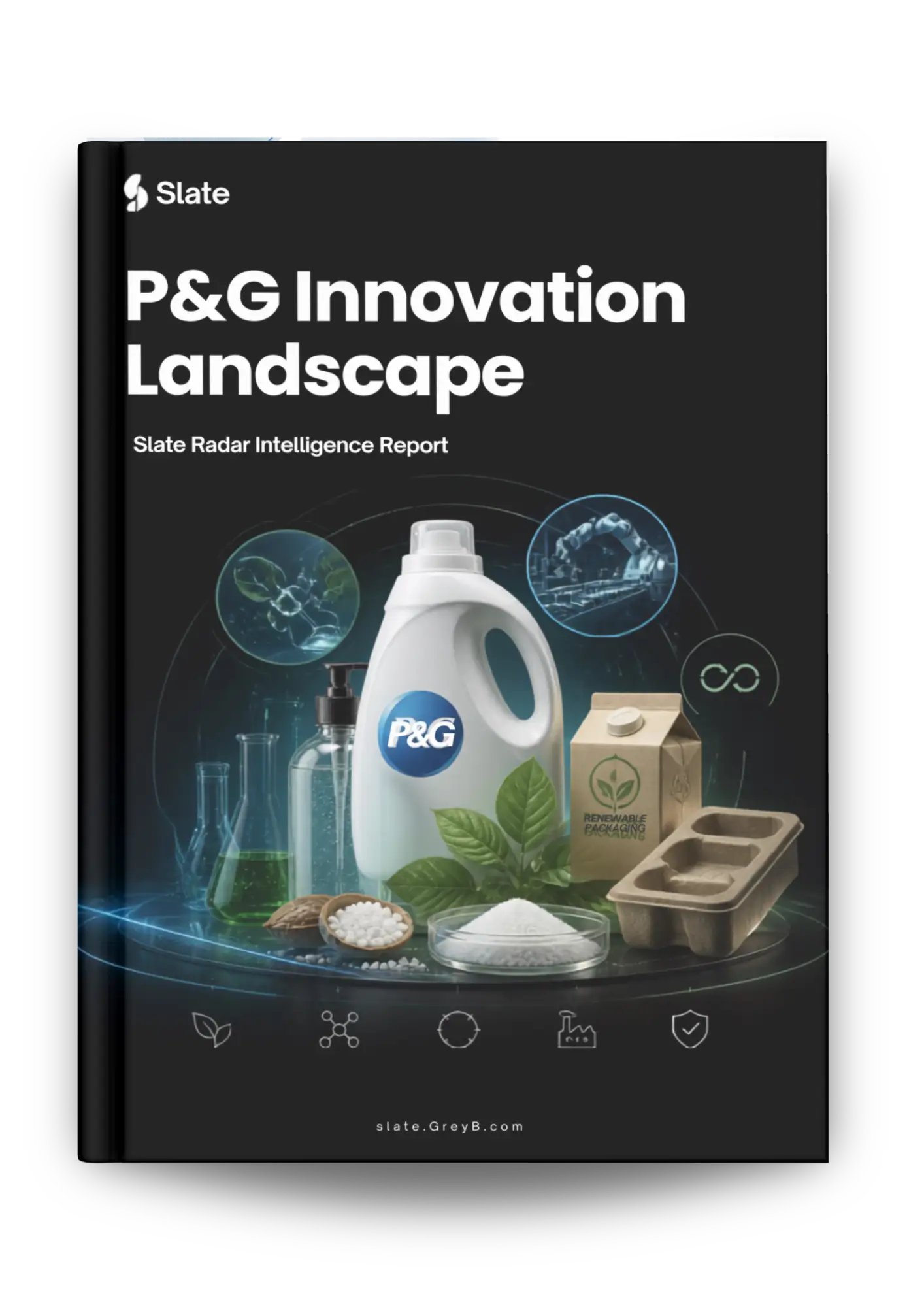
Publications in P&G’s core/shell delivery cluster rose 98% from 2024, while modular personal care device activity increased 173%. The larger signal is easy to miss: P&G is not treating sustainability as a packaging project. This report maps 2,817 innovations across 27 R&D clusters to show how formulation of IP, solid-state formats, smart hardware, and material […]
Laundry Detergent Innovations in 2026: The R&D Shifts Redefining Fabric Care
P&G is quietly building a low-pH detergent platform that would make the enzyme systems most competitors rely on functionally incompatible. If successful, the entire industry’s enzyme stability assumptions will be obsolete within 18 months. Meanwhile, there is simultaneous investment in fluorescent brightener optimization and non-FBA alternatives. This fragmentation is because of regulatory uncertainty in Europe […]

