
Clean-label protein products are gaining momentum, but the next challenge for food innovators may not be consumer demand. It may be access to the technologies needed to produce high-quality protein ingredients at scale.
Using Slate, we have identified emerging innovation gaps across the plant protein value chain. By mapping patents, companies, research activity, and technology clusters, Slate uncovered a growing concentration of intellectual property around high-purity protein extraction and texturization technologies.
Between 2024 and 2026, innovations in plant protein extraction using aqueous and ethanol-based methods increased from 62 to 152, a 145% rise in two years.
For food companies developing next-generation protein bars and clean-label products, this creates a new strategic question. The challenge is no longer only about finding the right protein source or creating appealing formulations. It is about understanding who controls the extraction methods, processing technologies, and manufacturing capabilities that determine product quality.
This article explores how intellectual property ownership is reshaping the protein supply chain, why extraction and texturization technologies are becoming strategic assets, and what R&D teams need to consider before their next product development cycle.

Who Controls the Technology Behind High-Purity Plant Protein Extraction
High-purity plant protein extraction is becoming increasingly concentrated among a small group of technology holders. Slate’s analysis identified 214 innovations across aqueous, ethanol, and salt-based extraction methods, with five companies accounting for a significant share of this activity: Louis Dreyfus Company, Burcon NutraScience, Roquette Frères, Arla Foods, and Fonterra.
Each company is building expertise around specific extraction challenges. Louis Dreyfus Company has focused on ethanol-based sunflower protein extraction, while Burcon NutraScience has developed calcium salt and ultrafiltration approaches to produce neutral-pH hemp protein isolates. Roquette Frères, Arla Foods, and Fonterra contribute to the broader innovation landscape across plant protein purification technologies.
High-performance clean-label proteins are becoming less dependent on commodity sourcing and more dependent on specialized processing technologies that improve taste, functionality, and nutritional quality.
General Mills has invested in protein blending and formulation innovation, with 15 innovations identified in this area, but no identified intellectual property in protein extraction infrastructure. This suggests that many downstream brands are optimizing product applications while relying on specialized suppliers for the upstream technologies that enable premium protein ingredients.
For R&D teams, this changes how protein sourcing decisions need to be evaluated. The question is no longer only which ingredient supplier can provide protein at scale, but which technologies and capabilities support the next generation of clean-label products.
Why Clean-label Protein Innovation is Moving Beyond Ingredients into Texture Technology
Securing high-purity protein isolates is only one part of developing next-generation clean-label products. The second challenge is converting these proteins into the textures consumers expect, especially in applications such as protein bars where mouthfeel, structure, and bite are critical.
Slate’s analysis reveals a gap between companies developing protein ingredients and those controlling the technologies required to structure them. Major food companies such as General Mills, Louis Dreyfus Company, and Arla Foods have published innovations in protein blending and formulation, but no identified innovations in key extrusion technologies such as twin-screw extrusion, diverging-branch nozzles, or rheological control systems.
The intellectual property landscape for texturization is dominated by specialized equipment and technology providers. Clextral has developed 34 innovations in twin-screw extrusion, including diverging-branch nozzle systems for continuous high-moisture extrusion. Planted Foods has developed controllable valve systems to maintain fibrous structures during high-moisture processing, while TNO and DST Holding have explored shear-based technologies for controlling protein structure formation.
Companies may have access to advanced protein isolates, but achieving differentiated textures still depends on specialized processing capabilities. Northeast Agricultural University is one of the few entities appearing across multiple technology clusters, including protein extraction, blending, and twin-screw extrusion. However, this broader capability remains largely within academic and early-stage research environments rather than commercial manufacturing.
For food manufacturers, this changes where product differentiation comes from. Proprietary formulations alone may not be enough to create a competitive advantage. As protein processing becomes more advanced, the ability to control texture formation and manufacturing technology will become increasingly important for developing premium clean-label products.
Why Protein Manufacturers May Face a New Cost Barrier in Clean-label Innovation
The gap between extraction technology and texturization capability creates a new cost challenge for mid-market protein manufacturers. Companies without their own processing capabilities must choose between partnering with specialized suppliers, investing in new infrastructure, or accepting limited control over product development.
The protein snacks market is projected to grow from $4.92 billion in 2025 to $10.83 billion by 2035, increasing the pressure on manufacturers to develop differentiated products at scale.
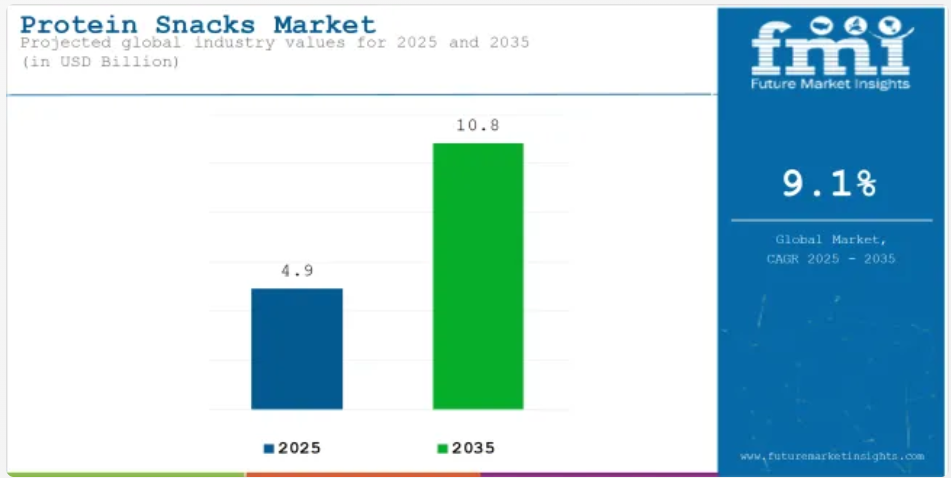
However, Slate’s analysis suggests that companies without proprietary extraction and processing capabilities may increasingly rely on partnerships or licensing arrangements to access advanced protein technologies.
Toll manufacturing can provide faster market access, but it may also reduce flexibility. Manufacturers may have less control over ingredient specifications, process customization, and the speed at which they can respond to changing consumer preferences. Their ability to differentiate products depends partly on the capabilities and priorities of external partners.
Building these capabilities internally is also challenging. The concentration of innovations around specialized systems, such as GEA’s high-shear steam infusion and drying technologies, highlights the equipment complexity involved in developing advanced protein processing infrastructure. Beyond capital investment, companies also need specialized process expertise to operate and optimize these systems.
Supply agreements may become another strategic consideration. As leading ingredient and technology providers strengthen their positions, manufacturers that secure early partnerships could gain advantages in access, customization, and supply stability.
For R&D teams, the question is no longer only how to formulate the next clean-label protein product. It is whether the underlying processing capabilities are accessible enough to support long-term innovation.

Why Protein Bar Manufacturing is Shifting from Binding to Precision Structuring
Innovation activity suggests that protein bar manufacturing is moving toward more advanced processing methods. Slate’s analysis shows a sharp decline in innovation around traditional binder-integrated forming, with publications dropping from 95 to 3 in the most recent cycle. At the same time, innovation activity has increased around protein extraction and extrusion technologies, including twin-screw systems, nozzles, and processing controls.
This shift indicates a move away from simple mixing and binding approaches toward more controlled protein structuring methods. Advanced extrusion technologies allow manufacturers to engineer texture, structure, and functionality at the protein matrix level, which is becoming increasingly important for premium clean-label products.
For companies with existing cold-pressed manufacturing lines, this creates a strategic planning challenge. Established assets may continue to support current products, but future product development could increasingly require access to extrusion-based capabilities and advanced processing expertise.
The question for manufacturers is not only whether current equipment can meet today’s demand. It is whether existing production platforms align with where innovation activity is moving. Companies planning future investments may need to evaluate the long-term role of cold-pressed systems compared with newer extrusion-based manufacturing approaches.
How R&D Teams Can Prepare for the Next Phase of Protein Innovation
The changing protein technology landscape requires companies to reassess where they have control and where they depend on external capabilities. R&D teams should map their current protein suppliers against the major extraction technology holders and evaluate whether their sourcing strategy provides enough flexibility in quality, customization, and long-term supply.
Companies relying on external partners should also assess whether toll manufacturing is a short-term scaling solution or a long-term constraint on innovation speed and product differentiation.
Manufacturers should also evaluate their access to advanced texturization technologies and extrusion capabilities. Understanding whether equipment partners or contract manufacturers hold relevant intellectual property in areas such as twin-screw extrusion, nozzles, and shear-based processing can help identify future limitations.
As innovation continues moving toward more advanced protein structuring, companies may need to factor processing capabilities, supplier partnerships, and manufacturing investments into their long-term product development strategy.
Map the Technology Landscape Before Making Your Next R&D Investment
Innovation decisions are often made with incomplete visibility. Companies may know which ingredients are trending, which competitors are launching products, or which patents are being filed. But they often lack a clear view of who controls the underlying technologies shaping the market.
This is where Slate, an AI-powered intelligence platform for F&B, helps research and innovation teams move from fragmented information to strategic clarity.
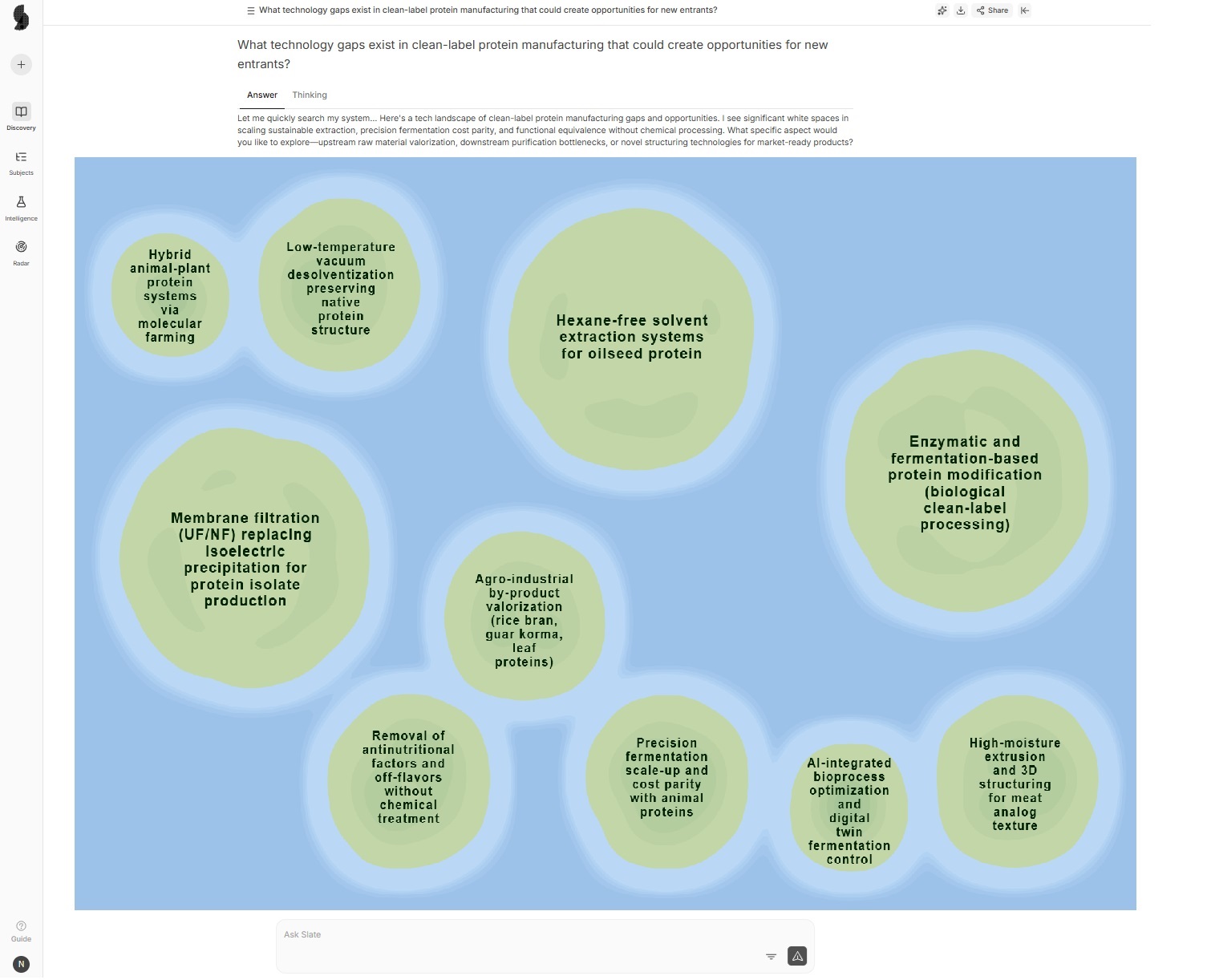
Slate combines patent intelligence, scientific literature, company activity, market signals, and technology mapping to help teams understand emerging innovation landscapes. Researchers can identify who is building critical technologies, track how innovation is evolving, benchmark competitors, and uncover white spaces before they become crowded.
In the protein industry, Slate helped reveal that the challenge was not only developing better formulations. The deeper opportunity was understanding ownership of extraction methods, texturization technologies, and manufacturing capabilities across the value chain.
With Slate, companies can continuously monitor technology shifts, map patent ownership, identify emerging players, and make innovation decisions backed by evidence rather than assumptions.

Frequently Asked Questions
Why is clean-label protein extraction more expensive than conventional methods?
Clean-label protein extraction requires specialized aqueous and ethanol-based purification methods that eliminate hexane residues while maintaining high protein density and removing off-flavors. These methods demand capital-intensive equipment like high-shear steam infusion systems and multi-stage fractionation infrastructure that only a few specialized processors have industrialized at scale. The intellectual property concentration among five dominant companies creates licensing dependencies and toll manufacturing premiums that commodity hexane-based processing does not impose.
What companies control the technology for hexane-free sunflower and hemp protein extraction?
Louis Dreyfus Company controls ethanol-based sunflower protein extraction methods using 30-70% ethanol fractionation. Burcon Nutrascience holds intellectual property for calcium salt ultrafiltration that produces neutral-pH hemp protein isolates. Roquette Frères, Arla Foods, and Fonterra occupy the remaining dominant positions across 214 innovations in aqueous, ethanol, and salt-based plant protein purification.
How does the lack of extrusion hardware ownership affect protein bar manufacturers?
Food manufacturers who lack proprietary extrusion hardware intellectual property are dependent on equipment vendors for the fibrous textures that premium clean-label bars require. This means they cannot differentiate on mouthfeel beyond whatever configurations their equipment supplier offers to all competitors. Companies like Clextral, Planted Foods, and TNO control the diverging-branch nozzles, controllable valves, and shear channel systems that define structural differentiation, effectively making texture a rented asset rather than a proprietary capability.
Can traditional cold-pressed protein bar production lines be retrofitted for clean-label products?
The innovation record suggests no. Publication velocity for binder-integrated forming collapsed from 95 to 3 in the most recent period, while protein extraction and extrusion hardware maintained high innovation volumes. This indicates the industry has moved to a fundamentally different manufacturing paradigm based on processed protein matrices and precision rheology rather than adhesive-based binding. Legacy production lines optimized for cold-pressed forming are becoming obsolete for next-generation product development.
What is the financial impact of not controlling your own protein extraction chemistry?
Mid-market manufacturers without captive extraction capabilities face structurally lower gross margins due to licensing fees or toll manufacturing premiums compared to vertically integrated competitors. They also have reduced formulation flexibility and slower response times to market shifts because they depend on suppliers’ willingness to co-develop and capacity to serve multiple clients. As the protein snacks market grows from $4.92 billion in 2025 to $10.83 billion by 2035, this margin disadvantage will compound, making it increasingly difficult to compete at the premium end without vertical integration.
Why are academic institutions like Northeast Agricultural University important in this landscape?
Northeast Agricultural University is one of the few entities spanning the full technical spectrum from protein extraction to extrusion hardware, appearing across multiple innovation clusters. While corporate players like General Mills and Arla Foods maintain higher total innovation counts, they concentrate in single technical layers. This academic cross-cluster footprint suggests that the integration of upstream ingredient processing with downstream extrusion mechanics remains largely in the pre-commercial phase, indicating that industrial players rely on external equipment vendors rather than developing vertically integrated capabilities.
How can companies identify their extraction dependencies before they become constraints?
Companies should map their current protein isolate suppliers against the five dominant extraction intellectual property holders and verify whether suppliers are operating under license or using commodity hexane-derived isolates. They should also identify whether contract manufacturers or equipment vendors have published innovations in twin-screw extrusion and texturization hardware. Tools like Slate allow teams to track intellectual property ownership, monitor exclusive partnerships, and benchmark technical capabilities against vertically integrated competitors before committing to formulations or capital investments.