
What happens when a snack is designed to do more than contain less sugar and starts influencing how the body processes carbohydrates? That question is becoming more relevant as food companies develop ingredients and processing methods aimed at controlling post-meal glucose response.
Patent and publication data shows that research around dietary fiber and polyphenol compositions for blocking glycolipid absorption grew by 108 percent, from 105 publications in 2024 to 218 during 2025 and 2026.
Nestlé stands out in this area as it holds a 2.7 times publication lead and has eight patents in this technology cluster. Some of its work combines mulberry leaf extract, which contains the alpha-glucosidase inhibitor 1-deoxynojirimycin, with dietary fibers to influence carbohydrate digestion and post-meal glucose response.
This changes the conversation around better-for-you snacks. These products are moving beyond simple sugar reduction and fiber fortification toward formulations designed around specific metabolic mechanisms.
Using Slate, we analyzed the patent and publication activity behind this shift to understand where glycemic-control snack innovation is heading. This article brings together the key technologies, companies, patents and research signals shaping the move toward more targeted metabolic functions in everyday snack formats.

Polyphenol-Fiber Formulations Are Redefining Glycemic-Control Snacks
Fiber is no longer being added only to increase the nutritional value of a snack. Companies are now studying how fibers can work with botanical compounds to influence carbohydrate digestion and post-meal glucose response.
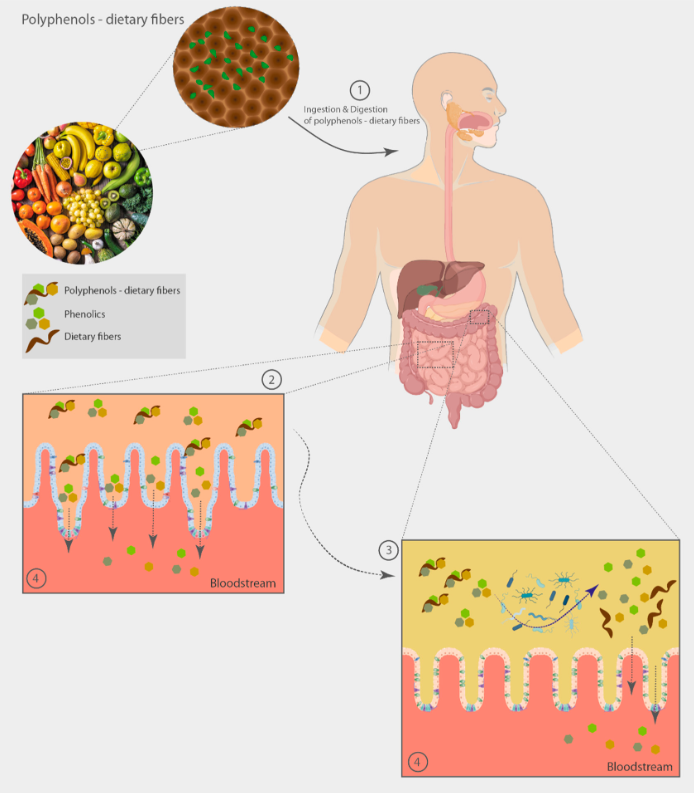
Mulberry leaf contains 1-deoxynojirimycin, also known as DNJ, a compound that can inhibit alpha-glucosidase. This enzyme helps break carbohydrates into sugars that can be absorbed by the body. Research on mulberry compounds has confirmed the alpha-glucosidase inhibitory activity of DNJ.
Patent activity shows how food companies are trying to build this mechanism into actual food formulations. Nestlé has eight patents in the dietary fiber and polyphenol cluster identified in our analysis. Its work includes combinations of fiber and mulberry-derived compounds designed around post-meal glucose response. This suggests that the focus is moving beyond adding a functional ingredient toward controlling how that ingredient behaves within the food matrix.
The pace of innovation supports this shift. Publications in dietary fiber and polyphenol compositions for glycolipid absorption blocking increased from 105 in 2024 to 218 during 2025 and 2026. That is a 108 percent rise. Yili is also developing a formulation that combines mulberry leaf and corn silk extracts for use in dairy products with auxiliary blood sugar lowering functions.
Processing is becoming just as important as the ingredients themselves. One Nestlé patent uses oat beta-glucan with an average molecular weight between 400 and 5000 kDa and controlled enzymatic hydrolysis. The aim is to improve texture and taste while retaining the molecular weight and health properties of beta-glucan. This shows the formulation challenge clearly. A functional ingredient still has to survive processing and deliver acceptable taste and mouthfeel.
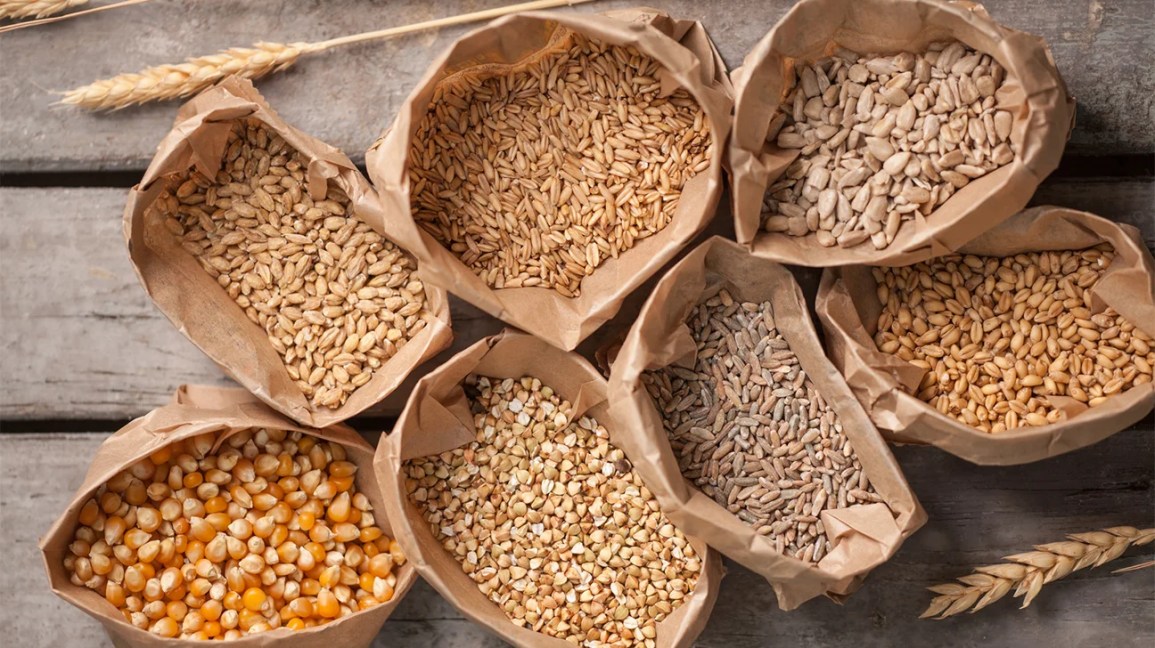
This is why glycemic-control snack innovation is becoming more technically demanding. The challenge is no longer limited to finding fiber, polyphenols or botanical extracts. Companies also have to understand how these components interact, how processing affects them and whether the final formulation can deliver the intended function without compromising texture or taste.
That combination of metabolic function and formulation complexity is also what makes this area important from a regulatory perspective. As companies move from broad claims such as high fiber or reduced sugar toward products designed around specific biological mechanisms, the evidence needed to support those claims becomes increasingly important.
Glycemic-Control Functional Snacks Face a Growing Regulatory Challenge
As glycemic-control snacks become more precise in how they interact with the body, regulation becomes less about whether an ingredient is simply permitted and more about what companies say the finished product can do.
FDA allows conventional foods to carry certain structure and function claims when they describe how nutrients support normal body functions. Claims connecting a product to disease prevention, treatment or mitigation enter a different regulatory category. FDA guidance on food label claims makes that separation clear.
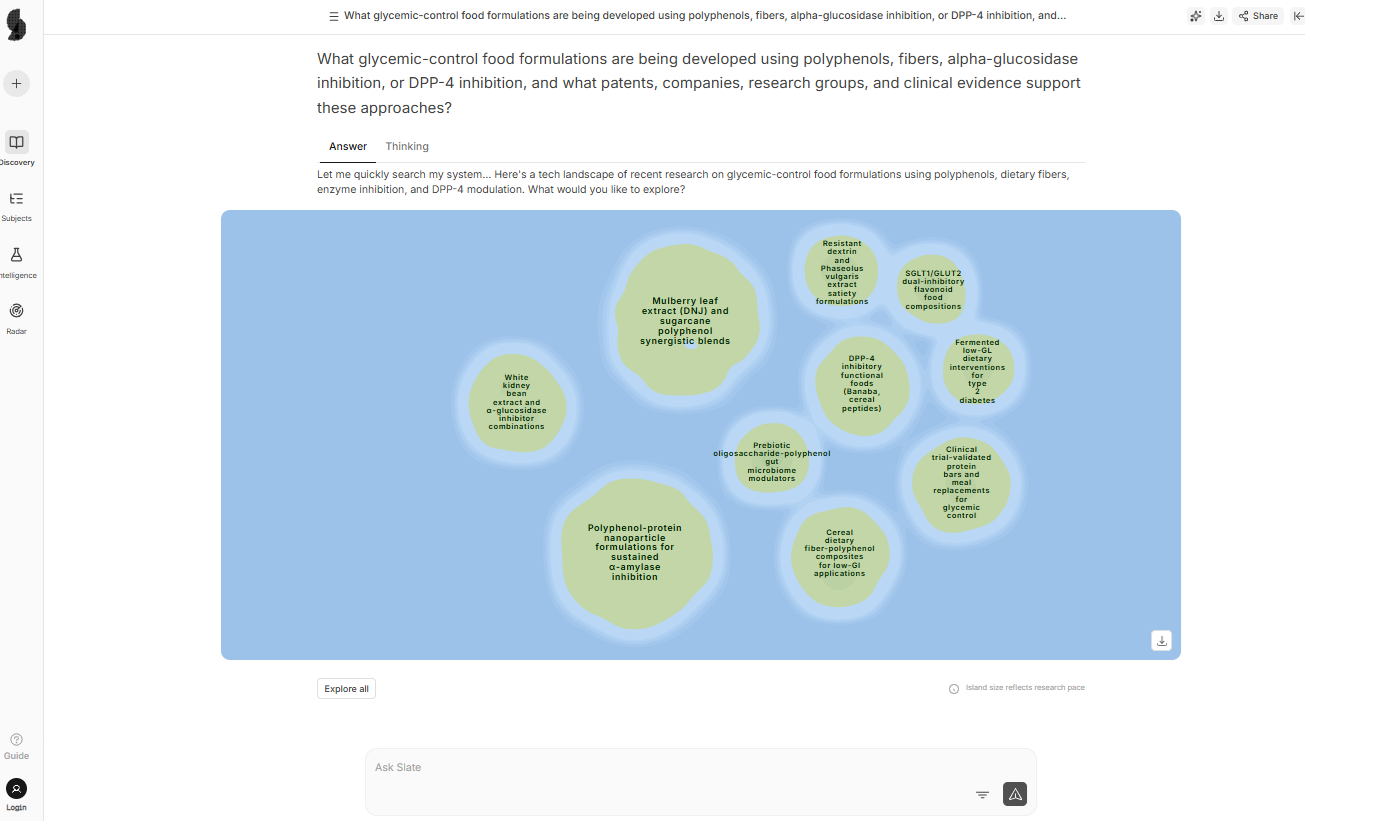
Some formulations are now built around specific mechanisms such as alpha-glucosidase inhibition and DPP-4 inhibition rather than broad ideas such as adding fiber or reducing sugar. One patent from Mengniu combines Cyclocarya paliurus, mulberry leaf and bitter melon extracts and describes bacterial DPP-4 inhibition as a way to maintain healthy blood glucose levels. The same patent also covers pharmaceutical uses for metabolic diseases.
Medical foods should also be treated separately. Under the FDA definition of medical foods, these products are formulated for the specific dietary management of a disease or condition with distinctive nutritional requirements and are intended for use under physician supervision. A snack does not become a medical food simply because one of its ingredients affects an enzyme involved in glucose metabolism.
The more immediate regulatory issue is therefore the claim attached to the mechanism. Saying that a product supports normal glucose metabolism is different from saying that it lowers blood glucose or manages diabetes. As companies develop more targeted polyphenol-fiber systems, they will need evidence that supports not only the ingredient but also the dose, finished formulation and specific benefit being communicated.
Patent activity suggests this question will become more important as the category grows. The better-for-you snacking analysis identified increasing work around polyphenol-fiber combinations and other metabolic mechanisms. Companies developing these products may therefore need to plan formulation, evidence generation and claim strategy together rather than treating regulatory review as something that happens after product development.
Academic IP Is Raising the Entry Barrier in Functional Snacking
Jiangnan University has 160 innovations spread across 20 technology clusters. That is more than Nestlé’s 135 innovations across the same number of clusters. Northeast Agricultural University is also active across 15 clusters with 85 innovations. Their work spans areas such as metabolic probiotics, protein texturization and glycemic regulation.
This matters because universities are not working only on isolated ingredients. Their research covers processing methods, formulations and biological mechanisms that companies may eventually need to commercialize better-for-you products. As these portfolios expand across several technical areas, companies may need to look beyond ingredient availability and understand who owns the processes that make those ingredients work.
A company may be able to source a fiber, probiotic strain or botanical extract without difficulty, but the processing method, stabilization technique or specific combination needed to achieve the desired performance may already be protected. This can push companies toward licensing, university partnerships or joint research rather than relying only on standard co-manufacturing.
The regulatory connection appears when these technologies support increasingly specific health outcomes. A formulation built around a defined metabolic mechanism may require stronger evidence than a product making a broad nutrition claim. As academic and commercial portfolios become more focused on glycemic regulation and other measurable biological effects, companies will need to consider IP strategy, claim substantiation and product validation together rather than treating them as separate decisions.
The Better-for-you Snacking Innovation Landscape developed through Slate shows how widely these academic portfolios already extend across functional food technologies.
Glycemic-Control Innovation Is Accelerating Across a Fragmented Patent Landscape
The speed of innovation around glycemic-control foods has increased sharply in just two years. Publications covering dietary fiber and polyphenol compositions for glycolipid absorption blocking rose from 105 in 2024 to 218 during 2025 and 2026. That represents a 108 percent increase.
Publications on whole-grain processing for low-glycemic noodles increased from 237 in 2023 and 2024 to 478 during 2025 and 2026. The analysis identified 319 named publishers in the low-glycemic noodle cluster, while several of the broader landscape’s most active organisations were absent from this specific area.
This points to a market where glycemic-control innovation is spreading across regional companies, universities and specialist developers rather than remaining concentrated among a few large food companies. Smaller players may therefore establish important positions around particular ingredients, processing methods or carbohydrate-management formats before larger companies enter the same area.
Patent activity increasingly covers combinations of dietary fibers with botanical compounds such as mulberry leaf and tea polyphenols. These formulations are being developed around mechanisms that can influence carbohydrate digestion and post-meal glucose response. Nestlé and Yili are among the companies exploring such polyphenol-fiber combinations.
This growing activity does not mean regulation will automatically change within a fixed period. It does mean that more companies are developing products around measurable metabolic outcomes. As these formulations move from broad better-for-you positioning toward more specific glycemic claims, questions around evidence, claim substantiation and regulatory review are likely to become harder to ignore.
The 319-publisher base creates another challenge. Companies can no longer monitor only the largest food manufacturers. Relevant IP may emerge from smaller regional businesses or academic groups, making ongoing patent and publication tracking increasingly important when assessing competitors, potential partners and freedom-to-operate.
Advanced Processing Is Raising the Barrier to Glycemic-Control Snacks
Companies are using techniques such as enzymatic hydrolysis and microencapsulation to control how functional compounds behave during processing and digestion. In some areas of the wider functional-snacking market, pH-responsive delivery systems are also being explored to protect sensitive bioactives and control where they are released.
Sichuan Mosun Pharmaceutical is developing gradient enzymatic hydrolysis methods for small-molecule peptide formulations. Guangdong Zhiduoxing Food is working with quercetin-modified resistant starch complexes and microencapsulated oil powders to manage carbohydrate release. Together, these approaches show how glycemic-control formulations are becoming multi-step processing systems rather than simple combinations of functional ingredients.
A brand may be able to buy beta-glucan, polyphenols or botanical extracts from multiple suppliers. Replicating the processing conditions that control viscosity, release, stability and sensory performance can be much harder. Proprietary enzyme treatments and stabilization methods can therefore become as important as the ingredients themselves.
Publication activity in whole-grain bioprocessing increased by 67 percent between 2024 and 2026. Protein and polysaccharide microencapsulation also rose sharply, from 144 publications in 2023 and 2024 to 343 during 2025 and 2026.
Brands that rely on standard co-manufacturing may need access to specialist enzyme processing, encapsulation or stabilization capabilities to reproduce the performance described in newer patents. Licensing a process, partnering with a technology developer or building the capability internally may therefore become part of product development.
The challenge becomes even greater when companies want to make specific metabolic claims. More complex processing can make a formulation more differentiated, but companies still need evidence that the finished product delivers the intended outcome. As glycemic-control snacks become more technically sophisticated, processing capability, IP access and product validation are becoming closely connected.
Glycemic-Control Snack Development Needs Earlier Evidence and IP Planning
As glycemic-control formulations become more specific, claim planning needs to start alongside product development. A product built around mulberry leaf, polyphenols or other ingredients linked to alpha-glucosidase inhibition should be assessed against the exact benefit the finished formulation is expected to deliver.
The same applies to processing. Enzymatic hydrolysis, resistant starch modification and microencapsulation can improve stability, release and sensory performance, but they can also bring companies closer to patented processing methods. Understanding the mechanism, supporting evidence and relevant IP early can help avoid costly reformulation later.
The competitive field is also becoming harder to track. Our Slate Radar identified 319 publishers in the low-glycemic noodle cluster, showing that relevant innovation is coming from regional companies and specialist developers as well as large food businesses.
Companies therefore need to watch emerging patents, assess whether clean-label goals can be maintained with increasingly complex processing and decide how much product-level validation is needed for the claims they want to make. These decisions are becoming closely connected as glycemic-control snacks move toward more mechanism-specific formulations.
Stronger Glycemic Claims Are Turning Validation Into a Strategic Decision
A snack positioned around fiber content or general metabolic support may need a very different evidence strategy from one designed around a specific mechanism such as alpha-glucosidase inhibition. The better-for-you snacking analysis shows growing patent activity around polyphenol-fiber combinations that are designed to influence carbohydrate digestion and post-meal glucose response.
Other patents are becoming equally specific about metabolic pathways. One invention identified probiotic innovation stimulates intestinal cells to secrete glucose-regulating hormones. This type of mechanism-driven development shows how far functional snack research is moving beyond broad claims such as low sugar or high fiber.
Companies can invest earlier in human studies and finished-product testing when stronger metabolic claims are central to the product strategy. This can provide better evidence for the claimed benefit and help distinguish the formulation from products supported mainly by ingredient-level research.
Polyphenol-fiber systems are increasingly being designed around measurable metabolic functions, but it is still unclear how regulatory frameworks will treat more advanced formulations as the category develops. It identifies possible pressure for stronger clinical substantiation, particularly for claims connected to mechanisms such as alpha-glucosidase inhibition.
This makes evidence planning part of product strategy rather than a final regulatory check. Companies developing glycemic-control snacks need to decide early what they want the product to claim, what evidence would support that claim and whether the commercial value of stronger positioning justifies the additional validation work.
Your R&D Team Has the Data. Slate Helps You Find the Answer Hidden Across It.
Researchers usually have to find signals separately and then connect them manually. That is where valuable time gets lost and promising technical routes get missed.
Slate, an AI-powered R&D tool for F&B is built to connect this information around the R&D problem you are trying to solve, rather than making you search every database separately.
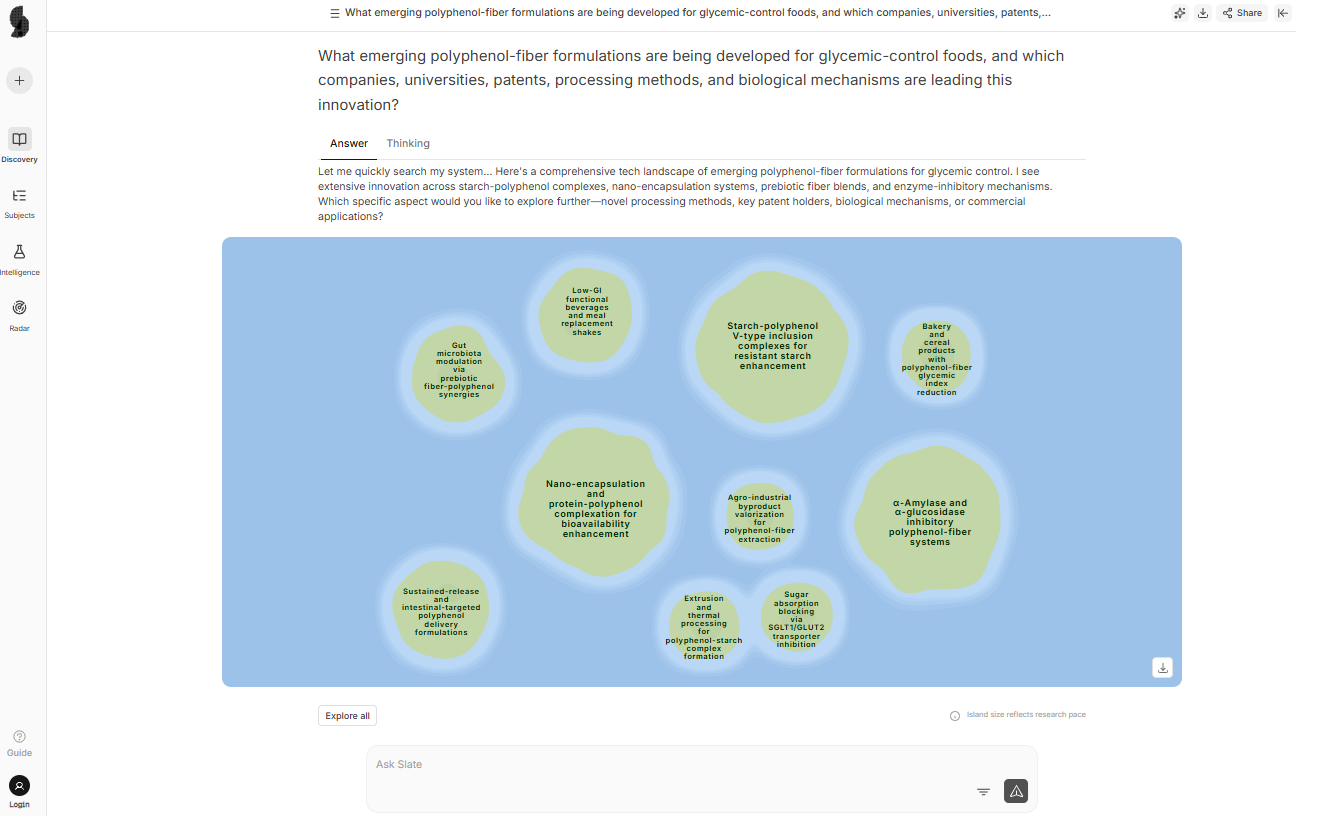
You can ask Slate a technical question and investigate several possible solution routes rather than searching ingredient by ingredient. Slate can surface relevant patents, research papers, technologies, companies, and academic groups working on the same technical problem, helping you see approaches that may sit outside your usual search vocabulary or competitor set.
Slate Radar adds another layer. It helps teams look beyond individual papers or patents and see where innovation activity is building. Researchers can examine growing technology clusters, changes in publication activity, companies entering a space, universities building IP, and technical approaches gaining momentum. The polyphenol-fiber patterns discussed in this article were identified by looking at these signals together rather than relying on isolated publications.
This matters because the best R&D opportunity is not always the most obvious ingredient or the most cited paper. It may be a processing method appearing across several patents, a university developing an unfamiliar mechanism, or a technology from an adjacent category that can solve your formulation problem in a different way.
Slate gives researchers a way to move between these levels of intelligence. Start with a technical question, explore multiple solution routes, compare them against your formulation needs, identify the patents and research behind them, see who is developing them, and track where the technology is moving.
That combination is difficult to recreate by running separate searches across patent databases, scientific literature, supplier websites, and market reports. Those sources can tell you what exists. Slate is designed to help you understand which technical routes are relevant to your problem and which ones deserve a closer look.
Frequently Asked Questions
What is the difference between a functional food and a medical food?
Functional foods provide health benefits beyond basic nutrition but are regulated as conventional foods. Medical foods are formulated to manage specific diseases or conditions under medical supervision and require clinical validation. The regulatory line blurs when functional snacks use mechanisms like enzyme inhibition that resemble pharmaceutical interventions.
Which botanical extracts are used to inhibit alpha-glucosidase in snacks?
Mulberry leaf extract containing 1-deoxynojirimycin, tea polyphenols, and corn silk extracts are commonly deployed to inhibit alpha-glucosidase, the enzyme that breaks down carbohydrates. These botanicals target the same pharmacological pathway as prescription diabetes medications like acarbose.
What is gradient enzymatic hydrolysis in polyphenol-fiber processing?
Gradient enzymatic hydrolysis uses multi-stage enzymatic systems to modify beta-glucans and fibers, controlling the release of polyphenols in the digestive tract. This process maintains high-viscosity health benefits while optimizing sensory properties like mouthfeel, requiring pharmaceutical-grade processing infrastructure.
How do regulatory bodies currently classify snacks with glycemic claims?
Currently, snacks with glycemic claims are classified as functional foods if they use GRAS ingredients and avoid explicit disease treatment claims. However, when products are engineered to inhibit specific enzymes or modulate metabolic pathways, they operate in a regulatory grey zone that has not been formally defined.
Why is academic IP concentration in functional foods significant?
Academic institutions like Jiangnan University and Northeast Agricultural University hold foundational patents across 15-20 technology clusters, fragmenting freedom-to-operate for commercial brands. This concentration signals that regulatory bodies will eventually need to establish clear standards as the science matures.
What clinical validation is required for medical food designation?
Medical food designation requires clinical evidence demonstrating that the product meets the nutritional requirements of a specific disease or condition. For metabolic snacks, this would mean human trials showing measurable glycemic control or metabolic outcomes, significantly raising R&D costs and time-to-market.
Which companies are leading polyphenol-fiber glycemic research?
Nestle holds the strongest publication position with a 2.7× lead, while Yili, Duhui Health, Jiangnan University, and Northeast Agricultural University are also active. Regional Chinese firms and South Korean entities represent a fragmented tail of 319 publishers establishing early IP positions in glycemic regulation.