Azelaic Acid
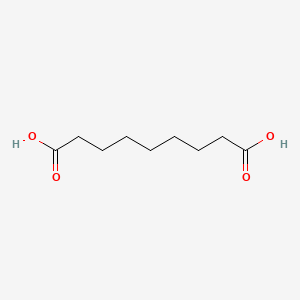
Identifiers
Functions
Hazards

Where is azelaic acid used, and what role does it play in each application?
Azelaic acid functions as a multifunctional active in dermatology and cosmetics, and as an industrial intermediate. In pharmaceuticals, it is a topical treatment for mild-to-moderate inflammatory acne vulgaris (20% cream) and inflammatory rosacea lesions (15% gel). In cosmetics, it is listed as a buffering and fragrance ingredient, and patents claim roles as an anti-acne, skin-brightening, anti-aging, and oil-control active. Industrially, it is used in lacquers, alkyd resins, plasticizers, adhesives, polyamides, and urethane elastomers. This dual pharmaceutical-cosmetic-industrial profile means formulators can leverage its clinical credibility for acne while exploring emerging cosmetic claims, but must align product positioning with the appropriate regulatory framework.
Which product or formulation problem does azelaic acid address?
Azelaic acid addresses multiple formulation and product problems: it provides antibacterial action against Propionibacterium acnes and Staphylococcus epidermidis, normalizes follicular keratinization, reduces stratum corneum thickness, and exhibits anti-inflammatory and antioxidant activity. These mechanisms solve the clinical problem of inflammatory acne and rosacea lesions. In formulations, it addresses the need for a multi-pathway active that targets sebum, keratinization, microbial colonization, and inflammation simultaneously. For cosmetic applications, patents claim it solves solubility and irritation challenges through microemulsions, liquid salts, and particle engineering, and addresses skin aging by increasing cell longevity and stimulating mitochondrial metabolism.
What supports the main commercial or clinical uses of azelaic acid?
Clinical evidence supports azelaic acid's use for acne and rosacea: 20% cream is more effective than vehicle placebo for mild-to-moderate inflammatory acne and comparable to tretinoin or benzoyl peroxide; 15% gel reduced rosacea papules and pustules by 50-58% versus 38-40% for vehicle in 12-week studies. Its mechanism is supported by demonstrated inhibition of microbial protein synthesis, competitive inhibition of 5-alpha-reductase and tyrosinase, and antiproliferative effects on keratinocytes. Follicular concentrations after topical application reach levels comparable to in vitro inhibitory concentrations for P. acnes. This evidence base supports both pharmaceutical registration and cosmetic claims, though cosmetic anti-aging uses rely on patent filings rather than published clinical data.
How is Azelaic acid used clinically?
For the topical treatment of mild-to-moderate inflammatory acne vulgaris
Which formulation trade-offs should researchers consider for azelaic acid?
Key formulation trade-offs for azelaic acid center on solubility, irritation, and delivery. Its low water solubility and tendency to cause irritation at effective concentrations (5-20%) drive the need for advanced delivery systems. Patents describe microemulsions, deep eutectic solvents with betaine and panthenol, liquid salts with meglumine or tromethamine, and micro-nanocrystalline suspensions to improve transdermal absorption and reduce epidermal irritation. High-load formulations (9-11%) require specific emulsion architectures with non-polar oils and polyols. Particle morphology (spherical or plate-like, ≥10 μm median diameter) enables powder cosmetic applications. These trade-offs mean formulators must balance efficacy concentration against skin tolerance and choose delivery technology based on target product format.
What are the physicochemical properties of Azelaic acid?
| Property | Value | Category |
|---|---|---|
| Physical Description | Dry Powder; Other Solid; Large Crystals, Yellowish to white solid; White flakes; [Acros Organics MSDS], Solid | Appearance |
| Color/Form | Monoclinic prismatic needles, Yellowish to white crystalline powder, Leaflets or needles | Appearance |
| Solubility | 2400 mg/L (at 20 °C), Slightly soluble in ethy ether, benzene, DMSO; soluble in ethanol, Soluble in hot water, alcohol and organic solvents, One liter of water dissolves 1.0 g at 1.0 °C; 2.4 g at 20 °C; 8.2 g at 50 °C; 22 g at 50 °C ... 1000 g ether dissolves 18.8 g at 11 °C and 26.8 g at 15 °C, In water, 2.40X10+3 mg/L at 20 °C, 2.4 mg/mL | Formulation Relevant Properties |
| LogP | 1.57, log Kow = 1.57, 1.59 | Formulation Relevant Properties |
| LogS | -1.89 | Formulation Relevant Properties |
| pKa | 4.55 (at 25 °C) | Formulation Relevant Properties |
| Dissociation Constants | pKa = 4.55 | Formulation Relevant Properties |
| Boiling Point | 286.5 °C at 1.00E+02 mm Hg, 357.1 °C; 287 °C at 100 mm Hg, BP: 365 °C (decomposes), Distills above 360 °C with partial anhydride formation. BP: 286.5 °C at 100 mm Hg; 265 °C at 50 mm Hg; 237 °C at 15 mm Hg; 225 dg C at 10 mm Hg | Handling Relevant Properties |
| Melting Point | 106.5 °C, 160.5 °C | Handling Relevant Properties |
| Flash Point | 210 °C (closed cup) | Handling Relevant Properties |
Which formulation benchmark best contextualizes azelaic acid, and what differs?
The most relevant formulation benchmark is the 15% gel (Finacea) for rosacea and 20% cream (Azelex) for acne, both containing propylene glycol. These benchmarks establish the efficacy concentration range and demonstrate that propylene glycol is a viable solubilizer. However, newer patent literature suggests alternatives: microemulsions with 1-10% azelaic acid, deep eutectic systems with up to 50% azelaic acid, and liquid salts enabling 0.1-80% loading without additional solubilizers. The key difference is that traditional benchmarks rely on high concentrations and simple vehicles, while newer approaches aim to maintain efficacy at lower concentrations or improve tolerability through advanced delivery, potentially enabling broader cosmetic use.