Azelaic Acid Environmental Fate & Ecotoxicity
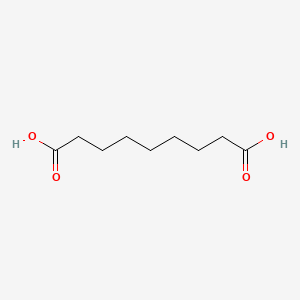
Identifiers
Functions
Hazards

What is known about the environmental fate of azelaic acid?
Azelaic acid is expected to partition across air, soil, and water compartments with limited volatility and moderate soil mobility. In air, it exists in vapor and particulate phases, with a vapor-phase hydroxyl radical reaction half-life of about 40 hours; particulate forms deposit via wet or dry deposition. In soil and water, its pKa of 4.55 means it is mostly ionized at environmental pH, reducing volatilization and adsorption to organic carbon and clay. Estimated Koc of 170 indicates moderate mobility in soil and adsorption to suspended solids and sediment. Direct photolysis is unlikely because it lacks chromophores absorbing above 290 nm. Biodegradation data are absent, but straight-chain carboxylic acids are expected to biodegrade readily.
What do biodegradation, bioaccumulation, and ecotoxicity findings indicate for azelaic acid?
Direct biodegradation and ecotoxicity data for azelaic acid are not available, but structural analogs suggest low bioaccumulation potential. An estimated BCF of 3 indicates low bioconcentration in aquatic organisms. The compound is expected to exist as an anion at pH 5–9, which limits volatilization and may reduce bioavailability. While straight-chain carboxylic acids are generally expected to biodegrade readily, this is an inference, not a measured result. No ecotoxicity endpoints (e.g., LC50, EC50) were reported, so hazard classification cannot be established from current evidence. The low BCF is a positive indicator, but without biodegradation or toxicity data, a full environmental hazard profile remains incomplete.
Which environmental exposure pathways or concentrations are reported for azelaic acid?
No measured environmental concentrations were reported for azelaic acid. Exposure pathways are inferred from its production and use in organic synthesis, lacquers, alkyd resins, polyamides, polyester adhesives, plasticizers, and urethane elastomers, which may release it through waste streams. The general population may be exposed via inhalation of ambient air and dermal contact with consumer products. Occupational exposure may occur through inhalation and dermal contact at production or use sites. These pathways are qualitative; no quantitative release or concentration data are available to estimate environmental loading or human exposure levels.
How might use context or formulation affect the environmental profile of azelaic acid?
Use context influences release pathways, but formulation-specific environmental effects are not documented. Industrial uses (e.g., in lacquers, resins, adhesives, plasticizers) may lead to release via waste streams, while consumer product use could result in down-the-drain disposal and subsequent wastewater treatment exposure. The compound's ionization at environmental pH suggests it will remain in water rather than volatilize, potentially affecting aquatic compartments. However, no data address how different formulations (e.g., concentration, vehicle, co-ingredients) alter degradation, mobility, or toxicity. Without such data, formulation-specific environmental profiling is not possible.
Which evidence gaps must be resolved before making sustainability claims about azelaic acid?
Before any sustainability claim, direct measurements of biodegradation, ecotoxicity, and environmental concentrations are required. Current evidence lacks aerobic or anaerobic biodegradation half-lives, aquatic or terrestrial toxicity endpoints, and any measured levels in air, water, soil, or biota. The low estimated BCF is useful but insufficient. Additionally, no data address the environmental impact of its production or formulation, such as energy use, emissions, or waste generation. Without these, claims of biodegradability, low ecotoxicity, or overall environmental safety are unsupported. A full life-cycle assessment would be needed to substantiate sustainability assertions.