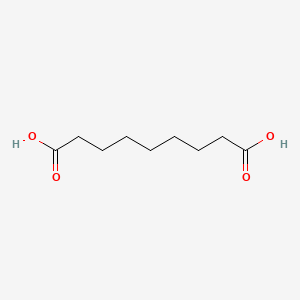
Regulations of Azelaic Acid

AZELAIC ACID

Identifiers

FormulaC9H16O4·CAS123-99-9·EC204-669-1

Functions

BufferingFragrance

Hazards

Irritant

How does the regulatory treatment of azelaic acid differ by market or product category?

Regulatory treatment of azelaic acid varies by market and product category. In the US, it is an FDA-approved prescription drug under the FD&C Act, an indirect food additive for adhesives, and an EPA Safer Chemical with active TSCA status. In the EU, it is a REACH-registered substance with ECHA C&L notifications and an EFSA legal basis. In Australia, it is listed on AICIS as an industrial chemical. In New Zealand, it lacks individual approval but may be used under a group standard. In cosmetics, it is an active ingredient with buffering and fragrance functions, with no specific restrictions listed.

Which United States federal regulations apply to Azelaic acid?

3 regulations

EPA TSCA Regulatory Flag

Nonanedioic acid is listed on the EPA's Chemical Data Reporting (CDR) system. Manufacturers and importers of Nonanedioic acid are required to report information about their production and use of this chemical to the EPA under the Toxic Substances Control Act (TSCA). (40 eCFR Part 711)

FDA Direct Food Additives

The Approved Drug Products with Therapeutic Equivalence Evaluations List identifies currently marketed prescription drug products, incl azelaic acid, approved on the basis of safety and effectiveness by FDA under sections 505 of the Federal Food, Drug, and Cosmetic Act.

FDA Food Contact Notifications

Azelaic acid is an indirect food additive for use only as a component of adhesives.

What EU regulatory requirements apply to Azelaic acid?

3 regulations

REACH Registered Substance

Status: Active Update: 27-04-2023 https://echa.europa.eu/registration-dossier/-/registered-dossier/13411

EFSA Legal Basis

Commission Regulation (EC) No 1565/2000 (Repealed by Com. Implementing Reg. (EU) No 872/2012)

Status Regulation (EC)

Commission Regulation (EC) No 1565/2000 (Repealed by Com. Implementing Reg. (EU) No 872/2012)

What regulations apply to Azelaic acid in Canada?

1 regulation

DSL / NDSL

Published
04 May 1994
Effective
04 May 1994

Regulatory records

EntryRegulationTypeStatus
123-99-9SOR/94-311DSLauthorized

Conditions

This substance is on the Domestic Substances List (DSL). This substance was added to the DSL as an “Existing Substance” given that it meets the criteria set out in CEPA for substances that were in commerce in Canada between 1984 and 1986.

Record details

SOR/94-311

professional use only
No

What regulations apply to Azelaic acid in China?

1 regulation

IECIC Listed Ingredients (List I)

Published
24 Jun 2025
Effective
24 Jun 2025

Regulatory records

EntryRegulationTypeStatus
5497Inventory of Existing Cosmetic Ingredients in China (IECIC) IList Iauthorized

Record details

Inventory of Existing Cosmetic Ingredients in China (IECIC) I

professional use only
No

What regulations apply to Azelaic acid in Australia?

1 regulation

The Australian Inventory of Industrial Chemicals

Chemical: Nonanedioic acid

What regulations apply to Azelaic acid in New Zealand?

1 regulation

New Zealand EPA Inventory of Chemical Status

Azelaic acid: Does not have an individual approval but may be used under an appropriate group standard

Which conditions, limits, and use contexts most affect a compliance assessment for azelaic acid?

Key conditions affecting compliance include GHS classifications for skin and eye irritation (H315, H319), which trigger labeling and safety data requirements. In the US, FDA approval as a prescription drug imposes efficacy and safety standards, while TSCA CDR reporting applies to manufacturers/importers. The EPA hazard characterization notes eye irritation but no skin sensitization or mutagenicity. In the EU, REACH registration is active, and C&L notifications are aggregated. No specific concentration limits or use restrictions were provided for cosmetics, so compliance hinges on general safety and labeling obligations.

What should be in place before a product containing azelaic acid is assessed for launch?

Before launch, ensure the product's regulatory pathway is clear: in the US, if therapeutic claims are made, it must comply with FDA drug approval; otherwise, it may be considered a cosmetic or industrial chemical. Verify TSCA CDR reporting obligations for nonanedioic acid. In the EU, confirm REACH registration status and GHS labeling per C&L notifications. For cosmetics, confirm INCI listing and function (buffering, fragrance) and check for any applicable group standards in New Zealand. Documentation should include safety data reflecting eye/skin irritation potential and evidence of compliance with local inventory listings.

Where does the available regulatory position stop short of supporting a decision on azelaic acid?

The available evidence does not specify concentration limits, use restrictions, or conditions for azelaic acid in cosmetics or other categories. While it is listed as an active cosmetic ingredient with buffering and fragrance functions, no annex restrictions or maximum concentrations are provided. In the US, FDA approval as a drug is noted, but details on allowed concentrations or formulation conditions are absent. For New Zealand, the lack of individual approval but potential use under a group standard introduces uncertainty. Thus, a compliance decision cannot be fully supported without additional regulatory details.

Which recent regulatory changes or effective dates are material for azelaic acid?

A material regulatory change is the EU REACH registration update dated 27-04-2023, indicating active status. Additionally, the EFSA legal basis references Commission Regulation (EC) No 1565/2000, which was repealed by Implementing Regulation (EU) No 872/2012, affecting flavoring use assessments. In the US, the FDA's Approved Drug Products list includes azelaic acid, but no recent changes are noted. For cosmetics, the ingredient remains active with no new restrictions. These updates are relevant for ensuring current compliance, but no other recent changes were identified.