Azelaic Acid Suppliers & Manufacturers
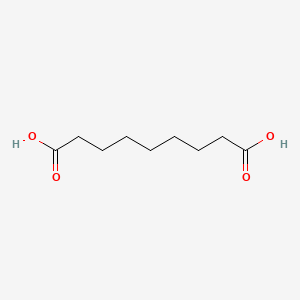
Identifiers
Functions
Hazards

What does available trade activity indicate for Azelaic acid?
Azelaic acid is classified under HS Code 2917.13. This falls under Chapter 29: Organic chemicals, specifically Heading 2917 (Acids; polycarboxylic acids, their anhydrides, halides, peroxides and peroxy-acids; their halogenated, sulphonated, nitrated or nitrosated derivatives), under subheading: Acids; acyclic polycarboxylic acids; azelaic acid, sebacic acid, their salts and esters.
* The data below is specific to the HS code, not the ingredient.
Suppliers
129
Across 17 countries
Shipments
2,256
from 2015 to 2026
Total weight
50.5M kg
4,885 TEU · standard 20-foot container units
Last shipment
8 months ago
Last updated at Feb 25, 2026
Growth
↑ 37%
Trade under 2917.13 has increased by 37% over the past 6 months
What does trade activity suggest about the azelaic acid supply chain?
Trade activity under HS 2917.13 indicates a substantial and active supply chain, with 129 suppliers, 2,256 shipments, and over 50 million kg moved between 2015 and 2026. The recent growth score of 40.3 suggests moderate expansion. However, this data is not ingredient-specific; it covers azelaic acid, sebacic acid, and their salts and esters. High-volume suppliers like Hengshui Jinghua Chemical and Casda Biomaterials show broad chemical distribution, not confirmed azelaic acid manufacturing. Therefore, while the volume signals a robust market for this chemical family, it does not isolate azelaic acid demand.
What does the HS or HTS classification include, and where are its limits for azelaic acid?
HS code 2917.13 covers azelaic acid, sebacic acid, and their salts and esters, falling under acyclic polycarboxylic acids in Chapter 29. This classification is broad, meaning trade activity under this code includes multiple related compounds. The data cannot distinguish azelaic acid from sebacic acid or other derivatives. For formulation research, this means shipment volumes and supplier counts overstate azelaic acid-specific activity. Regulatory or sourcing decisions should not rely on this data alone; additional product-level verification is required to confirm azelaic acid content.
Which suppliers are associated with Azelaic acid trade?
| Supplier | Shipments | Top customer | Growth | Last shipment | |
|---|---|---|---|---|---|
No suppliers found. | |||||
How concentrated or diversified does the supplier landscape appear for azelaic acid?
The supplier landscape appears moderately concentrated, with the top three suppliers—Hengshui Jinghua Chemical (CN), Casda Biomaterials (CN), and Jayant Agro Organics (IN)—accounting for over 1,000 shipments combined. This suggests a few large players dominate, but the presence of 129 total suppliers indicates a diversified base. Many entities are distributors or logistics providers, not confirmed manufacturers. For risk management, reliance on a few high-volume suppliers could pose supply continuity risks, but the broad supplier count offers alternatives. However, without ingredient-specific confirmation, supplier concentration for azelaic acid alone remains uncertain.
Which supply risks or dependencies around azelaic acid require further diligence?
Key supply risks include potential over-reliance on Chinese suppliers, who represent nearly half of all suppliers and the majority of volume. Additionally, the classification ambiguity means that some high-volume suppliers may primarily produce sebacic acid, not azelaic acid. Entities like Sebacic Oman and Sebacic India are likely sebacic acid-focused, yet their shipments are included in this data. Further diligence should verify each supplier's product portfolio and confirm azelaic acid manufacturing capability. Also, the presence of logistics intermediaries suggests that some shipment records may not reflect direct manufacturer relationships, complicating supply chain mapping.
Which sourcing geographies and trade lanes appear most relevant to azelaic acid?
China and India dominate the supply landscape, with China accounting for 59 suppliers and 30.9 million kg, and India 16 suppliers and 14.1 million kg. Oman, Belgium, France, and Italy also show notable activity, with Oman contributing 2.6 million kg. These geographies suggest primary sourcing lanes from Asia and Europe. The presence of European suppliers like Stearinerie Dubois Fils and Matrica indicates regional manufacturing or distribution. For procurement, China and India are key origins, but the data does not confirm azelaic acid-specific sourcing; it may include sebacic acid, especially from Oman-based entities.
Which countries drive Azelaic acid trade activity?
By shipment count
China
1,225 shipments
59 suppliers
30.9M kg total weight
India
691 shipments
16 suppliers
14.1M kg total weight
Oman
129 shipments
3 suppliers
2.6M kg total weight
Belgium
40 shipments
7 suppliers
627.6K kg total weight
France
36 shipments
2 suppliers
439.5K kg total weight
Italy
31 shipments
6 suppliers
426.8K kg total weight
Spain
27 shipments
5 suppliers
458K kg total weight
Netherlands
17 shipments
5 suppliers
258.2K kg total weight
United Kingdom
15 shipments
7 suppliers
134.8K kg total weight
South Korea
12 shipments
3 suppliers
190.2K kg total weight