Biotin
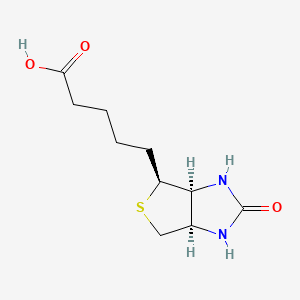
Identifiers
Functions
Where is biotin used, and what role does it play in each application?
Biotin functions as a coenzyme, cofactor, and prosthetic group in essential metabolic processes, and is used as a nutraceutical and dietary supplement. In cosmetics, it is an active ingredient for hair and skin conditioning, appearing in products like shampoos, conditioners, and skin creams. It is also used as a nutrient in food and animal feed, and as a therapeutic vitamin for treating deficiency. Patent filings show it is being explored in more specialized roles, such as a component in hair growth compositions, a vitamin in functional foods and beverages, and a payload in novel delivery systems.
Which product or formulation problem does biotin address?
Biotin addresses nutritional deficiency and supports metabolic functions related to fatty acid, glucose, and amino acid metabolism. In personal care, it is formulated to solve hair and nail aesthetic problems, such as hair breakage, thinning, and weakness, as well as to condition the skin. It is also used to address specific conditions like brittle hair syndrome. In food and beverage applications, it serves as a nutrient to fortify products and support overall health, with some patent filings suggesting a role in hair health support and fatigue recovery.
What supports the main commercial or clinical uses of biotin?
The main uses are supported by its established role as an essential nutrient and cofactor for five carboxylases, which are critical for metabolism. Its use in cosmetics is supported by its function as a conditioning agent, as evidenced by its inclusion in numerous product formulations. However, clinical evidence for its efficacy in improving hair quality or nail growth is limited, with no trials supporting these claims. Its use in treating biotinidase deficiency and other inborn errors of metabolism is well-documented. Patent filings show a claimed approach for using biotin in hair growth and skin conditioning compositions.
How is Biotin used clinically?
For nutritional supplementation, also for treating dietary shortage or imbalance
Which formulation trade-offs should researchers consider for biotin?
A key formulation trade-off is the need for delivery systems to improve stability and bioavailability, as biotin is a water-soluble vitamin. Patent filings describe liposomal encapsulation and nanoparticle carriers to enhance delivery for skin and hair applications. Another consideration is the potential for high doses to cause cellular stress, as suggested by research on pharmacological doses. In oral formulations, it is available in various dosages, and its absorption is efficient, but high doses may rely on passive diffusion. For cosmetics, it is used at low concentrations, and its function is primarily as a conditioning agent.
What are the physicochemical properties of Biotin?
| Property | Value | Category |
|---|---|---|
| Physical Description | Solid; [Merck Index] White powder; [Sigma-Aldrich MSDS], Solid | Appearance |
| Color/Form | Long, thin needles from water, Colorless, crystalline | Appearance |
| Solubility | 220 mg/L (at 25 °C), SOL IN ACETONE; DISSOLVES ABOUT 1 PART/100 IN METHANOL; SOL IN METHYL ETHYL KETONE, BENZENE, CYCLOHEXENE; INSOL IN SATURATED & PARAFFIN HYDROCARBONS /METHYL ESTER/, HIGHLY SOL IN WATER /SODIUM SALT/, Insol in naphtha, Slightly sol in chloroform and ether, Biotin is slightly soluble in water and alcohol (its salts are quite soluble), 0.22 mg/mL at 25 °C, >36.6 [ug/mL] (The mean of the results at pH 7.4) | Formulation Relevant Properties |
| LogP | 0.5, 0.39 | Formulation Relevant Properties |
| Melting Point | 232 dec °C, 232 °C (decomposes), CRYSTALS. MELTING POINT 166.5 °C; SPECIFIC OPTICAL ROTATION +82 DEG @ 15 °C/D (7.5 MG IN 1.28 G METHANOL) /METHYL ESTER/, Melting point = 231-233 °C for 99% pure (+)-biotin, 232 °C | Handling Relevant Properties |
| Vapor Pressure | 0.00000001 [mmHg] | Handling Relevant Properties |
| Stability/Shelf Life | PURE CMPD IS STABLE TO AIR & TEMP; MODERATELY ACID & NEUTRAL SOLN ARE STABLE SEVERAL MO; ALKALINE REASONABLY STABLE TO PH 9, STABILITY IN DRY PRODUCTS IS EXCELLENT; PHARMACEUTICAL LIQ PRODUCTS INDICATE LOSSES OF 0-8% @ PH 5-8 AFTER 1 YR @ ROOM TEMP, PHARMACEUTICAL LIQ LOSSES: 6-12% @ PH 4.1-4.3, 15-20 @ PH 3.3-3.6 AFTER 1 YR @ ROOM TEMP, UNSTABLE IN STRONG ACIDS | Handling Relevant Properties |
| Decomposition | Emits toxic fumes of NOx and SOx when heated to decomp | Handling Relevant Properties |
| Optical Rotation | Specific optical rotation: +92 deg at 22 °C (c=1 at 0.4% NaOH), The specific optical rotation is +91.1 deg at 18 °C (c=1, 0.1 N NaOH) for 99% pure (+)-biotin | Analytical Properties |
| Collision Cross Section | 160.1 Ų [M+K]+ [CCS Type: DT; Method: single field calibrated with ESI Low Concentration Tuning Mix (Agilent)], 149.7 Ų [M+H]+ [CCS Type: DT; Method: single field calibrated with ESI Low Concentration Tuning Mix (Agilent)], 155.4 Ų [M-H]- [CCS Type: DT; Method: single field calibrated with ESI Low Concentration Tuning Mix (Agilent)], 152.9 Ų [M+Na-2H]- [CCS Type: DT; Method: single field calibrated with ESI Low Concentration Tuning Mix (Agilent)], 159.9 Ų [M+Na]+ [CCS Type: DT; Method: single field calibrated with ESI Low Concentration Tuning Mix (Agilent)], 148 Ų [M+H]+ [CCS Type: TW; Method: calibrated with polyalanine and drug standards], 152.96 Ų [M-H]- [CCS Type: DT; Method: single field calibrated with Agilent tune mix (Agilent)], 150.4 Ų [M+H]+ [CCS Type: DT; Method: single field calibrated with Agilent tune mix (Agilent)], 147.28 Ų [M+H]+ [CCS Type: TW; Method: calibrated with polyalanine and drug standards], 161.66 Ų [M+K]+ [CCS Type: TW; Method: calibrated with polyalanine and drug standards], 141.72 Ų [M+H-H2O]+ [CCS Type: TW; Method: calibrated with polyalanine and drug standards], 154.88 Ų [M+Na]+ [CCS Type: TW; Method: calibrated with polyalanine and drug standards], 164.45 Ų [M+Na]+ [CCS Type: DT; Method: stepped-field], 154.16 Ų [M+H]+ [CCS Type: DT; Method: stepped-field], 159.72 Ų [M-H]- [CCS Type: DT; Method: stepped-field], 151.4 Ų [M+H]+, 152.9 Ų [M-2H+Na]-, 161.6 Ų [M+Na]+, 160.6 Ų [M+K]+, 157.1 Ų [M-H]- | Analytical Properties |
Which formulation benchmark best contextualizes biotin, and what differs?
A relevant formulation benchmark is the combination of biotin with other vitamins and minerals, such as panthenol, niacinamide, and zinc, which is common in hair and skin care products. This suggests biotin is often part of a broader nutrient complex rather than a standalone active. Patent filings also show combinations with silicon for hair, skin, and nail benefits, and with peptides for hair growth. This differs from its use as a single-entity supplement, where it is the primary active ingredient for addressing deficiency.