Castor Oil
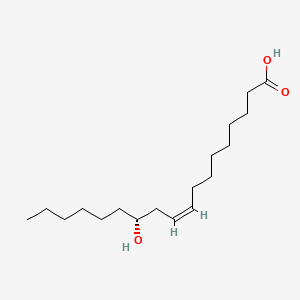
Identifiers
Functions
Hazards

Where is Castor oil used, and what role does it play in each application?
Castor oil functions across cosmetics, personal care, and industrial materials. In cosmetics, it is a fragrance, skin-conditioning, and perfuming agent, and appears in lip color, lip balm, lip gloss, foundation, and mascara. It also serves as a surfactant, emulsifier, and viscosity modifier. In industrial applications, it is a plasticizer, softener for elastomers, and a source of derivatives like sebacic acid and 12-hydroxystearic acid. Patents show its use as a bio-based polyol in polyurethanes, coatings, adhesives, and as a base oil in optical cable fillers.
Which product or formulation problem does Castor oil address?
Castor oil addresses formulation problems requiring emolliency, skin conditioning, and structure. In lip products, it provides a smooth, conditioning base. In hair care, it is used to improve moisturizing power and shine, and as a scalp protector before relaxer treatments. It also solves the need for plant-based alternatives to petroleum-derived ingredients, as seen in 'Un-Petroleum' products. In industrial settings, it acts as a plasticizer and softener, and as a polyol for bio-based polyurethanes, offering a renewable alternative to synthetic components.
What supports the main commercial or clinical uses of Castor oil?
Evidence for castor oil's uses comes from its listing in cosmetic ingredient databases with functions like skin conditioning and perfuming, and its presence in over 2,500 products across 251 brands, including lip color, lip balm, and foundation. It is also cited as a major component of castor oil, believed to be the active purgative agent, and is used in contraceptive jellies. Patents claim its use in hair growth, scalp protection, and as a bio-based polyol in coatings and adhesives, though these are not proof of commercial adoption.
Which formulation trade-offs should researchers consider for Castor oil?
Researchers should consider castor oil's multifunctional nature, which can act as an emollient, surfactant, and viscosity modifier, potentially simplifying formulations but also requiring careful balancing. Its use as a bio-based polyol in polyurethanes may offer environmental benefits but could require adjustments in reactivity or mechanical properties compared to synthetic polyols. In cosmetics, its comedogenicity or sensory profile may not suit all product types. Concentration data shows a median of 27.58% w/w in products, indicating it can be a significant formulation component.
What are the physicochemical properties of Castor oil?
| Property | Value | Category |
|---|---|---|
| Physical Description | Liquid, Colorless to yellow liquid; mp = 5.5 deg C; [Hawley] Deep yellow-brown liquid; [MSDSonline] | Appearance |
| Color/Form | Colorless to yellow viscous liquid | Appearance |
| Solubility | 3460 mg/L (at 25 °C), Soluble in alcohol, acetone, ether, chloroform, In water, 3.46X10+3 mg/L at 25 °C | Formulation Relevant Properties |
| Boiling Point | 245 °C, 245 °C at 10 mm Hg | Handling Relevant Properties |
| Melting Point | 5.5 °C | Handling Relevant Properties |
| Density | 0.940 at 27.4 °C/4 °C | Handling Relevant Properties |
| Vapor Pressure | Vapor pressure: 10 mm Hg at 226 °C | Handling Relevant Properties |
| Viscosity | 400 cSt at 25 °C | Analytical Properties |
| Refractive Index | Specific optical rotation: +6.67 deg at 22 °C/D; +7.15 deg at 26 °C/D (C = 5 in acetone); index of refraction: 1.4716 at 20 °C/D | Analytical Properties |
| Collision Cross Section | 189.7 Ų [M+Na]+ [CCS Type: DT; Buffer gas: N2; Ionization: ESI+; Dataset: TOXCAST; ], 178.6 Ų [M-H]- [CCS Type: DT; Buffer gas: N2; Ionization: ESI-; Dataset: TOXCAST; ] | Analytical Properties |
Which formulation benchmark best contextualizes Castor oil, and what differs?
A relevant benchmark is its use as a plant-based alternative to petroleum-derived ingredients like petrolatum, as seen in 'Un-Petroleum' products. Castor oil provides emolliency and skin conditioning, but unlike petrolatum, it is a natural oil with additional functions like surfactant and viscosity modification. This means it can replace petrolatum's occlusive properties while also contributing to texture and stability, but may require additional thickeners or waxes to achieve the same barrier effect.