Castor Oil Suppliers & Manufacturers
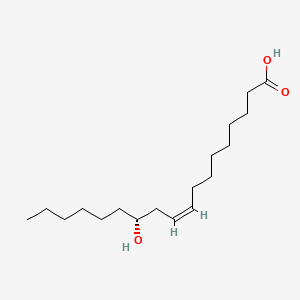
Identifiers
Functions
Hazards

What does available trade activity indicate for Castor oil?
Castor oil is classified under HS Code 1515.30. This falls under Chapter 15: Animal, vegetable or microbial fats and oils and their cleavage products; prepared edible fats; animal or vegetable waxes, specifically Heading 1515 (Fixed vegetable or microbial fats and oils n.e.c. in chapter 15 (including jojoba oil) and their fractions, whether or not refined, but not chemically modified), under subheading: Vegetable oils; castor oil and its fractions, whether or not refined, but not chemically modified.
* The data below is specific to the HS code, not the ingredient.
Suppliers
327
Across 27 countries
Shipments
5,889
from 2015 to 2026
Total weight
313.4M kg
11,440 TEU · standard 20-foot container units
Last shipment
8 months ago
Last updated at Feb 25, 2026
Growth
↑ 42%
Trade under 1515.30 has increased by 42% over the past 6 months
What does trade activity suggest about the Castor oil supply chain?
Trade activity under HS 1515.30 indicates a large, active supply chain with 327 suppliers, 5,889 shipments, and roughly 313,000 metric tons of associated material moving between 2015 and early 2026. India dominates this flow, accounting for about 97% of the recorded weight and 93% of shipments. The growth score of 45.9 over the recent 180-day window suggests moderate momentum, with several top suppliers showing recent shipments into 2026. However, this evidence reflects broad trade under the HS code, not confirmed castor oil-specific volumes, so it should be treated as directional supply-chain context rather than precise ingredient-level data.
What does the HS or HTS classification include, and where are its limits for Castor oil?
HS code 1515.30 covers castor oil and its fractions, whether or not refined, but not chemically modified, within the broader chapter on fixed vegetable fats and oils. The classification scope is therefore limited to unmodified castor oil products; chemically modified derivatives fall outside this code. Because the code also covers other fixed vegetable oils not elsewhere classified, supplier and shipment activity linked to this code cannot be assumed to be exclusively castor oil. This boundary materially affects interpretation: trade volumes and supplier counts likely overstate castor-specific activity, and any formulation or sourcing decision should verify product-level detail beyond the HS classification.
Which suppliers are associated with Castor oil trade?
| Supplier | Shipments | Top customer | Growth | Last shipment | |
|---|---|---|---|---|---|
No suppliers found. | |||||
How concentrated or diversified does the supplier landscape appear for Castor oil?
The supplier landscape appears concentrated at the top but fragmented overall. The ten largest Indian suppliers account for roughly 3,000 of the 5,889 total shipments, with entities like Adani Wilmar, Ihsedu Agrochem, Gokul Overseas, and Jayant Agro Organics showing hundreds of shipments each. However, the full list includes 327 suppliers, many with only 1-4 shipments, and a substantial portion are logistics providers or freight forwarders rather than confirmed ingredient manufacturers. This suggests a two-tier structure: a core of high-volume Indian oleochemical producers and traders, surrounded by a long tail of intermediaries and smaller distributors. The presence of logistics firms inflates supplier counts and complicates direct manufacturer identification.
Which supply risks or dependencies around Castor oil require further diligence?
The primary supply risk is geographic concentration in India, which accounts for over 97% of associated shipment weight, creating dependency on a single country's agricultural output, export policies, and port infrastructure. A secondary risk is supplier identification: many high-volume entities are logistics firms or generic traders, so verifying actual manufacturing capability is essential before relying on them as sources. Brazil offers an alternative but shows limited recent activity, with one major supplier's last shipment in 2021. Additionally, the HS code's broad scope means volumes may include non-castor oils, so buyers should confirm product specifications and origin at the transaction level. These factors warrant targeted due diligence on Indian supplier reliability and alternative sourcing options.
Which sourcing geographies and trade lanes appear most relevant to Castor oil?
India is the dominant sourcing geography, with 209 suppliers and over 305 million kg of associated shipments, representing the vast majority of trade under this HS code. Secondary geographies include Brazil (6 suppliers, 3.1 million kg), the Netherlands (4 suppliers, 1.3 million kg), Germany (7 suppliers, 0.75 million kg), and China (27 suppliers, 0.77 million kg). Haiti appears with 20 suppliers but modest volume, likely reflecting distribution or re-export activity. The trade lanes are heavily India-centric, with notable customer names like Acme Hardesty and Vertellus suggesting U.S. and industrial buyers. This concentration implies that supply continuity depends significantly on Indian export infrastructure and logistics.
Which countries drive Castor oil trade activity?
By shipment count
India
5,485 shipments
209 suppliers
305.4M kg total weight
Germany
94 shipments
7 suppliers
748.1K kg total weight
Brazil
75 shipments
6 suppliers
3.1M kg total weight
Haiti
59 shipments
20 suppliers
842.4K kg total weight
China
45 shipments
27 suppliers
768.8K kg total weight
Belgium
32 shipments
3 suppliers
354.2K kg total weight
Netherlands
14 shipments
4 suppliers
1.3M kg total weight
Jamaica
13 shipments
6 suppliers
65.2K kg total weight
South Korea
12 shipments
5 suppliers
151.4K kg total weight
Spain
8 shipments
3 suppliers
205.1K kg total weight