Products & Brands Using Castor Oil
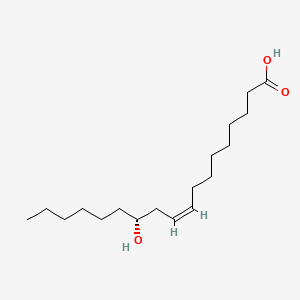
Identifiers
Functions
Hazards

How broadly is Castor oil used across tracked brands and products?
Brands
251
Across 65 product types
Products
2,519
Includes function: Anti-caking agent
Product Types
65
Distinct formulation categories
Functions
26
Known functional-use labels
What does product breadth indicate about the commercial maturity of Castor oil?
Castor oil is a mature commercial ingredient, evidenced by its presence in over 2,500 products across 251 brands, with usage spanning from 1985 to 2020. It is a staple in lip care and has expanded into diverse categories including hair care, baby care, and industrial applications. Patent activity shows continued innovation in bio-based polymers and specialty cosmetics. This long history and broad adoption indicate a stable, well-established market with ongoing development, suggesting low risk for formulators but also a need for differentiation to stand out.
How is Castor oil positioned across the market?
Castor oil is positioned as a versatile, natural ingredient across mass-market and premium brands. It appears in drugstore lines (Cover Girl, Burt's Bees) and high-end products (La Mer, Rituel de Fille), often highlighted in 'plant-based', 'un-petroleum', and 'clean beauty' claims. Patent filings show its use in bio-based and sustainable industrial materials, reinforcing an eco-friendly image. This dual positioning in both personal care and industrial applications suggests a strong reputation for functionality and natural origin, which can be leveraged in marketing.
Top companies using Castor oil in their products
Ranked by number of tracked products that list castor oil, out of 2,519 total.
Where is Castor oil covered by tracked regulatory lists?
Jurisdictions
Markets where this ingredient appears on tracked ingredient regulation lists.
EU
2525 tracked lists
US Federal
2121 tracked lists
California
1414 tracked lists
Japan
44 tracked lists
Other
66 tracked lists
Regulatory Bodies
Authorities cited most often across the tracked ingredient lists.
Danish Environmental Protection Agency
State of California
MN Department of Agriculture Pesticide Sales Database
European Food Safety Authority
FDA
Which product categories, formats, and functions use Castor oil?
Castor oil is used across a broad range of personal care and industrial categories, with a strong concentration in lip care (lip color, balm, gloss), followed by color cosmetics (foundation, blush, eyeliner) and hair care (styling, shampoo, conditioner). It also appears in baby care (diaper cream, lotion), body care (lotions, oils, scrubs), and even household and automotive products (lubricants, detergents, adhesives). Its functions are equally diverse, including emollient, viscosity modifier, film former, plasticizer, and surfactant. This wide functional and category spread indicates that castor oil is a versatile ingredient, not limited to a single application.
Which product categories contain Castor oil?
Tracked product categories ranked by distinct products containing this ingredient.
Which formulation and co-ingredient patterns recur around Castor oil?
Recurring formulation patterns show castor oil paired with waxes (candelilla, beeswax), other vegetable oils (sunflower, coconut, shea butter), and pigments (titanium dioxide, mica, iron oxides) in lip and color cosmetics. In hair care, it is often combined with conditioning agents and other plant oils. Patent evidence highlights its use as a bio-based polyol with isocyanates in polyurethane systems, and as a vegetable oil in anhydrous hair treatments. These patterns suggest castor oil serves as a structural and sensory modifier, often in 'natural' or 'bio-based' positioning.
Which product spaces around Castor oil appear crowded or differentiated?
Lip care is the most crowded space for castor oil, with over 1,300 products, making it difficult to differentiate. In contrast, patent evidence points to emerging opportunities in hair care, particularly anhydrous treatments and silicone-replacement formulas, as well as in specialized applications like scalp protection and eye care. Industrial uses as a bio-based polyol in coatings and adhesives also show active innovation. These areas offer more room for evidence-backed differentiation compared to the saturated lip category.