Creatine Monohydrate
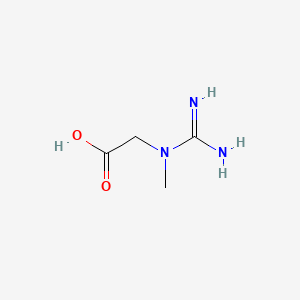
Identifiers
Functions
Hazards

Where is Creatine monohydrate used, and what role does it play in each application?
Creatine monohydrate is used across sports nutrition, functional foods, and cosmetics. In sports nutrition and functional foods, it serves as an active ingredient to support energy generation during anaerobic exercise, muscle recovery, and muscle strength, often formulated in powders, tablets, soft candies, and functional rice. In cosmetics, it functions as a skin conditioning agent. It is also positioned as a nutraceutical and geroprotector, with potential neuroprotective and cardioprotective roles. Patent filings show combinations with B-vitamins, wolfberry extract, and bitter melon extract to target sarcopenia and blood sugar regulation, indicating expanding application beyond traditional performance supplements.
Which product or formulation problem does Creatine monohydrate address?
Creatine monohydrate addresses formulation challenges related to solubility, stability, and delivery format. Patents describe ultrafine grinding to improve solubility and absorption efficiency, and encapsulation with lecithin and polysaccharides to create shelf-stable dispersions. It also solves the problem of incorporating a performance ingredient into diverse formats like soft candy and tablets, where particle size and moisture control are critical. In nutritional compositions, buffer systems are used to maintain stability. These approaches aim to overcome creatine's inherent physicochemical limitations, enabling broader product development.
What supports the main commercial or clinical uses of Creatine monohydrate?
The main uses are supported by pharmacological evidence and patent claims. Creatine is described as an endogenous amino acid derivative that forms phosphocreatine, which regenerates ATP for short-term energy needs during anaerobic exercise. This mechanism underpins its use for muscle wasting, athletic performance, and neuroprotection. Patent filings claim improvements in muscle strength (1-RM), creatine phosphate levels, and sarcopenia, often in combination with other ingredients. However, these are patent claims, not clinical trial results. Regulatory listings show active status in industrial chemical inventories, but no approved health claims are cited.
How is Creatine monohydrate used clinically?
For nutritional supplementation, also for treating dietary shortage or imbalance
Which formulation trade-offs should researchers consider for Creatine monohydrate?
Key formulation trade-offs include managing hygroscopicity, particle size, and stability. Ultrafine grinding improves solubility but increases hygroscopic agglomeration, requiring controlled humidity and temperature during processing. Encapsulation with lecithin and polysaccharides can improve shelf stability but reduces creatine concentration (23.7-40.2% in one patent). Acidic coatings (malic/citric acid) may enhance solubility but risk forming creatine salts, which must be limited. In soft candy, creatine is added at 20-30%, requiring careful control of boiling temperature and sugar content to avoid degradation. These trade-offs impact ingredient load, cost, and final product performance.
What are the physicochemical properties of Creatine monohydrate?
| Property | Value | Category |
|---|---|---|
| Physical Description | Solid; [Merck Index] White powder; [Alfa Aesar MSDS], Solid | Appearance |
| Solubility | 13300 mg/L (at 18 °C), Slightly soluble in water, insoluble in ether, Slightly soluble in ether and ethanol, In water, 1.33X10+4 mg/L at 18 °C, 13.3 mg/mL at 18 °C | Formulation Relevant Properties |
| LogP | -0.2 | Formulation Relevant Properties |
| pH | Neutral reaction to litmus | Formulation Relevant Properties |
| Dissociation Constants | pKa1 = 3.8 (carboxylic acid); pKa2 = 12.7 (amine), pKb = 11.02 at 20 °C | Formulation Relevant Properties |
| Melting Point | 255 dec °C, Decomposes at 303 °C, 303 °C | Handling Relevant Properties |
| Density | 1.33 at 25 °C | Handling Relevant Properties |
| Vapor Pressure | 0.00079 [mmHg] | Handling Relevant Properties |
| Collision Cross Section | 126.0 Ų [M+H]+ [CCS Type: DT; Buffer gas: N2; Ionization: ESI+; Dataset: TOXCAST; ], 126 Ų [M+H]+ [CCS Type: DT; Method: single field calibrated with ESI Low Concentration Tuning Mix (Agilent)], 125.9 Ų [M+H]+ [CCS Type: DT; Method: single field calibrated with Agilent tune mix (Agilent)], 126 Ų [M+H]+ | Analytical Properties |
| Other Experimental Properties | Crystals heat of fusion = -537.2, Molar heat capacity = 140.9 J/mole-K, Prisms from water at 100 °C /monohydrate/, 1 g is soluble in 75 mL of water /monohydrate/ | Analytical Properties |
Which formulation benchmark best contextualizes Creatine monohydrate, and what differs?
A relevant formulation benchmark is the encapsulated creatine monohydrate colloidal dispersion, which uses lecithin, polysaccharides, and spray-drying to achieve shelf stability. This differs from ultrafine grinding approaches that focus on solubility and absorption. The encapsulated form has a lower creatine load (23.7-40.2%) compared to ultrafine composite particles (84-92% creatine), indicating a trade-off between stability and potency. This benchmark is useful for researchers targeting ready-to-mix or shelf-stable products, whereas ultrafine grinding may suit high-dose formats like tablets or candies.