Creatine Monohydrate Suppliers & Manufacturers
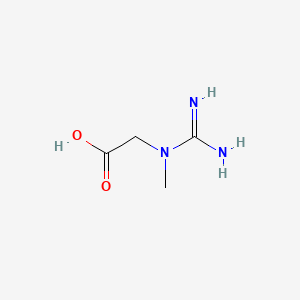
Identifiers
Functions
Hazards

What does available trade activity indicate for Creatine monohydrate?
Creatine monohydrate is classified under HS Code 2925.29. This falls under Chapter 29: Organic chemicals, specifically Heading 2925 (Carboxyimide-function compounds (including saccharin and its salts) and imine-function compounds), under subheading: Imines and their derivatives; salts thereof; other than chlordimeform (ISO).
* The data below is specific to the HS code, not the ingredient.
Suppliers
273
Across 28 countries
Shipments
4,488
from 2015 to 2026
Total weight
82.9M kg
8,442 TEU · standard 20-foot container units
Last shipment
8 months ago
Last updated at Feb 25, 2026
Growth
↑ 40%
Trade under 2925.29 has increased by 40% over the past 6 months
What does trade activity suggest about the Creatine monohydrate supply chain?
Trade activity under HS code 2925.29 shows a large, active supply chain with 273 suppliers, 4,488 shipments, and roughly 82,947 metric tons moved between 2015 and early 2026. The recent growth score of 44.3 indicates moderate momentum in the last 180 days. However, this activity is not confirmed as ingredient-specific; the code covers broad organic nitrogen compounds, and many listed entities are logistics providers or chemical traders rather than verified creatine monohydrate manufacturers. For formulation planning, this suggests a robust but unverified sourcing environment where supplier qualification must confirm actual creatine monohydrate production capability.
What does the HS or HTS classification include, and where are its limits for Creatine monohydrate?
The classification scope is HS code 2925.29, described as "Other" under heading 2925, which covers carboxyimide-function compounds and imine-function compounds, specifically imines and their derivatives and salts other than chlordimeform. This is a broad organic nitrogen category that includes many substances beyond creatine monohydrate, such as pharmaceutical intermediates and diagnostic chemicals. The data explicitly notes that ingredient-specific shipments are not confirmed. For regulatory and sourcing decisions, this means the trade evidence provides supply-chain context but cannot be used to quantify creatine monohydrate volumes, supplier market share, or pricing trends without additional product-level verification.
Which suppliers are associated with Creatine monohydrate trade?
| Supplier | Shipments | Top customer | Growth | Last shipment | |
|---|---|---|---|---|---|
No suppliers found. | |||||
How concentrated or diversified does the supplier landscape appear for Creatine monohydrate?
The supplier landscape appears moderately concentrated at the top but broadly diversified overall. The top five suppliers by shipment count—Farmhispania (602), Alzchem Trostberg (417), Ajinomoto (352), Cheil Jedang Indonesia (260), and Bajaj Healthcare (111)—account for roughly 1,742 of 4,488 total shipments, or about 39 percent. The remaining 268 suppliers contribute the balance, indicating a long tail of smaller players. This structure suggests a mix of established large producers and numerous smaller or trading entities. For procurement strategy, this implies potential supply security through multiple sources, but the presence of logistics providers and traders in the list means actual manufacturing concentration could be higher than shipment counts suggest.
Which supply risks or dependencies around Creatine monohydrate require further diligence?
Key diligence risks include supplier verification, classification ambiguity, and geographic dependency. The data shows many entities are logistics providers or chemical traders rather than confirmed creatine monohydrate manufacturers, so buyers must verify production capability directly. China has 99 suppliers and 17,755 metric tons, creating potential dependency on Chinese export stability, though Germany and Spain also show significant volume. Additionally, the broad HS code means some suppliers may be shipping unrelated organic nitrogen compounds, requiring product-level confirmation. Recent shipment activity through early 2026 suggests continuity, but the growth score of 44.3 indicates moderate rather than strong expansion, warranting monitoring of supplier-specific trends and any regulatory changes affecting organic nitrogen compound trade.
Which sourcing geographies and trade lanes appear most relevant to Creatine monohydrate?
Germany, China, Spain, Japan, Indonesia, and India emerge as the most active sourcing geographies by shipment volume and weight. Germany leads with 1,419 shipments and 20,377 metric tons, followed by China with 761 shipments and 17,755 metric tons, and Spain with 762 shipments and 13,437 metric tons. Japan and Indonesia show high weight-to-shipment ratios, suggesting bulk movements. Key named suppliers include Alzchem Trostberg (Germany), Farmhispania (Spain), Ajinomoto (Japan), Cheil Jedang Indonesia, and multiple Chinese entities. These lanes indicate a trans-Pacific and trans-Atlantic flow pattern, but the data does not confirm destination countries or whether these shipments are creatine monohydrate-specific.
Which countries drive Creatine monohydrate trade activity?
By shipment count
Germany
1,419 shipments
31 suppliers
20.4M kg total weight
Spain
762 shipments
17 suppliers
13.4M kg total weight
China
761 shipments
99 suppliers
17.8M kg total weight
Japan
398 shipments
9 suppliers
9.7M kg total weight
India
352 shipments
35 suppliers
5.9M kg total weight
Indonesia
335 shipments
5 suppliers
9.5M kg total weight
Belgium
148 shipments
16 suppliers
1.6M kg total weight
Mexico
92 shipments
13 suppliers
1.1M kg total weight
South Korea
66 shipments
6 suppliers
994.1K kg total weight
Netherlands
34 shipments
6 suppliers
724.9K kg total weight