Creatine Monohydrate Patent Landscape
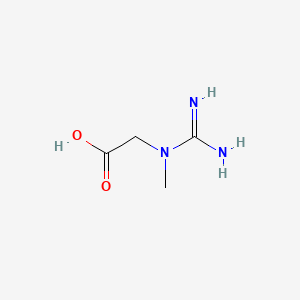
Identifiers
Functions
Hazards

Which organizations and claims shape current development around Creatine monohydrate?
Key organizations include Glanbia Dairy Nutrition (encapsulation for shelf stability), Gachon University (functional rice for sarcopenia and blood sugar), and Chinese firms like Jiabei Health Tech (soft candy) and Ningxia Hengkang Tech (wolfberry combinations). Claims focus on improved solubility, absorption, stability, and synergistic effects on muscle strength, creatine phosphate levels, and blood glucose regulation. These patents represent a mix of academic and industrial efforts to expand creatine's application scope.
How is Creatine monohydrate innovation changing in Food & Beverage?
Monthly patent filings by domain
Which technical problems do recent patents address with Creatine monohydrate?
Recent patents primarily address creatine monohydrate's poor solubility, hygroscopicity, and stability. One approach uses ultrafine milling and organic acid coatings to improve dissolution and absorption, while another encapsulates creatine in a lecithin-polysaccharide matrix for shelf stability. Other patents tackle formulation challenges in novel matrices, such as preventing degradation in soft candies or maintaining efficacy in functional rice. These technical fixes aim to expand creatine's use beyond traditional powders into more consumer-friendly formats.
How do recent patents change the role or application of Creatine monohydrate?
Creatine monohydrate is shifting from a standalone sports powder to a versatile active ingredient in everyday foods and combination products. Patents show it as a core component in functional rice for sarcopenia and blood sugar regulation, in soft candies for energy and recovery, and in B-vitamin tablets for athletic performance. It is also paired with botanical extracts like wolfberry to enhance muscle strength and creatine phosphate levels. This broadens creatine's role from performance enhancer to a multifunctional health ingredient.
How is Creatine monohydrate used in Food & Beverage patents?
Which Food & Beverage product categories feature Creatine monohydrate in recent patents?
Which product categories and formulation strategies emerge in recent work on Creatine monohydrate?
Emerging product categories include functional rice, soft candies, tablets, and encapsulated dispersions, moving beyond traditional powders and capsules. Formulation strategies focus on particle size reduction (e.g., ultrafine grinding to D50 3–8 μm), coating with organic acids or lecithin-polysaccharide matrices to improve solubility and stability, and combining with complementary ingredients like B vitamins, bitter melon extract, and wolfberry extract. These strategies aim to mask taste, enhance bioavailability, and create stable, convenient formats.
Where is the evidence-backed white space for further development of Creatine monohydrate?
Evidence suggests white space in combining creatine with botanical extracts for metabolic health, as seen with wolfberry and bitter melon. There is also room for developing stable, low-sugar confectionery formats and exploring encapsulation technologies that mask taste while maintaining efficacy. Additionally, targeting sarcopenia and blood sugar regulation in staple foods like rice represents an underexplored area. These directions are supported by recent patent activity but lack commercial validation.