“Creatine might be the most misunderstood supplement... It doesn't matter how 'quickly' it is absorbed... We absorb nearly 100% of the creatine we ingest. Creatine monohydrate. Making sure it's 3rd party”
Creatine Monohydrate Consumer Sentiment
CtrlK
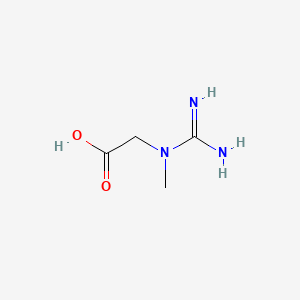
Identifiers
FormulaC4H9N3O2·CAS57-00-1·EC200-306-6
Functions
SKIN Conditioning
Hazards

How do consumers feel about products containing Creatine monohydrate?
Positive
Mixed
Negative
Consumers view Creatine Monohydrate as a safe, effective, and affordable staple for improving strength, muscle recovery, and cognitive function, with strong preference for micronized powder and gummy formats.
Which consumer needs, benefits, and objections are associated with Creatine monohydrate?
Consumers primarily seek creatine monohydrate for muscle strength, explosive power, and faster recovery, with cognitive and brain health benefits occasionally noted. The sentiment is overwhelmingly positive, with no negative labeled feedback. Objections are moderate to serious: bloating and digestive discomfort, the risk of counterfeit or low-quality products, and a minor chalky texture or taste when mixed with small amounts of water. Purity, third-party testing, and trusted brands are emphasized to mitigate the counterfeit risk. The evidence base is limited to 20 labeled sources, so the prevalence of these objections outside this sample is not established.
What do consumers discuss about Creatine monohydrate?
Effectiveness and Benefits
Users consistently report that creatine monohydrate improves strength, muscle mass, endurance, and recovery, with some noting cognitive benefits like focus and brain function.
instagram
lemon8-app
tiktok
pinterest
Form Factor Preferences (Powder vs Gummies)
While traditional unflavored micronized powder is praised for purity and cost, gummies are increasingly popular for convenience, taste, and ease of use, especially among those who dislike mixing powders.
lemon8-app
tiktok
Quality and Purity Concerns
Consumers emphasize the importance of third-party testing, Creapure certification, and avoiding fillers, with many trusting specific brands or lab-tested products to ensure safety and efficacy.
instagram
lemon8-app
tiktok
youtube
Dosage and Usage Tips
Users share practical advice on taking 3-5g daily, skipping loading phases to avoid stomach upset, staying hydrated, and mixing with various beverages or foods like yogurt.
instagram
lemon8-app
Cost-Effectiveness
Creatine monohydrate is frequently described as budget-friendly and offering high value compared to other supplements, with users seeking deals at retailers like Walmart or Costco.
lemon8-app
tiktok
How are current products and patent claims responding to consumer concerns about Creatine monohydrate?
Current products and patent claims are responding to consumer concerns by focusing on format innovation, purity assurance, and improved solubility. Commercial products highlight micronized forms for better absorption and third-party testing to counter authenticity fears. Patent claims address specific objections: one claims a method for ultrafine creatine with citric and malic acids to improve solubility and absorption, another claims encapsulation for shelf stability, and a third claims a soft candy format for convenience and palatability. These patents are evidence of claimed approaches, not market adoption, and do not confirm any product is commercially available.
What concerns do consumers raise about Creatine monohydrate?
Potential for bloating or gastrointestinal discomfort, particularly with non-micronized forms or during loading phases.
lemon8-app
tiktok
Confusion over different creatine forms (HCL, ethyl ester) versus standard monohydrate, leading to questions about necessity of expensive alternatives.
tiktok
Difficulty in mixing unflavored powder without clumping or gritty texture, though micronized versions largely solve this.
lemon8-app
tiktok
Where is the gap between consumer expectations and the current Creatine monohydrate offering?
The main gap is between consumer desire for convenient, palatable formats and the traditional unflavored powder experience. While consumers praise gummies and flavored options, the only direct texture complaint is about chalkiness in unflavored powder. Patents claim to address this via soft candies and ultrafine particles, but no commercial product adoption is evidenced. Additionally, consumers value cognitive benefits, yet no patent or product claim in the evidence addresses this directly, leaving a potential unmet expectation for brain-health positioning.
Which formulation approaches are being used to address those concerns around Creatine monohydrate?
Formulation approaches are targeting solubility, stability, and delivery format. One patent claims ultrafine milling to a D50 of 3-8 μm with a citric and malic acid coating to enhance solubility and absorption. Another claims encapsulation with lecithin and polysaccharides for a shelf-stable colloidal dispersion. A third claims a soft candy with ultrafine creatine (D90 of 20 μm) and co-ingredients like guarana for energy. These approaches aim to address digestive discomfort and chalky texture by altering particle size and delivery, but none are confirmed as adopted in commercial products.
What consumer-led opportunity or risk should researchers consider for Creatine monohydrate?
A distinct opportunity exists in positioning creatine monohydrate for cognitive health, as consumers and a brand note preclinical evidence for cognition and Alzheimer's biomarkers. No patent claim in the evidence addresses this benefit, suggesting a white space for formulation or marketing. The risk is the counterfeit concern, which is serious in some markets; brands that emphasize verifiable purity and third-party testing could build trust. However, the cognitive evidence is preclinical, so any consumer-facing claim would require careful regulatory review.