Lavender Extract Suppliers & Manufacturers
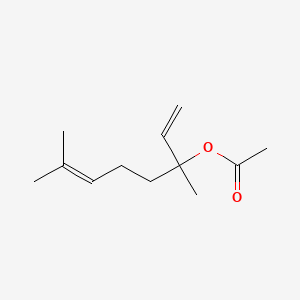
Identifiers
Functions
Hazards

What does available trade activity indicate for Lavender extract?
Lavender extract is classified under HS Code 2915.39. This falls under Chapter 29: Organic chemicals, specifically Heading 2915 (Acids; saturated acyclic monocarboxylic acids and their anhydrides, halides, peroxides and peroxyacids; their halogenated, sulphonated, nitrated or nitrosated derivatives), under subheading: Acids; saturated acyclic monocarboxylic acids; esters of acetic acid n.e.c. in item no. 2915.3.
* The data below is specific to the HS code, not the ingredient.
Suppliers
503
Across 39 countries
Shipments
8,267
from 2015 to 2026
Total weight
156.5M kg
11,511 TEU · standard 20-foot container units
Last shipment
8 months ago
Last updated at Feb 25, 2026
Growth
↑ 43%
Trade under 2915.39 has increased by 43% over the past 6 months
What does trade activity suggest about the lavender extract supply chain?
Trade activity under HS code 2915.39 shows a large, active supply chain with 503 suppliers, 8,267 shipments, and 156.5 million kg moved since 2015, but this is not ingredient-specific to lavender extract. The volume and recent growth score of 48 suggest steady demand for chemicals in this classification, which includes esters of acetic acid and other saturated acyclic monocarboxylic acid derivatives. For lavender extract, this signal is indirect: it indicates a robust market for related aroma chemicals, but the data cannot confirm that any specific shipment contains lavender extract. Business planning should treat this as a proxy for supply chain capacity, not as direct evidence of lavender extract availability.
What does the HS or HTS classification include, and where are its limits for lavender extract?
The HS code 2915.39 and HTS code 2915.39.40.00 cover 'other' esters of acetic acid and saturated acyclic monocarboxylic acids, including their anhydrides, halides, peroxides, and derivatives. This classification is broad and includes many industrial chemicals, synthetic aroma compounds, and other organic chemicals unrelated to lavender extract. The match to lavender extract is based on a mapping, not on shipment-level ingredient verification. Therefore, while the classification may capture some lavender extract shipments, it also includes a wide range of other products. Users should not assume that all activity under this code is lavender extract; the data is a proxy for a chemical category, not a specific ingredient.
Which suppliers are associated with Lavender extract trade?
| Supplier | Shipments | Top customer | Growth | Last shipment | |
|---|---|---|---|---|---|
No suppliers found. | |||||
How concentrated or diversified does the supplier landscape appear for lavender extract?
The supplier landscape appears moderately concentrated, with a few large suppliers handling a disproportionate share of shipments. Eternis Fine Chemicals (India) alone accounts for 1,322 shipments, followed by Privi Speciality Chemicals (397) and Best Value Chem (287), all in India. These top suppliers serve major fragrance customers like Givaudan and IFF, indicating a consolidated upstream for aroma chemicals. However, the total of 503 suppliers across 39 countries shows diversification at the fringe, with many smaller players. This suggests that while there are dominant suppliers, the market is not a monopoly, offering multiple sourcing options. For lavender extract, this implies potential supply security but also the need to verify which suppliers actually handle the ingredient.
Which supply risks or dependencies around lavender extract require further diligence?
Key supply risks include over-reliance on a few large suppliers, particularly in India, and the lack of ingredient-specific verification. The top three suppliers (Eternis, Privi, Best Value Chem) account for a significant share of shipments, creating potential concentration risk if any face disruptions. Additionally, the HS code includes many non-lavender chemicals, so there is a risk of misidentifying suppliers as lavender extract sources. Further diligence should verify whether shortlisted suppliers actually produce or trade lavender extract, assess their compliance with fragrance industry standards, and evaluate geopolitical or logistical risks in India and China, which are the primary sourcing regions.
Which sourcing geographies and trade lanes appear most relevant to lavender extract?
India and China dominate the supplier landscape, with 121 suppliers each, but India leads in shipment volume (4,586 shipments, 88.6 million kg) and weight, indicating a major sourcing hub. Mexico, the UK, Germany, Belgium, Spain, and France also show significant activity, with Mexico having 36 suppliers and 809 shipments. The presence of fragrance houses like Givaudan and Firmenich as top customers for suppliers in India, France, Mexico, and China suggests trade lanes from these countries to global fragrance manufacturing centers. However, since the HS code is broad, these lanes may serve multiple chemical categories, not just lavender extract. For sourcing strategy, India and China are primary, with Europe as a secondary but notable region.
Which countries drive Lavender extract trade activity?
By shipment count
India
4,586 shipments
121 suppliers
88.6M kg total weight
China
912 shipments
121 suppliers
18.5M kg total weight
Mexico
809 shipments
36 suppliers
13.8M kg total weight
United Kingdom
329 shipments
24 suppliers
3.8M kg total weight
Germany
315 shipments
33 suppliers
3.3M kg total weight
Belgium
210 shipments
23 suppliers
2.7M kg total weight
Spain
204 shipments
27 suppliers
2.8M kg total weight
Japan
167 shipments
8 suppliers
1.4M kg total weight
Italy
166 shipments
2 suppliers
3.1M kg total weight
France
116 shipments
17 suppliers
2.5M kg total weight