Polyvinyl Alcohol
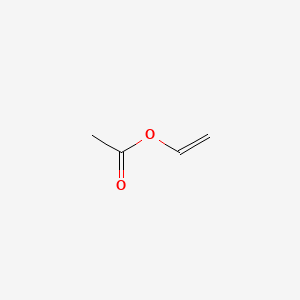
Identifiers
Functions
Hazards


Where is polyvinyl alcohol used, and what role does it play in each application?
Polyvinyl alcohol functions primarily as a film former and viscosity controller in cosmetics, and as a water-soluble film, binder, and barrier polymer across packaging, adhesives, and pharmaceuticals. In cosmetics, it creates peel-off masks, mascara, and lip liners. In packaging, it forms water-soluble films for unit-dose detergents and barrier coatings for oxygen and grease resistance. It also acts as a binder in adhesives, a matrix in hydrogels for wound dressings, and a stabilizer in dispersions. Its role is defined by its ability to form films, control viscosity, and provide water solubility or barrier properties depending on the formulation.
Which product or formulation problem does polyvinyl alcohol address?
Polyvinyl alcohol solves formulation problems requiring film formation, water solubility, and barrier performance. In cosmetics, it enables peelable films for masks and liners, and provides water resistance in mascara. In packaging, it creates water-soluble films that dissolve in water, enabling unit-dose delivery of detergents and reducing packaging waste. It also provides oxygen and grease barriers for food packaging, extending shelf life. In pharmaceuticals, it acts as a lubricant in eye drops to relieve dryness. Its water solubility is a key advantage, allowing for controlled dissolution or removal.
What supports the main commercial or clinical uses of polyvinyl alcohol?
Evidence for polyvinyl alcohol's main uses comes from its regulatory status, market presence, and patent filings. It is listed as an active ingredient in cosmetics with functions of film forming and viscosity controlling. Market data shows its use in over 700 products, including mascara, laundry detergents, and face masks, indicating broad commercial adoption. Patent filings describe its use in water-soluble films for unit-dose packaging, barrier coatings, and hydrogels for medical applications. These sources collectively support its roles as a film former, water-soluble polymer, and barrier material.
Which formulation trade-offs should researchers consider for polyvinyl alcohol?
Researchers must balance polyvinyl alcohol's water solubility with mechanical strength and barrier properties. In water-soluble films, higher solubility may reduce strength, requiring plasticizers or crosslinking agents. For barrier applications, crosslinking with agents like boric acid or glyoxal improves water resistance but may reduce solubility. In cosmetics, film-forming ability must be balanced with drying time and adhesion. The degree of hydrolysis and polymerization are critical parameters that influence these properties, but the evidence does not provide specific guidance on optimal values for all applications.
What are the physicochemical properties of Polyvinyl alcohol?
| Property | Value | Category |
|---|---|---|
| Physical Description | Vinyl acetate appears as a clear colorless liquid. Flash point 18 °F. Density 7.8 lb / gal. Slightly soluble in water. Vapors are heavier than air. Vapors irritate the eyes and respiratory system. May polymerize if heated or contaminated. If polymerization occurs inside a container, the container may violently rupture. Used to make adhesives, paints, and plastics, Liquid; Other Solid; Liquid, Colorless liquid with a pleasant, fruity odor. [Note: Raw material for many polyvinyl resins.]; [NIOSH] Polymerizes when exposed to light; [ACGIH], Liquid, COLOURLESS LIQUID WITH CHARACTERISTIC ODOUR, Colorless liquid with a pleasant, fruity odor, Colorless liquid with a pleasant, fruity odor. [Note: Raw material for many polyvinyl resins.] | Appearance |
| Color/Form | COLORLESS, MOBILE LIQUID, Clear, colorless liquid | Appearance |
| Odor | An initially pleasant odor which quickly becomes sharp and irritating ... Not unpleasant , sweetish smell in small quantities | Appearance |
| Solubility | 2 % (NIOSH, 2024), Sol in ethane, acetone, chloroform, Soluble in organic liquids, > 10% in ethyl ether; > 10% in ethanol; > 10% in benzene, At 20 °C, a saturated solution of vinyl acetate in water contains 2.0-2.4 wt % vinyl acetate, whereas a saturated solution of water in vinyl acetate contains 0.9-1.0 wt % water; at 50 °C, the solubility of vinyl acetate in water is 0.1 wt % more than at 20 °C, but the solubility of water in vinyl acetate doubles to about 2 wt %, 20 mg/mL at 20 °C, Solubility in water, g/100ml at 20 °C: 2 (poor), 2% | Formulation Relevant Properties |
| LogP | log Kow = 0.73, 0.73, 0.6 | Formulation Relevant Properties |
| Boiling Point | 162 to 163 °F at 760 mmHg (EPA, 1998), 72.8 °C, 72.50 °C. @ 760.00 mm Hg, 72.7 °C, 162 °F, 72.8 °C @760 [mm Hg] | Handling Relevant Properties |
| Melting Point | -136 °F (EPA, 1998), -93.2 °C, -100 °C, -136 °F | Handling Relevant Properties |
| Flash Point | 18 °F (EPA, 1998), -8 °C, closed cup, -8 °C, 18 °F (CLOSED CUP), 0.5-0.9 °C (open cup), -8 °C c.c, 18 °F | Handling Relevant Properties |
| Density | 0.932 at 68 °F (EPA, 1998) - Less dense than water; will float, 0.932 at 20 °C/4 °C, Relative density (water = 1): 0.93, 0.93, 0.9256 @25 °C | Handling Relevant Properties |
| Vapor Density | 3 (EPA, 1998) - Heavier than air; will sink (Relative to Air), 3.0 (Air = 1), Relative vapor density (air = 1): 3.0, 3 | Handling Relevant Properties |
Which formulation benchmark best contextualizes polyvinyl alcohol, and what differs?
A relevant formulation benchmark is water-soluble film for unit-dose packaging, where polyvinyl alcohol is the primary structural polymer. In this context, it is often blended with other polymers like pectin or starch to tune solubility and seal strength. The key difference from other applications is the need for rapid dissolution in water while maintaining sufficient mechanical integrity during handling and storage. This benchmark highlights the importance of balancing solubility with mechanical properties, which is a central trade-off in polyvinyl alcohol formulations.