Postbiotic Ferment Lysates
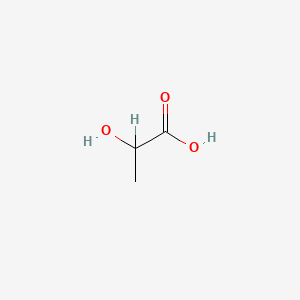
Identifiers
Functions
Hazards


Where is Postbiotic Ferment Lysates used, and what role does it play in each application?
Postbiotic Ferment Lysates, as represented by lactic acid, functions primarily as an acidulant, preservative, and pH-regulating agent across food, beverage, cosmetic, and industrial applications. In food, it acidulates beverages, preserves cultured dairy products, and acts as a flavoring agent. In cosmetics, it serves as a buffering, skin-conditioning, and humectant ingredient. Industrially, it is used in leather tanning, textile processing, and as a monomer for polylactic acid production. Its role is defined by its acidity and fermentation origin, not by a specific postbiotic activity.
Which product or formulation problem does Postbiotic Ferment Lysates address?
Postbiotic Ferment Lysates, via lactic acid, addresses formulation problems related to pH control, microbial preservation, and texture or stability. As an acidulant, it lowers pH to inhibit spoilage organisms and maintain product safety, which is critical in food and cosmetic systems. It also acts as a processing aid and chelating agent, improving the function of other ingredients. In personal care, it provides mild exfoliation and skin conditioning, solving the need for gentle pH-adjusting actives. However, its corrosive nature at high concentrations requires careful neutralization in formulations.
What supports the main commercial or clinical uses of Postbiotic Ferment Lysates?
The main uses of Postbiotic Ferment Lysates are supported by lactic acid's established regulatory and commercial status. It is FDA-affirmed as GRAS for direct addition to human food and as a food additive in animal feeds. The EPA lists it as a Safer Chemical of low concern for preservative and processing aid functions. Clinical evidence includes its use as a bactericidal agent on neonatal skin and in wart removal. However, its role as a postbiotic ferment lysate specifically lacks direct clinical or commercial validation; the evidence is for lactic acid, not the lysate complex.
How is Postbiotic ferment lysates used clinically?
For use as an alkalinizing agent
Which formulation trade-offs should researchers consider for Postbiotic Ferment Lysates?
Researchers must balance lactic acid's acidity and corrosivity against its functional benefits. At concentrations above 10% and pH below 3.5, it requires safety precautions and may increase sun sensitivity, necessitating sun protection guidance. It is corrosive to skin and eyes in concentrated forms, so neutralization with bases like calcium carbonate is essential during manufacturing. Formulations must avoid strong bases and unstable mixtures with nitric acid. Its hygroscopic and syrupy nature can affect texture, and its production via fermentation introduces byproducts like formic and acetic acid that may require purification.
What are the physicochemical properties of Postbiotic ferment lysates?
| Property | Value | Category |
|---|---|---|
| Physical Description | Lactic acid appears as a colorless to yellow odorless syrupy liquid. Corrosive to metals and tissue. Used to make cultured dairy products, as a food preservative, and to make chemicals, Dry Powder; Liquid; Liquid; Other Solid, Colourless or yellowish, nearly odourless, syrupy liquid to solid, Thick liquid or crystals, colorless to yellow; mp = 17 deg C, VISCOUS COLOURLESS-TO-YELLOW LIQUID OR COLOURLESS-TO-YELLOW CRYSTALS, colourless to yellow hygroscopic crystals becoming syrupy liquid; odourless | Appearance |
| Color/Form | Crystals (melt at 16.8 °C), Yellow to colorless crystals or syrupy 50% liquid, Viscous, colorless to yellow liquid or colorless to yellow crystals | Appearance |
| Odor | Odorless, Weak unpleasant odor, Available forms have very slightly acrid odor | Appearance |
| Taste | Mild acid taste and does not overpower weaker aromatic flavors, Taste is acrid | Appearance |
| Solubility | 1000000 mg/L, Completely soluble in water, Miscible with water, Completely soluble in ethanol, diethyl ether, and other organic solvents which are miscible with water. It is virtually insoluble in benzene and chloroform, Miscible with glycerol, Soluble in alcohol and furfurol; slightly soluble in ether; insoluble in chloroform, petroleum ether, carbon disulfide. Miscible with alcohol-ether solution, Solubility in water: miscible, miscible with water, glycerol, glycols, oils, miscible at room temperature (in ethanol) | Formulation Relevant Properties |
| LogP | -0.72, log Kow = -0.72, -0.6, -0.62 | Formulation Relevant Properties |
| pH | The pH of a 10 wt% aqueous solution of lactic acid is 1.75 | Formulation Relevant Properties |
| pKa | 3.86 (at 20 °C) | Formulation Relevant Properties |
| Dissociation Constants | pKa = 3.86 at 20 °C | Formulation Relevant Properties |
| Boiling Point | 122 °C at 1.50E+01 mm Hg, 122 °C at 15 mm Hg, 122 °C (15 mm Hg) | Handling Relevant Properties |
Which formulation benchmark best contextualizes Postbiotic Ferment Lysates, and what differs?
The most relevant benchmark is lactic acid as a standalone ingredient, given that postbiotic ferment lysates are often characterized by their lactic acid content. Lactic acid is produced via fermentation of carbohydrates using Lactobacillus strains, similar to postbiotic production. However, postbiotic ferment lysates include additional cellular components and metabolites, which may alter efficacy and safety. Unlike pure lactic acid, the lysate form may offer synergistic effects but also introduces variability in composition. Regulatory benchmarks for lactic acid, such as GRAS and cosmetic safety limits, provide a baseline, but the lysate's complexity requires separate evaluation.