Postbiotic Ferment Lysates Suppliers & Manufacturers
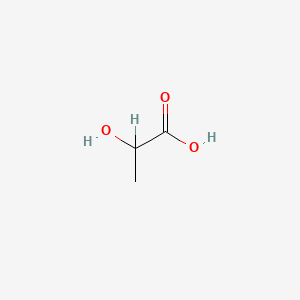
Identifiers
Functions
Hazards


What does available trade activity indicate for Postbiotic ferment lysates?
Postbiotic ferment lysates is classified under HS Code 2918.11. This falls under Chapter 29: Organic chemicals, specifically Heading 2918 (Acids; carboxylic acid with additional oxygen function and their anhydrides, halides, peroxides, peroxyacids; their halogenated, sulphonated, nitrated or nitrosated derivatives), under subheading: Acids; carboxylic acids, (with alcohol function but without other oxygen function), lactic acid, its salts and esters.
* The data below is specific to the HS code, not the ingredient.
Suppliers
218
Across 34 countries
Shipments
6,540
from 2015 to 2026
Total weight
143.4M kg
11,237 TEU · standard 20-foot container units
Last shipment
8 months ago
Last updated at Feb 25, 2026
Growth
↑ 42%
Trade under 2918.11 has increased by 42% over the past 6 months
What does trade activity suggest about the Postbiotic Ferment Lysates supply chain?
Trade activity under HS 2918.11 indicates a large, active supply chain for lactic acid and its derivatives, with 218 suppliers, 6,540 shipments, and 143 million kg traded since 2015. This suggests robust upstream fermentation capacity that could support postbiotic ferment lysate production. However, the data is not ingredient-specific; it captures bulk organic acids and derivatives, not finished postbiotic lysates. The presence of major lactic acid producers like Jungbunzlauer, Purac, and Henan Jindan confirms this is primarily a commodity chemical flow. For postbiotic ferment lysates, this evidence points to a reliable source of precursor materials, but not direct proof of lysate manufacturing or trade.
What does the HS or HTS classification include, and where are its limits for Postbiotic Ferment Lysates?
HS 2918.11 and HTS 2918.11.10.00 cover lactic acid, its salts, and esters, falling under organic chemicals with additional oxygen function. This classification is broad, encompassing commodity chemicals and fermentation products, not specialized postbiotic ferment lysates. The scope includes bulk lactic acid producers, chemical traders, and logistics entities, as evidenced by the presence of companies like Natureworks and Palsgaard, which are not lysate manufacturers. Therefore, trade activity under this code reflects general organic acid flows, not lysate-specific shipments. Any supply chain analysis must treat this as a proxy for upstream fermentation capacity, not direct evidence of postbiotic lysate trade.
Which suppliers are associated with Postbiotic ferment lysates trade?
| Supplier | Shipments | Top customer | Growth | Last shipment | |
|---|---|---|---|---|---|
No suppliers found. | |||||
How concentrated or diversified does the supplier landscape appear for Postbiotic Ferment Lysates?
The supplier landscape appears moderately concentrated, with a few large lactic acid producers dominating shipment volumes. Jungbunzlauer (Belgium) and Purac Biochem (Netherlands) account for a significant share of shipments, with 1,808 and 1,129 respectively, while Henan Jindan (China) follows with 484. This suggests a core of established chemical manufacturers, but the presence of 218 total suppliers indicates a broader, diversified base including traders and logistics entities. For postbiotic ferment lysates, this implies a fragmented upstream market with a few dominant players, but no evidence of specialized lysate manufacturers, requiring further filtering to identify true ingredient suppliers.
Which supply risks or dependencies around Postbiotic Ferment Lysates require further diligence?
A key supply risk is the lack of ingredient-specific evidence; trade data under HS 2918.11 does not confirm any supplier as a postbiotic ferment lysate manufacturer. This creates a dependency on upstream lactic acid producers, which may not have lysate production capabilities. Additionally, the presence of logistics and trading entities in the data suggests potential supply chain complexity and a need for further diligence to identify true manufacturers. The concentration of shipments in Belgium and the Netherlands also poses a geographic dependency risk, as any disruption in these regions could impact precursor availability.
Which sourcing geographies and trade lanes appear most relevant to Postbiotic Ferment Lysates?
The most relevant sourcing geographies are Belgium, the Netherlands, and China, which together account for the majority of suppliers and shipments under HS 2918.11. Belgium leads with 30 suppliers and 2,603 shipments, followed by the Netherlands with 14 suppliers and 1,436 shipments, and China with 53 suppliers and 703 shipments. These regions are hubs for lactic acid production, suggesting they are key upstream sources for fermentation-derived ingredients. Trade lanes appear concentrated in Europe and Asia, with notable activity from Ireland and Spain. This geographic concentration indicates a potential dependency on European and Chinese fermentation capacity for postbiotic lysate precursors.
Which countries drive Postbiotic ferment lysates trade activity?
By shipment count
Belgium
2,603 shipments
30 suppliers
55.4M kg total weight
Netherlands
1,436 shipments
14 suppliers
36.6M kg total weight
China
703 shipments
53 suppliers
15.1M kg total weight
Ireland
669 shipments
2 suppliers
13.1M kg total weight
Spain
309 shipments
14 suppliers
8.9M kg total weight
Thailand
240 shipments
1 suppliers
5.4M kg total weight
Japan
167 shipments
11 suppliers
2.6M kg total weight
India
88 shipments
10 suppliers
1.2M kg total weight
Germany
48 shipments
16 suppliers
592.4K kg total weight
United Kingdom
48 shipments
9 suppliers
146.2K kg total weight