Postbiotics
Identifiers
Functions
Hazards

Where is postbiotics used, and what role does it play in each application?
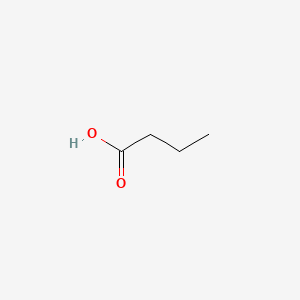
Postbiotics, exemplified by butyric acid, function as flavoring agents, fragrance ingredients, and chemical intermediates across food, perfume, drug, and industrial applications. In food, butyric acid provides body to butter, cheese, butterscotch, caramel, fruit, and nut flavors, while its low-molecular-weight esters are used as food and perfume additives. Industrially, it serves as a leather tanning agent, a lubricating agent, and an intermediate for cellulose derivatives in lacquers and plastics. As a human metabolite produced by colonic bacterial fermentation, it also has putative biological roles, though these are not established commercial uses.
Which product or formulation problem does postbiotics address?
Postbiotics address formulation challenges related to flavor delivery and chemical functionality. Butyric acid solves the problem of imparting characteristic dairy and fruit notes in food products, providing body to butter, cheese, butterscotch, caramel, fruit, and nut flavors. Its esters offer pleasant aromas, making them suitable for food and perfume additives. In industrial formulations, it acts as a chemical intermediate for cellulose derivatives, a leather tanning agent, and a lubricating agent, solving material performance needs. However, its unpleasant odor and corrosive nature require careful handling and formulation to mitigate sensory and safety issues.
What supports the main commercial or clinical uses of postbiotics?
The main commercial uses of postbiotics, specifically butyric acid, are supported by its regulatory status and production volume. Butyric acid is listed as a synthetic flavoring substance generally recognized as safe (GRAS) for human consumption and for use in animal drugs and feeds by the FDA. It is also an active TSCA chemical with high production volumes in the U.S., indicating widespread industrial use. Its role as a human metabolite is documented, but clinical evidence for health benefits, such as colorectal cancer suppression, is contradictory and based on animal models, not established commercial claims.
Which formulation trade-offs should researchers consider for postbiotics?
Formulation trade-offs for postbiotics like butyric acid center on sensory, safety, and stability challenges. The acid has a penetrating, unpleasant odor and acrid taste, requiring masking or esterification to achieve acceptable organoleptic properties. It is corrosive to metals and tissue, necessitating careful handling and packaging. Storage must be separated from strong oxidants, bases, and foodstuffs, and outside or detached storage is preferred. These factors increase formulation complexity and cost, particularly for consumer products where sensory appeal and safety are critical.
What are the physicochemical properties of Postbiotics?
| Property | Value | Category |
|---|---|---|
| Physical Description | Butyric acid appears as a colorless liquid with a penetrating and unpleasant odor. Flash point 170 °F. Corrosive to metals and tissue. Density 8.0 lb /gal, Liquid; CBI, Colorless, oily liquid with an unpleasant, rancid odor, Liquid, COLOURLESS OILY LIQUID WITH CHARACTERISTIC ODOUR, colourless liquid/strong, rancid, butterlike odour | Appearance |
| Color/Form | Oily liquid, Colorless liquid | Appearance |
| Odor | Unpleasant, rancid odor, Penetrating and obnoxious odor | Appearance |
| Taste | Butter-fat taste | Appearance |
| Solubility | greater than or equal to 100 mg/mL at 66 °F, 60000 mg/L (at 25 °C), Miscible with ethanol, ether; slightly soluble in carbon tetrachloride, In water, 6.00X10+4 mg/L at 25 °C, 60.0 mg/mL, Solubility in water: miscible, miscible with alcohol, most fixed oils, propylene glycol, water, (in ethanol) | Formulation Relevant Properties |
| LogP | 0.79, log Kow= 0.79, 0.83 | Formulation Relevant Properties |
| LogS | -0.19 | Formulation Relevant Properties |
| pKa | 4.82 (at 25 °C) | Formulation Relevant Properties |
| Dissociation Constants | pKa = 4.82 at 25 °C | Formulation Relevant Properties |
| Boiling Point | 326.3 °F at 760 mmHg, 163.7 °C, 163.5 °C, 164 °C, 163.5 °C @760 [mm Hg] | Handling Relevant Properties |
Which formulation benchmark best contextualizes postbiotics, and what differs?
Butyric acid serves as a benchmark for postbiotic ingredients due to its well-documented regulatory and industrial profile. It is available in multiple grades (90%, 95%, 99%, edible, synthetic, reagent, technical, FCC) and is produced in high volumes, indicating established supply chains. Its dual role as a flavoring agent and chemical intermediate provides a model for how postbiotics can be integrated into both food and industrial formulations. However, its sensory and corrosive properties differ from other postbiotics, which may have milder profiles, so formulators should not assume similar handling requirements.