Postbiotics Suppliers & Manufacturers
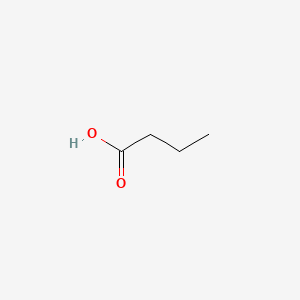
Identifiers
Functions
Hazards

What does available trade activity indicate for Postbiotics?
Postbiotics is classified under HS Code 3002.49. This falls under Chapter 30: Pharmaceutical products, specifically Heading 3002 (Human blood; animal blood for therapeutic, prophylactic or diagnostic uses; antisera, other blood fractions, immunological products, modified or obtained by biotechnological processes; vaccines, toxins, cultures of micro-organisms (excluding yeasts) etc), under subheading: Toxins, cultures of micro-organisms (excluding yeasts) and similar products; n.e.c. in item 3002.3.
* The data below is specific to the HS code, not the ingredient.
Suppliers
42
Across 14 countries
Shipments
153
from 2022 to 2026
Total weight
3.1M kg
374 TEU · standard 20-foot container units
Last shipment
8 months ago
Last updated at Feb 25, 2026
Growth
↑ 29%
Trade under 3002.49 has increased by 29% over the past 6 months
What does trade activity suggest about the postbiotics supply chain?
Trade activity under HS 3002.49 shows a substantial but broad biological-products supply chain, with 42 suppliers, 153 shipments, and roughly 3,144 metric tons over the observed period. Germany dominates by volume (2,261 metric tons) and supplier count (13), indicating a European-centric production hub. Growth score of 31.9 over the recent 180-day window suggests moderate expansion. However, this is not ingredient-specific evidence; the classification captures diverse biological products, including medical-grade materials. The presence of major fermentation players (Chr Hansen, Danisco, DSM) implies fermentation capability exists, but their shipments likely reflect broader portfolios rather than postbiotic-only trade.
What does the HS or HTS classification include, and where are its limits for postbiotics?
HS code 3002.49 falls under Chapter 30 (Pharmaceutical products), specifically covering toxins, cultures of micro-organisms (excluding yeasts), and similar products not elsewhere classified. This is a pharmaceutical/medical classification, not a food or feed ingredient category. The scope includes antisera, blood fractions, and modified immunological products, which are far broader than postbiotics. The match method used an LLM tree classifier with 0.85 confidence, indicating a probabilistic association rather than a definitive mapping. Consequently, trade data under this code cannot be interpreted as postbiotic-specific shipment evidence; it captures a wide range of biological products, including animal health and pesticide applications, as noted in the evidence.
Which suppliers are associated with Postbiotics trade?
| Supplier | Shipments | Top customer | Growth | Last shipment | |
|---|---|---|---|---|---|
No suppliers found. | |||||
How concentrated or diversified does the supplier landscape appear for postbiotics?
The supplier landscape under HS 3002.49 shows moderate concentration: the top five suppliers account for 64 of 153 shipments (42%), with E Nema (26 shipments) and Chr Hansen (14) leading. Germany hosts 13 of 42 suppliers, indicating geographic clustering. However, the supplier list includes diverse entities—from fermentation specialists (Chr Hansen, Danisco, DSM) to animal health (Elanco) and pesticide firms (Fujian Green Shell)—confirming the classification captures heterogeneous biological-product makers, not a postbiotic-specific supplier base. This diversification suggests that if postbiotic suppliers exist within this code, they are mixed with unrelated biological producers, making true concentration assessment impossible without ingredient-level data.
Which supply risks or dependencies around postbiotics require further diligence?
Key diligence risks include classification ambiguity, geographic concentration, and customer-supplier overlap. First, HS 3002.49 is a pharmaceutical/medical code, so any postbiotic supply-chain conclusions drawn from this data carry high uncertainty; ingredient-specific verification is essential. Second, Germany's dominance (13 suppliers, 73% of weight) creates geographic concentration risk—disruptions in that region would disproportionately affect supply. Third, several top suppliers ship to their own affiliates (e.g., Chr Hansen to Chr Hansen, Danisco to Danisco USA), suggesting intra-company transfers that may not reflect external market availability. Additionally, zero weight recorded for selected suppliers indicates data gaps that obscure true shipment volumes. Further diligence should confirm whether these entities produce food-grade postbiotics versus medical biologicals.
Which sourcing geographies and trade lanes appear most relevant to postbiotics?
Germany is the most prominent sourcing geography, with 13 suppliers, 75 shipments, and 2,261 metric tons—over 70% of total weight. France (4 suppliers, 141 metric tons) and Italy (5 suppliers, 97 metric tons) follow, reinforcing a Western European supply base. Canada (289 metric tons from 2 suppliers) and Argentina (85 metric tons) represent notable non-European sources. The top customer names (e.g., Profarm Group US, Danisco USA, DSM Food Specialties USA) suggest transatlantic lanes from Europe to North America are active. However, these lanes reflect the broader biological-products trade under HS 3002.49, not confirmed postbiotic flows. Asian sources (China, Japan, India) appear minor by shipment count and weight.
Which countries drive Postbiotics trade activity?
By shipment count
Germany
75 shipments
13 suppliers
2.3M kg total weight
France
21 shipments
4 suppliers
140.9K kg total weight
Italy
12 shipments
5 suppliers
97K kg total weight
Argentina
6 shipments
2 suppliers
84.7K kg total weight
Belgium
6 shipments
2 suppliers
39K kg total weight
Canada
6 shipments
2 suppliers
289.2K kg total weight
China
5 shipments
3 suppliers
79.7K kg total weight
Japan
4 shipments
2 suppliers
10.3K kg total weight
Ireland
4 shipments
1 suppliers
8.1K kg total weight
Brazil
4 shipments
4 suppliers
51.8K kg total weight