Potassium Permanganate Patent Landscape
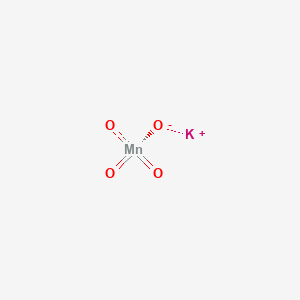
Identifiers
Hazards


Which organizations and claims shape current development around potassium permanganate?
Key organizations include Temple University (MnO2 coating method), Hartalega Research (permeation-resistant gloves), Jilin Chemical University (wound dressing hydrogel), Airbus Helicopters (anti-corrosion treatment), and Zhongkai University of Agriculture and Engineering (food preservation bag). Claims focus on methods for forming uniform coatings, latex formulations with manganese compounds, hydrogels with oxygen-generating and ROS-scavenging properties, anti-corrosion substances with specific ion concentrations, and ethylene scavengers on zeolite carriers. These claims are technical approaches, not evidence of market adoption.
How is Potassium permanganate innovation changing?
Monthly patent filings
Which technical problems do recent patents address with potassium permanganate?
Recent patents use potassium permanganate to solve surface durability, barrier performance, wound healing, and preservation challenges. Specifically, it is claimed to form uniform manganese dioxide coatings for enhanced substrate properties, improve permeation resistance in latex gloves, generate oxygen and scavenge ROS in diabetic wound dressings, provide corrosion-resistant treatment for magnesium alloys, and remove ethylene in food packaging. These are claimed approaches, not proven commercial outcomes. The technical problems center on functional material performance rather than traditional disinfection, indicating a shift toward advanced material engineering.
How do recent patents change the role or application of potassium permanganate?
Potassium permanganate's role is shifting from a standalone oxidizer to a reactive precursor and functional additive. It is used to create MnO2 coatings, as a manganese source in latex formulations, to form MXene/Mn composites for oxygen production, as a permanganate ion donor in anti-corrosion gels, and as an ethylene scavenger on zeolite carriers. This indicates a move toward integrating the ingredient into composite materials where its reactivity is harnessed for specific functions like barrier enhancement, corrosion resistance, or controlled gas scavenging, rather than direct antimicrobial action.
Which product categories and formulation strategies emerge in recent work on potassium permanganate?
Emerging product categories include surface coatings, permeation-resistant gloves, wound dressings, anti-corrosion treatments, and food preservation bags. Formulation strategies involve using potassium permanganate as a coating precursor with manganese salts, as an additive in latex at 0.25–10 phr for valency +7, as an oxygen-producing agent in hydrogels, as a permanganate ion source in epoxy gels with dihydrogen phosphate, and as an impregnating solution (1–6% w/v) on zeolite for ethylene removal. These strategies emphasize controlled reactivity and integration into multi-component systems.
Where is the evidence-backed white space for further development of potassium permanganate?
Evidence-backed white space exists in combining potassium permanganate's oxygen-generating and ROS-scavenging functions with other active agents, as seen in wound dressings, but no patents claim its use in combination with photothermal agents beyond MXene. Additionally, its role as a coating precursor for MnO2 on diverse substrates is only claimed for general surfaces, leaving room for specialized applications like medical devices or electronics. The anti-corrosion use is limited to magnesium alloys, suggesting potential for other metals. These are gaps based on the patent evidence reviewed.