Products & Brands Using Potassium Permanganate
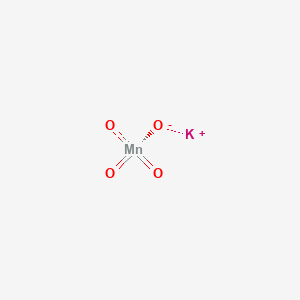
Identifiers
Hazards


How broadly is Potassium permanganate used across tracked brands and products?
Brands
0
Across 1 product types
Products
159
Includes function: Anti-caking agent
Product Types
1
Distinct formulation categories
Functions
7
Known functional-use labels
What does product breadth indicate about the commercial maturity of potassium permanganate?
The commercial market for potassium permanganate appears mature but stagnant, with product listings peaking at 45 in 1995 and declining to 4 by 2001, with no listings after that year. The 159 total products span 1985-2001, indicating a historical product landscape rather than an active one. The narrow category focus on aircraft cleaners suggests a specialized, possibly niche market. Patent activity from 2025-2026 shows continued innovation interest, but this does not translate to commercial product evidence. The gap between active patent filings and absent recent commercial listings suggests either market contraction, regulatory restriction, or a shift toward applications not captured in the product database.
How is potassium permanganate positioned across the market?
Potassium permanganate is positioned as a specialized industrial chemical, primarily for aircraft cleaning and scale conditioning, with one product explicitly named 'permanganate scale conditioner.' Its functional profile spans oxidation, bleaching, disinfection, and deodorization, suggesting a multi-purpose active within a narrow application domain. Patent filings position it as a functional additive for advanced materials, including permeation-resistant gloves and anti-corrosion coatings, indicating a shift toward performance-enhancing roles. The commercial positioning emphasizes cleaning efficacy, while patent positioning emphasizes material property enhancement. This divergence suggests the ingredient's market identity is evolving from a commodity oxidizer toward a specialty performance additive.
Top companies using Potassium permanganate in their products
Ranked by number of tracked products that list potassium permanganate, out of 159 total.
Where is Potassium permanganate covered by tracked regulatory lists?
Jurisdictions
Markets where this ingredient appears on tracked ingredient regulation lists.
EU
44 tracked lists
US Federal
44 tracked lists
Other
33 tracked lists
Regulatory Bodies
Authorities cited most often across the tracked ingredient lists.
FDA
European Commission
DrugBank
Commission of the European Communities
EPA
Which product categories, formats, and functions use potassium permanganate?
Potassium permanganate appears in a narrow commercial product category: aircraft cleaners, with 4 of 159 total products explicitly identified as such. Functionally, it is listed as an anti-caking agent, biocide, bleaching agent, deodorizer, emulsifier, oxidizing agent, and processing aid. Patent evidence shows broader potential applications, including surface coatings, permeation-resistant gloves, wound dressings, anti-corrosion treatments, and food preservation bags. The commercial product record is limited to industrial cleaning, while patents explore pharmaceutical, cosmetic, and agricultural formats. This suggests the ingredient's commercial footprint is concentrated in specialized industrial cleaning, with emerging application spaces documented only in patent filings.
Which product categories contain Potassium permanganate?
Tracked product categories ranked by distinct products containing this ingredient.
Which formulation and co-ingredient patterns recur around potassium permanganate?
Recurring co-ingredients in commercial products include alumina and sodium hydroxide (13 products each), sulfuric acid (9), and phosphoric acid (5), indicating formulations built around strong alkaline or acidic environments. Patent evidence shows different patterns: manganese-based compounds (manganese nitrate, manganese carbonate, manganese dioxide) for coatings and gloves, potassium dihydrogen phosphate for anti-corrosion, and hyaluronic acid, MXene, and ε-polylysine for wound dressings. Concentration data from commercial products shows a median of 100% w/w, suggesting use as a standalone active. Patent claims specify ranges from 0.25 to 10 phr in gloves and 1-6% w/v in ethylene scavengers, indicating dose-dependent formulation strategies.
Which product spaces around potassium permanganate appear crowded or differentiated?
Differentiation opportunities appear strongest in advanced material applications documented in patents: permeation-resistant gloves (two filings from Hartalega), anti-corrosion treatments for magnesium alloys (Airbus Helicopters), and diabetic wound-healing hydrogels. These spaces show specific functional claims—permeation resistance, corrosion protection, and ROS-scavenging—rather than generic oxidation. The aircraft cleaner category appears crowded with 4 similar products. The food preservation bag application (ethylene scavenging) and surface coating technology represent less crowded spaces with clear mechanistic roles. Patent evidence suggests differentiation is achievable through formulation with complementary materials like MXene, hyaluronic acid, and potassium dihydrogen phosphate, rather than through potassium permanganate alone.