Turmeric Extract Environmental Fate & Ecotoxicity
Identifiers
Functions
Hazards

What is known about the environmental fate of turmeric extract?
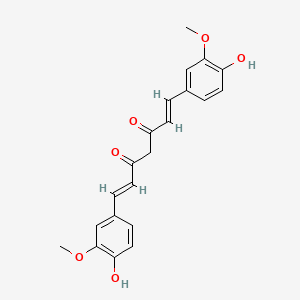
Turmeric extract's primary constituent, curcumin, is expected to partition into soil and sediment due to an estimated Koc of 3400, indicating slight soil mobility and adsorption to suspended solids. Volatilization from soil or water is negligible based on its very low Henry's Law constant and vapor pressure. In air, curcumin exists solely in the particulate phase and may undergo wet/dry deposition and direct photolysis. Biodegradation in soil or water was not directly measured, but a white-rot fungi strain degraded 75% of curcumin in a pure culture study. These fate characteristics suggest environmental persistence is possible, but data gaps remain for natural degradation rates.
What do biodegradation, bioaccumulation, and ecotoxicity findings indicate for turmeric extract?
Biodegradation evidence is limited to a single pure culture study showing 75% degradation by a mutant white-rot fungus, with no environmental soil or water data. Bioaccumulation potential is moderate, with an estimated BCF of 68 from a log Kow of 3.29, suggesting some bioconcentration in aquatic organisms. No ecotoxicity data were available for turmeric extract or curcumin. These findings indicate a moderate bioaccumulation concern but insufficient evidence to assess ecological hazard. Formulators should consider potential accumulation in aquatic food chains, but definitive risk cannot be established without ecotoxicity testing.
Which environmental exposure pathways or concentrations are reported for turmeric extract?
No measured environmental concentrations were reported for turmeric extract or curcumin. Release to the environment is expected through waste streams from its use as a food dye, analytical reagent, and biological stain. General population exposure occurs via ingestion of foods containing turmeric, while occupational exposure may occur through inhalation and dermal contact during production. The lack of quantitative environmental concentration data prevents assessment of actual exposure levels in soil, water, or air. This gap limits the ability to predict environmental risk or set monitoring priorities.
How might use context or formulation affect the environmental profile of turmeric extract?
Use context significantly influences environmental release pathways. As a food dye, turmeric extract enters wastewater streams, where curcumin's adsorption to sediment and moderate bioaccumulation potential become relevant. In agricultural applications, soil mobility is slight, reducing leaching risk. Formulation as a particulate solid minimizes volatilization but may lead to atmospheric deposition. The absence of hydrolysis under environmental pH suggests persistence in water systems. These factors imply that environmental impact depends on the application route, with aquatic discharge posing the greatest concern due to sediment partitioning and bioaccumulation potential.
Which evidence gaps must be resolved before making sustainability claims about turmeric extract?
Before making sustainability claims, critical evidence gaps must be addressed: measured biodegradation rates in soil and water, ecotoxicity data for aquatic and terrestrial organisms, and actual environmental concentrations from production and use. The current evidence relies on estimated values for Koc, BCF, and vapor pressure, with only a single fungal degradation study. Without these data, claims of environmental safety or biodegradability are unsupported. Additionally, the moderate bioaccumulation potential requires verification through empirical testing. Until these gaps are filled, any sustainability assertion would be premature and potentially misleading.