Upcycled Botanical Extracts
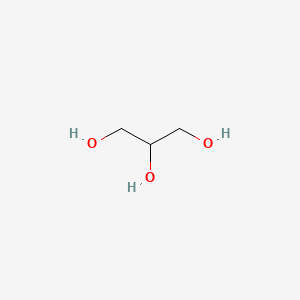
Identifiers
Functions
Where is Upcycled Botanical Extracts used, and what role does it play in each application?
Upcycled botanical extracts, as a category, are not directly documented in the available evidence. The closest related substance, glycerol, is widely used across pharmaceuticals, cosmetics, foods, and industrial products as a solvent, humectant, emollient, plasticizer, and vehicle. In personal care and drug formulations, glycerol maintains moisture, provides smoothness, and acts as a lubricant. In foods, it serves as a humectant, solvent for flavors and colors, and smoothing agent. The evidence does not specify how upcycled botanical extracts specifically function in these or other applications.
Which product or formulation problem does Upcycled Botanical Extracts address?
The evidence does not directly address problems solved by upcycled botanical extracts. For glycerol, which may be a component or analog, documented functions include preventing moisture loss (humectant), improving texture and smoothness, acting as a solvent to dissolve active ingredients, and serving as a lubricant or emollient in cosmetics and pharmaceuticals. These functions address formulation challenges such as dryness, ingredient incompatibility, and stability. However, the specific problem-solving profile of upcycled botanical extracts—such as sustainability-driven formulation goals—is not covered in the available data.
What supports the main commercial or clinical uses of Upcycled Botanical Extracts?
There is no direct evidence supporting commercial or clinical uses of upcycled botanical extracts. The available data on glycerol shows it is a GRAS food substance, used in pharmaceuticals as a solvent, humectant, and vehicle, and in cosmetics for moisture retention and smoothness. Glycerol is also an active ingredient in some ophthalmic and laxative preparations. However, these uses pertain to glycerol itself, not to upcycled botanical extracts. No clinical trials, product formulations, or market data specific to upcycled botanical extracts are present in the evidence.
How is Upcycled botanical extracts used clinically?
It is used as a solvent, emollient, pharmaceutical agent, and sweetening agent
Which formulation trade-offs should researchers consider for Upcycled Botanical Extracts?
Formulation trade-offs for upcycled botanical extracts cannot be directly assessed from the evidence. For glycerol, which may be a relevant benchmark, key considerations include its hygroscopic nature, which can affect moisture balance; its role as a solvent that may dissolve both active and inert ingredients, potentially altering formulation stability; and its antimicrobial activity in concentrated solutions, which could impact preservation. Glycerol is combustible but requires effort to ignite, and it should be separated from strong oxidants. These factors may inform handling and compatibility, but they do not directly translate to upcycled botanical extracts.
What are the physicochemical properties of Upcycled botanical extracts?
| Property | Value | Category |
|---|---|---|
| Physical Description | Glycerine appears as a colorless to brown colored liquid. Combustible but may require some effort to ignite, Dry Powder; Large Crystals; Gas Vapor; Liquid; Wet Solid; Other Solid; Liquid; Other Solid; Dry Powder; Liquid; Other Solid; Large Crystals; Wet Solid; Large Crystals; Liquid; Liquid; Other Solid; CBI; Large Crystals, Clear, colourless hygroscopic syrupy liquid with not more than a slight characteristic odour, which is neither harsh nor disagreeable, Clear, colorless, odorless, syrupy liquid or solid (below 64 degrees F). [Note: The solid form melts above 64 degrees F but the liquid form freezes at a much lower temperature.]; [NIOSH], Liquid, HYGROSCOPIC VISCOUS COLOURLESS LIQUID, Clear, colorless, odorless, syrupy liquid or solid (below 64 °F), Clear, colorless, odorless, syrupy liquid or solid (below 64 °F). [Note: The solid form melts above 64 °F but the liquid form freezes at a much lower temperature.] | Appearance |
| Color/Form | Syrupy, rhombic plates, Clear, colorless syrupy liquid, Clear, colorless, ... syrupy liquid or solid (below 64 degrees F) [Note: The solid form melts above 64 degrees F but the liquid form freezes at a much lower temperature] | Appearance |
| Odor | MILD ODOR, Odorless | Appearance |
| Taste | Sweet, warm taste | Appearance |
| Solubility | greater than or equal to 100 mg/mL at 64 °F, Miscible with ethanol; slightly soluble in ethyl ether; insoluble in benzene, carbon tetrachloride, chloroform, carbon disulfide, petroleum ether, 1 part dissolves in 11 parts ethyl acetate, in approx 500 parts ethyl ether. Insoluble in benzene, chloroform, carbon tetrachloride, carbon disulfide, petroleum ether, oils, SOLUBILITY IN ACETONE: 1 G IN 15 ML, Insoluble in fixed and volatile oils, In water, 5.296X10+6 mg/L at 25 °C, 1000.0 mg/mL, Solubility in water: miscible, Miscible | Formulation Relevant Properties |
| LogP | log Kow = -1.76, -1.76 | Formulation Relevant Properties |
| pH | Neutral to litmus | Formulation Relevant Properties |
| Dissociation Constants | pKa = 14.4 | Formulation Relevant Properties |
| Boiling Point | 554 °F at 760 mmHg (decomposes), 290 °C (decomposes), BP: 263 °C at 400 mm Hg; 240.0 °C at 200 mm Hg; 220.1 °C at 100 mm Hg; 208.0 °C at 60 mm Hg; 182.2 °C at 20 mm Hg; 167.2 °C at 10 mm Hg; 153.8 °C at 5 mm Hg; 125.5 °C at 1.0 mm Hg, 290 °C, 554 °F (decomposes), 290 °C @760 [mm Hg] | Handling Relevant Properties |
| Melting Point | 64 °F, 18.1 °C, 20 °C, 18 °C | Handling Relevant Properties |
Which formulation benchmark best contextualizes Upcycled Botanical Extracts, and what differs?
Glycerol serves as a useful formulation benchmark for upcycled botanical extracts because of its documented roles as a humectant, solvent, and emollient across pharmaceuticals, cosmetics, and foods. However, upcycled botanical extracts likely differ in composition, containing a complex mixture of plant-derived compounds rather than a single chemical. This means their solubility, stability, and sensory profile may vary significantly from glycerol. The evidence does not provide a direct comparison, so researchers should treat glycerol as a functional reference point, not a compositional equivalent.