Regulations of Upcycled Botanical Extracts

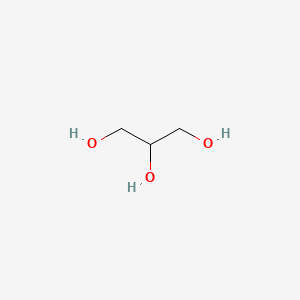
GLYCERIN

Identifiers

FormulaC3H8O3·CAS56-81-5·EC200-289-5·HS2905.45

Functions

DenaturantHAIR Conditioning +8 more

How does the regulatory treatment of Upcycled Botanical Extracts differ by market or product category?

Regulatory treatment varies by market and product category, with the most defined pathways in the US and EU. In the US, glycerin, a common botanical extract component, is FDA GRAS for food, pharmaceutical, and cosmetic use, and is listed as an EPA Safer Chemical. In the EU, it is an active REACH-registered substance and subject to EFSA food additive regulations. However, New Zealand does not approve it as a standalone chemical, only as a component under group standards. For pesticide use, US EPA shows no current registrations for glycerin. These differences mean a single global compliance approach is not feasible.

Which United States federal regulations apply to Upcycled botanical extracts?

9 regulations

EPA TSCA Regulatory Flag

1,2,3-Propanetriol is listed on the EPA's Chemical Data Reporting (CDR) system. Manufacturers and importers of 1,2,3-Propanetriol are required to report information about their production and use of this chemical to the EPA under the Toxic Substances Control Act (TSCA). (40 eCFR Part 711)

FIFRA Requirements

Residues resulting from the use of the following substances as either an inert or an active ingredient in a pesticide chemical formulation, including antimicrobial pesticide chemicals, are exempted from the requirement of a tolerance under FFDCA section 408, if such use is in accordance with good agricultural or manufacturing practices. Glycerin is included on this list.

FDA Direct Food Additives

Regulatory records

EntryRegulationTypeStatusSource
176.21021 CFR 176.210Food AdditiveauthorizedView
177.139021 CFR 177.1390Food AdditiveauthorizedView
177.242021 CFR 177.2420Food AdditiveauthorizedView
177.280021 CFR 177.2800Food AdditiveauthorizedView
178.350021 CFR 178.3500Food AdditiveauthorizedView
182.132021 CFR 182.1320Food AdditiveauthorizedView
182.9021 CFR 182.90Food AdditiveauthorizedView
169.17521 CFR 169.175Labeling StandardsauthorizedView

FDA OTC Drug Monographs

Regulatory records

RegulationStatus
Federal Registerauthorized

Record details

Federal Register

product types
OTC skin protectant, Skin protectant

FDA 21 CFR Indirect Food Additives

Regulatory records

EntryRegulationTypeStatusSource
172.81121 CFR 172.811Food AdditiveauthorizedView
175.30021 CFR 175.300Food AdditiveauthorizedView
175.32021 CFR 175.320Food AdditiveauthorizedView

FDA GRAS Notices

Several grades of refined glycerol, such as high gravity, dynamite, and USP, are marketed; specifications vary depending on the consumer and the intended use. USP-grade glycerol is water-white, and meets the requirements of the USP. It is classified as GRAS by the FDA, and is suitable for use in foods, pharmaceuticals, and cosmetics, or when the highest quality is demanded or the product is designed for human consumption. It has a minimum specific gravity (25 °C/25 °C) of 1.249, corresponding to no less than 95% glycerol. Kosher glycerin meets all USP requirements and is produced by synthetically or from 100% vegetable glycerides. The European Pharmacopoeia (PH.EUR.) grade is similar to the USP, but the common PH.EUR. grade has a minimum glycerol content of 99.5%. The chemically pure (CP)

FDA Food Contact Notifications

Food contact notifications

NotificationManufacturer / supplierIntended useLimitationsEffectiveStatus
1278
EEcolab
As an adjuvant to antimicrobial solutions for use in commercial sterilization of aseptic filling systems and packaging prior to filling.1. The application rate will be a maximum of 13 ppm catalase in mixtures applied to polymeric food packaging containers (e.g., bottles and closures) for liquid and semi-solid flowable foods.; 2. Following the application of the FCS, the surfaces of the polymeric food packaging will be drained, rinsed with sterile water, and drained again.03 Jul 2013active
1362
EEltron Research & Development, LLC BioSafe Systems LLC
As an antimicrobial agent on meat, poultry, fish and seafood, and fruits and vegetables that are not raw agricultural commodities.The FCS will be added to process water or ice applied to (1)  meat carcasses, parts, trim, and organs at a level not to exceed 400 ppm peroxyacetic acid and 280 ppm hydrogen peroxide; (2) poultry parts, organs, and carcasses at a level not to exceed 1000 ppm peroxyacetic acid and 700 ppm hydrogen peroxide; (3) fish and seafood at a level not to exceed 190 ppm peroxyacetic acid and 140 ppm hydrogen peroxide; (4) fruits and vegetables that are not raw agricultural commodities at a level not to exceed 80 ppm peroxyacetic acid and 60 ppm hydrogen peroxide.25 Feb 2014active
1384
EEnviro Tech Chemical Services, Inc.
As an antimicrobial agent added to process water or ice used for preparing whole and cut meat and whole or cut poultry products, including hides, parts, trim and organs, and for processing fruits and vegetables.The final process water or ice used for washing, rinsing, cooling, or otherwise for processing will not exceed: 1) 400 ppm peroxyacetic acid and 100 ppm hydrogen peroxide for whole or cut meat products, 2) 1000 ppm peroxyacetic acid and 250 ppm hydrogen peroxide for whole or cut poultry products, 3) 2000 ppm peroxyacetic acid and 500 ppm hydrogen peroxide for poultry post-chiller or dip tanks prior to air chillers, and 4) 350 ppm peroxyacetic acid and 87.5 ppm hydrogen peroxide for fruits and vegetables.06 Mar 2014active
1746
HHenkel, Inc.
The FCS Is intended to be used as an adhesive in laminate structures intended for contact with food, except for use in contact with infant formula and human milk (see Limitations/Specifications).The adhesive may be applied at a maximum rate of 1.25 pounds per 3000 square feet of food-contact surface. A food-contact layer will separate the adhesive from food and will consist of low density polyethylene with a minimum thickness of 1 mil or other material with equivalent or greater barrier properties under the intended conditions of use. Laminate structures using the FCS as an adhesive may be used in contact with all food types under Conditions of Use B through H as described in Tables 1 and 2, respectively. The FCS is not for use in contact with infant formula and human milk. Such uses were not included as part of the intended use of the substance in the FCN.15 Apr 2017active
1783
EEltron Research & Development, LLC BioSafe Systems LLC
As an antimicrobial to control microorganisms in process water used during the commercial preparation of processed meat and poultry, fish and seafood, and fruits and vegetables that are not raw agricultural commodities.The FCS will be added to process water as a spray, dip, ice chiller water or scald water for washing, rinsing, or cooling meat, poultry, fish and seafood, and fruits and vegetables that are not raw agricultural commodities. Final at-use concentrations of peroxyacetic acid and hydrogen peroxide are limited to: 1800 ppm peroxyacetic acid and 1215 ppm hydrogen peroxide in water for whole and cut meat carcasses, parts, trim, and organs; 2000 ppm peroxyacetic acid and 1474 ppm hydrogen peroxide in water for whole or cut poultry carcasses, parts, trim, and organs; 230 ppm peroxyacetic acid and 165 ppm hydrogen peroxide in water for fish and seafood; and 350 ppm peroxyacetic acid and 525 ppm hydrogen peroxide in water for fruits and vegetables that are not raw agricultural commodities.08 Sept 2017active
2352
CClean Chemistry Inc.
As an antimicrobial agent used: in process water, ice or brine used in washing, rinsing, scalding, or cooling whole or cut meat and poultry carcasses, parts, trim, and organs; in process water, ice, or brine used in washing, rinsing, or cooling processed and preformed meat and poultry products; in process water or ice for washing, rinsing, chilling or processing fruits and vegetables in food processing facilities; in process water and ice used to commercially prepare fish and seafood; during the tempering and before milling of grains of wheat, corn, and rice; in water for washing shell eggs; in spray, wash, dip, rinse, mist, or chiller water for hard boiled, peeled eggs; in liquid, pasteurized whey used in the production of whey protein concentrate; in wash water used to manufacture lactose; in brines, sauces, and marinades applied either on the surface or injected into processed or unprocessed, cooked, or uncooked, whole or cut poultry parts or pieces; in surface sauces and in marinades applied on processed and preformed meat and poultry products; alone or in combination with other processes in the commercial sterilization of aseptic filling systems and glass and plastic food packaging and their closures prior to filling, except for use in contact with infant formula and human milk, on food packaging used in contact with infant formula and human milk, or aseptic filling equipment used to fill food packaging used in contact with infant formula and human milk (see Limitations/Specifications).The components of the FCS will not exceed: 2000 ppm PAA and 44.4 ppm HP in spray, wash, rinse, dip, chill, and scald process water, ice, or brine used in the production, processing, and preparation of whole or cut meat and poultry carcasses, parts, trim, and organs; 495 ppm PAA and 11 ppm HP in process water, ice, or brine used for washing, rinsing, or cooling of processed and preformed meat and poultry; 600 ppm PAA and 13.3 ppm HP in process water or ice for washing, rinsing, chilling or processing fruits and vegetables in food processing facilities; 230 ppm PAA and 5.1 ppm HP in process water and ice used to commercially prepare fish and seafood; 6000 ppm PAA and 133.3 ppm HP when applied during the tempering and before milling of grains of wheat, corn, and rice applied at a level not to exceed 3% by weight of the grain; 2000 ppm PAA and 44.4 ppm HP in water for washing shell eggs; 2000 ppm PAA and 44.4 ppm HP in spray, wash, dip, rinse, mist, or chiller water for hard boiled, peeled eggs; 15 ppm PAA and 0.33 ppm HP in liquid, pasteurized whey used in the production of whey protein concentrate; 30 ppm PAA and 0.67 ppm HP in wash water used to manufacture lactose; 50 ppm PAA and 1.1 ppm HP in brines, sauces, and marinades applied either on the surface or injected into processed or unprocessed, cooked, or uncooked, whole or cut poultry parts or pieces; 50 ppm PAA and 1.1 ppm HP in surface sauces and in marinades applied on processed and preformed meat and poultry products; 4500 ppm PAA and 100 ppm HP when applied to aseptic filling systems and glass and plastic food packaging and their closures prior to filling. The FCS is not for use in contact with infant formula and human milk. The FCS is also not for use on food packaging used in contact with infant formula and human milk or on aseptic filling equipment used to fill such packaging. Such uses were not included as part of the intended use of the substance in the FCN.14 Feb 2024active

FDA Technical Effects

Regulatory records

RegulationStatus
FDA Technical Effect: ANTICAKING AGENT OR FREE-FLOW AGENTauthorized
FDA Technical Effect: DRYING AGENTauthorized
FDA Technical Effect: EMULSIFIER OR EMULSIFIER SALTauthorized
FDA Technical Effect: HUMECTANTauthorized
FDA Technical Effect: MASTICATORY SUBSTANCEauthorized
FDA Technical Effect: NUTRITIVE SWEETENERauthorized
FDA Technical Effect: SOLVENT OR VEHICLEauthorized
FDA Technical Effect: STABILIZER OR THICKENERauthorized
FDA Technical Effect: TEXTURIZERauthorized

Atmospheric Standards

This action promulgates standards of performance for equipment leaks of Volatile Organic Compounds (VOC) in the Synthetic Organic Chemical Manufacturing Industry (SOCMI). The intended effect of these standards is to require all newly constructed, modified, and reconstructed SOCMI process units to use the best demonstrated system of continuous emission reduction for equipment leaks of VOC, considering costs, non air quality health and environmental impact and energy requirements. Glycerol is produced, as an intermediate or a final product, by process units covered under this subpart.

What EU regulatory requirements apply to Upcycled botanical extracts?

3 regulations

REACH Registered Substance

Status: Active Update: 18-04-2023 https://echa.europa.eu/registration-dossier/-/registered-dossier/14481

EFSA Legal Basis

Commission Regulation (EU) No 231/2012 (amended)

Status Regulation (EC)

Regulation (EC) No 1333/2008 (amended)

What regulations apply to Upcycled botanical extracts in Canada?

1 regulation

DSL / NDSL

Regulatory records

EntryRegulationTypeStatus
30918-77-5SOR/94-311DSLauthorized
56-81-5SOR/94-311DSLauthorized

Key dates

Published: 11 Feb 2004

Published: 04 May 1994

Effective: 11 Feb 2004

Effective: 04 May 1994

Conditions

This substance is on the Domestic Substances List (DSL). This substance was added to the DSL as an “Existing Substance” given that it meets the criteria set out in CEPA for substances that were in commerce in Canada between 1984 and 1986.

Record details

SOR/94-311

professional use only
No

SOR/94-311

professional use only
No

What regulations apply to Upcycled botanical extracts in China?

1 regulation

IECIC Listed Ingredients (List I)

Published
24 Jun 2025
Effective
24 Jun 2025

Regulatory records

EntryRegulationTypeStatus
2421Inventory of Existing Cosmetic Ingredients in China (IECIC) IList Iauthorized

Record details

Inventory of Existing Cosmetic Ingredients in China (IECIC) I

professional use only
No

What regulations apply to Upcycled botanical extracts in Australia?

1 regulation

The Australian Inventory of Industrial Chemicals

Chemical: 1,2,3-Propanetriol

What regulations apply to Upcycled botanical extracts in New Zealand?

1 regulation

New Zealand EPA Inventory of Chemical Status

Propanetriol: Does not have an individual approval but may be used as a component in a product covered by a group standard. It is not approved for use as a chemical in its own right.

Which conditions, limits, and use contexts most affect a compliance assessment for Upcycled Botanical Extracts?

Occupational exposure limits and use context are the primary conditions affecting compliance. OSHA PELs for glycerin mist are 15 mg/m³ (total dust) and 5 mg/m³ (respirable), with some states enforcing vacated 1989 limits of 10 mg/m³ and 5 mg/m³. ACGIH recommends a TLV of 10 mg/m³ for glycerin mist. These limits are relevant for manufacturing and formulation facilities. Additionally, the EPA requires TSCA Chemical Data Reporting for manufacturers and importers of glycerin. The intended product category—food, cosmetic, or industrial—determines which FDA or EPA requirements apply.

What should be in place before a product containing Upcycled Botanical Extracts is assessed for launch?

Before launch assessment, documentation should confirm the extract's composition and intended use. For glycerin-containing extracts, evidence of FDA GRAS status is needed for food or pharmaceutical use, and REACH registration is required for EU market entry. TSCA CDR reporting obligations must be verified for US manufacturers or importers. For pesticide applications, confirm no current EPA registration exists. Safety data sheets must reflect GHS classifications and applicable occupational exposure limits. The extract's specific botanical source and processing method will determine if these glycerin-specific approvals apply.

Where does the available regulatory position stop short of supporting a decision on Upcycled Botanical Extracts?

The available regulatory position is insufficient for a full decision because it is based on glycerin, not the entire category of upcycled botanical extracts. Key gaps include: no GHS classification data for the extract itself, no specific exposure limits for botanical extracts, and no clarity on how 'upcycled' sourcing affects regulatory status. The New Zealand EPA's lack of individual approval for glycerin highlights that inventory status can be restrictive. Without extract-specific data, compliance cannot be fully determined, and legal advice is necessary for market-specific approvals.

Which recent regulatory changes or effective dates are material for Upcycled Botanical Extracts?

No recent regulatory changes or effective dates are evident from the supplied evidence. The most current regulatory update is the EU REACH registration status, last updated April 18, 2023, confirming active registration. The ACGIH 2011 Notice of Intended Changes indicates proposed changes to exposure limits, but these are not adopted values. For upcycled botanical extracts, no specific recent changes are documented. Monitoring regulatory inventories and exposure limit proposals is advisable, but no immediate compliance action is triggered by the evidence.