Upcycled Botanical Extracts Environmental Fate & Ecotoxicity
Identifiers
Functions
What is known about the environmental fate of Upcycled Botanical Extracts?
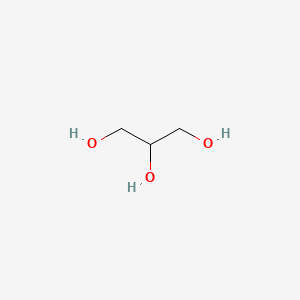
Upcycled Botanical Extracts, as represented by glycerin, are expected to partition across air, soil, and water, with biodegradation as the dominant removal process. In soil, very high mobility is expected (Koc ≈ 1), while volatilization from moist or dry surfaces is negligible. In water, adsorption to solids is minimal, and volatilization is not significant. In air, the compound exists in both vapor and particulate phases, with a vapor-phase hydroxyl radical reaction half-life of about 7 hours; direct photolysis is not expected. These fate characteristics imply that the extract's components will largely remain in environmental compartments where microbial degradation can occur, rather than persisting or accumulating in sediments or air.
What do biodegradation, bioaccumulation, and ecotoxicity findings indicate for Upcycled Botanical Extracts?
Biodegradation, bioaccumulation, and ecotoxicity findings indicate low environmental hazard potential for Upcycled Botanical Extracts, based on glycerin data. Aerobic biodegradation is rapid and extensive: 63% theoretical BOD in 2 weeks (MITI test), 82% 5-day BOD in wastewater effluent, and 94–97% removal in 24 hours with activated sludge. Anaerobic degradation reached 90% after an 8-day lag. Bioaccumulation is low (estimated BCF = 3). Ecotoxicity thresholds are high: >5000 mg/L for goldfish (24h LC50), >10000 mg/L for Daphnia magna, and 2900 mg/L for algae. These values suggest minimal acute risk to aquatic organisms at environmentally relevant concentrations.
Which environmental exposure pathways or concentrations are reported for Upcycled Botanical Extracts?
No specific environmental concentrations are reported for Upcycled Botanical Extracts. The available evidence indicates that glycerin, a likely component, may be released through waste streams from industrial, cosmetic, food, pharmaceutical, and domestic product use. General population exposure pathways include ingestion of food, pharmaceuticals, and drinking water, as well as dermal contact with consumer products. Occupational exposure may occur via inhalation and dermal contact during production or use. However, quantitative environmental concentration data for water, soil, or air are absent, limiting the ability to assess actual exposure levels in different compartments.
How might use context or formulation affect the environmental profile of Upcycled Botanical Extracts?
Use context and formulation can influence the environmental profile of Upcycled Botanical Extracts primarily through release pathways and dilution. If used in consumer products (e.g., cosmetics, food), the extract is likely to enter wastewater streams, where rapid aerobic biodegradation (94–97% removal in 24 hours) would minimize aquatic exposure. In soil applications, high mobility (Koc ≈ 1) could lead to leaching, but biodegradation remains important. Formulation with other ingredients may alter the extract's bioavailability or toxicity, as seen in the Daphnia test where a formulated product had a higher LC50 (>10000 mg/L) than the pure compound. However, no direct evidence links specific formulations to changes in environmental fate or effects.
Which evidence gaps must be resolved before making sustainability claims about Upcycled Botanical Extracts?
Before making sustainability claims, several evidence gaps must be resolved: (1) quantitative environmental concentrations in water, soil, and air are missing; (2) chronic ecotoxicity data are absent, as only acute thresholds are reported; (3) the composition of Upcycled Botanical Extracts is not fully defined, so glycerin data may not represent all constituents; (4) no field or mesocosm studies confirm biodegradation under real-world conditions; and (5) the impact of formulation on environmental behavior is uncharacterized. Without these data, claims of environmental safety or sustainability cannot be substantiated beyond the acute, laboratory-based findings for glycerin.