Ascorbic Acid
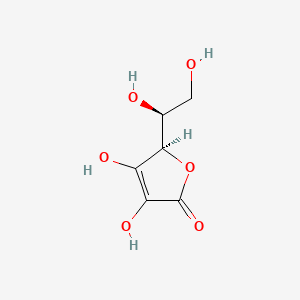
Identifiers
Functions
Where is Ascorbic acid used, and what role does it play in each application?
Ascorbic acid functions as an antioxidant, skin-conditioning agent, buffering agent, and fragrance ingredient in cosmetics, and as a food antioxidant, color-retention agent, flour treatment agent, and nutrient supplement. In pharmaceuticals, it is used as a therapeutic vitamin for scurvy and as an antioxidant. It also serves as a reducing agent in chemical synthesis and as a processing aid. Its role is primarily defined by its reducing and antioxidant properties, which are leveraged across food, cosmetic, and pharmaceutical applications.
Which product or formulation problem does Ascorbic acid address?
Ascorbic acid addresses oxidative degradation and enzymatic browning in food products, preventing color loss and spoilage. In cosmetics, it solves formulation instability and skin pigmentation issues, functioning as a skin lightening and anti-aging active. It also corrects nutritional deficiencies, particularly scurvy, and enhances iron absorption. Its primary problem-solving function is as a potent reducing agent that protects against oxidation, which is critical for maintaining product quality and efficacy across applications.
What supports the main commercial or clinical uses of Ascorbic acid?
The main uses of ascorbic acid are supported by its regulatory status as a food additive with antioxidant, color adjunct, and nutrient supplement functions, and as a WHO essential medicine for scurvy. Patent literature extensively documents its use in cosmetics for skin brightening and anti-aging, often requiring stabilization strategies. Its role as a coenzyme and cofactor in metabolic pathways, including collagen formation, provides a biological basis for its clinical and nutritional applications. This evidence is robust for established uses, though specific commercial adoption of patented approaches is not confirmed.
How is Ascorbic acid used clinically?
Used to treat vitamin C deficiency, scurvy, delayed wound and bone healing, urine acidification, and in general as an antioxidant. It has also been suggested to be an effective antiviral agent
Which formulation trade-offs should researchers consider for Ascorbic acid?
The primary formulation trade-off is ascorbic acid's sensitivity to oxidation, which requires stabilization in aqueous systems. This is often addressed through encapsulation (e.g., liposomes, wax dispersions), anhydrous or non-aqueous solvents, or co-formulation with stabilizers like ferulic acid or specific polymers. High concentrations, needed for efficacy in skin brightening, exacerbate stability challenges, leading to trade-offs between potency and shelf-life. Additionally, its acidic nature may require pH adjustment, impacting skin compatibility and formulation compatibility with other actives.
What are the physicochemical properties of Ascorbic acid?
| Property | Value | Category |
|---|---|---|
| Physical Description | L-ascorbic acid is a white to very pale yellow crystalline powder with a pleasant sharp acidic taste. Almost odorless, Dry Powder; CBI, White to pale yellow, odourless crystalline powder, White solid; [Merck Index] White to yellow odorless solid; Powder; [Sigma-Aldrich MSDS], Solid, ODOURLESS WHITE-TO-SLIGHTLY-YELLOW CRYSTALS OR POWDER | Appearance |
| Color/Form | Crystals (usually plates, sometimes needles, monoclinic system), White crystals (plates or needles), White to slightly yellow crystals or powder ... gradually darkens on exposure to light | Appearance |
| Odor | Odorless | Appearance |
| Taste | Pleasant, sharp, acidic taste | Appearance |
| Solubility | greater than or equal to 100 mg/mL at 73 °F, 400000 mg/L (at 40 °C), Insoluble in ether, chloroform, benzene, petroleum ether, oils, fats, fat solvents, 1 g dissolves in about 3 ml of water, The solubility in g/mL is 0.33 in water, 0.033 in 95 wt% ethanol, 0.02 in absolute ethanol, 0.01 in glycerol USP, 0.05 in propylene glycol, Solubility in water: 80% at 100 °C, 40% at 45 °C, 400 mg/mL at 40 °C, Solubility in water, g/100ml at 20 °C: 33 (freely soluble) | Formulation Relevant Properties |
| LogP | -1.85, log Kow = -1.85, -2.15, -1.84 | Formulation Relevant Properties |
| pH | Between 2,4 and 2,8 (2 % aqueous solution), pH = 3 (5 mg/mL); pH = 2 (50 mg/mL) | Formulation Relevant Properties |
| pKa | 4.7 (at 10 °C) | Formulation Relevant Properties |
| Dissociation Constants | pK1 = 4.17; pK2 = 11.57, pKa = 4.70 at 10 °C | Formulation Relevant Properties |
| Melting Point | 374 to 378 °F (decomposes), 191 dec °C, Between 189 °C and 193 °C with decomposition, 190-192 °C (some decomposition), Melting point = 465.15 deg K, decomposes, 191 °C | Handling Relevant Properties |
Which formulation benchmark best contextualizes Ascorbic acid, and what differs?
A relevant formulation benchmark is the use of ascorbic acid in high-concentration (5-30%) topical serums for skin brightening and anti-aging. These formulations typically require stabilization strategies such as non-aqueous solvents, specific polymers, or encapsulation to maintain potency. This differs from food applications where lower concentrations (0.01-2%) are used for antioxidant protection, and stability is less critical. The benchmark highlights the need for advanced delivery systems in cosmetics to overcome the ingredient's inherent instability.