Ascorbic Acid Environmental Fate & Ecotoxicity
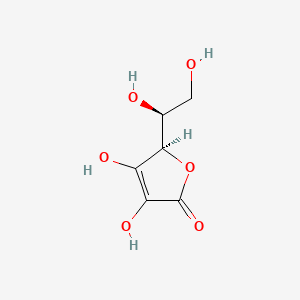
Identifiers
Functions
What is known about the environmental fate of Ascorbic acid?
Ascorbic acid is expected to be highly mobile in soil and water, with low adsorption to solids and sediment, and it does not volatilize from moist surfaces. It is susceptible to direct photolysis in air and is easily oxidized in aqueous solution. Biodegradation is an important fate process, with moderate degradation observed in sewage-derived consortia. These properties suggest that in the environment, ascorbic acid will partition to water and soil, where it may degrade or oxidize rather than persist. For formulation, this implies that environmental release is likely to be dispersed and transient, but the high mobility could lead to broader distribution in aquatic systems.
What do biodegradation, bioaccumulation, and ecotoxicity findings indicate for Ascorbic acid?
Ascorbic acid shows moderate biodegradation in sewage-derived consortia, indicating it is not readily persistent but also not rapidly mineralized. Its estimated bioconcentration factor of 3 suggests low potential for bioaccumulation in aquatic organisms. Ecotoxicity data are limited, but a 96-hour LC50 of 1,020 mg/L for rainbow trout indicates low acute toxicity to fish. These findings suggest that ascorbic acid poses a low hazard for bioaccumulation and acute aquatic toxicity, but the moderate biodegradation rate means it may remain in the environment for a period before degradation. This supports its use in formulations where environmental persistence is a concern, though chronic effects are not characterized.
Which environmental exposure pathways or concentrations are reported for Ascorbic acid?
No measured environmental concentrations were reported for ascorbic acid. Exposure pathways are inferred from its production and use as a food additive, preservative, antioxidant, and in agricultural applications, which may release it through waste streams. The general population is exposed via ingestion of foods and consumer products, while occupational exposure may occur through inhalation and dermal contact during production. Environmental release is likely to occur through wastewater and agricultural runoff, but without quantitative data, the magnitude of environmental exposure cannot be assessed. This gap limits the ability to predict actual environmental loading or risk.
How might use context or formulation affect the environmental profile of Ascorbic acid?
Use context significantly influences environmental release pathways. As a food additive and preservative, ascorbic acid enters wastewater streams, where its moderate biodegradation and oxidation may reduce persistence. In agricultural uses, such as citrus fruit abscission, it may be released directly to soil, where high mobility could lead to leaching into groundwater. Formulation as an antioxidant in foodstuffs may result in lower environmental concentrations due to consumption, whereas industrial uses in analytical chemistry could lead to point-source releases. The anion form at typical environmental pH reduces volatilization, so aquatic and soil pathways dominate. These factors should be considered in environmental risk assessments for specific applications.
Which evidence gaps must be resolved before making sustainability claims about Ascorbic acid?
Before making sustainability claims, several evidence gaps must be addressed. Measured environmental concentrations in water, soil, and air are absent, preventing assessment of actual exposure. Biodegradation data are limited to one study using sewage consortia, and no half-life or ultimate degradation data are available. Ecotoxicity data are restricted to a single acute fish test, lacking chronic, invertebrate, and algal studies. Bioaccumulation is only estimated, not measured. Additionally, the potential for photolysis and hydrolysis is noted but not quantified. Without these data, claims of environmental safety or sustainability cannot be substantiated.