Ascorbic Acid Suppliers & Manufacturers
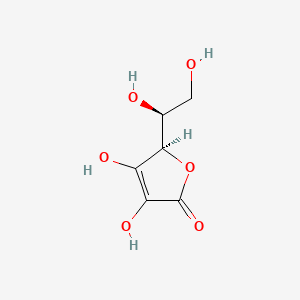
Identifiers
Functions
What does available trade activity indicate for Ascorbic acid?
Ascorbic acid is classified under HS Code 2936.27. This falls under Chapter 29: Organic chemicals, specifically Heading 2936 (Provitamins, vitamins; natural or reproduced by synthesis (including natural concentrates) derivatives thereof used as vitamins, and intermixtures of the fore-going, whether or not in any solvent), under subheading: Vitamins; vitamin C and its derivatives, unmixed.
* The data below is specific to the HS code, not the ingredient.
Suppliers
11,089
Across 133 countries
Shipments
59,290
from 2015 to 2026
Total weight
5.6B kg
120,223 TEU · standard 20-foot container units
Last shipment
8 months ago
Last updated at Feb 25, 2026
Growth
↑ 55%
Trade under 2936.27 has increased by 55% over the past 6 months
What does trade activity suggest about the Ascorbic acid supply chain?
Trade activity under HS 2936.27 shows a large, active supply chain with over 11,000 suppliers and nearly 60,000 shipments, but this is not ingredient-specific. The data includes many entities in unrelated sectors, so it cannot confirm ascorbic acid volumes. The presence of major vitamin producers like CSPC Weisheng and Shandong Luwei suggests a robust network, yet the broad classification limits precise conclusions. Business implication: use this as directional context, not as a basis for volume commitments.
What does the HS or HTS classification include, and where are its limits for Ascorbic acid?
HS 2936.27 covers 'Vitamin C (Ascorbic acid) and its derivatives,' including unmixed vitamin C and derivatives, but also broader vitamin-related goods. The HTS 2936.27.00.00 extends this for U.S. imports. This scope means trade data includes cosmetics, animal feed, and other vitamin applications, not just ascorbic acid. For formulation research, this classification is too broad to isolate ascorbic acid supply; it provides a ceiling, not a precise measure.
Which suppliers are associated with Ascorbic acid trade?
| Supplier | Shipments | Top customer | Growth | Last shipment | |
|---|---|---|---|---|---|
No suppliers found. | |||||
How concentrated or diversified does the supplier landscape appear for Ascorbic acid?
The supplier landscape appears highly diversified with over 11,000 suppliers, but the top suppliers are concentrated in China, with several pharmaceutical-named entities like CSPC Weisheng and Shandong Luwei showing high shipment counts. This suggests a mix of a few large players and many smaller ones. For procurement, this implies potential for competitive sourcing but also a need to verify which suppliers actually produce ascorbic acid, as the data includes non-ingredient-specific entities.
Which supply risks or dependencies around Ascorbic acid require further diligence?
Key supply risks include reliance on Chinese suppliers, potential for inactive or historical records (e.g., DSM Jiangshan with zero recent growth), and the broad HS code capturing non-ascorbic acid trade. Further diligence should verify supplier production capabilities, current shipment activity, and product-specific certifications. The data shows some suppliers with old shipment dates, indicating possible supply gaps. Business implication: conduct supplier audits and confirm ingredient-specific manufacturing before relying on these sources.
Which sourcing geographies and trade lanes appear most relevant to Ascorbic acid?
China dominates supplier count and shipments, with over 5,000 suppliers and 25,000 shipments, indicating a primary sourcing region. Other notable origins include Italy, Taiwan, Germany, and Vietnam. High-weight lanes from Belgium and the Netherlands suggest significant European distribution hubs. For sourcing strategy, China is the clear focal point, but European and Asian alternatives exist. However, since the data is not ingredient-specific, these lanes may include other vitamin C derivatives.
Which countries drive Ascorbic acid trade activity?
By shipment count
China
25,189 shipments
5,093 suppliers
508.5M kg total weight
Italy
6,837 shipments
280 suppliers
130.1M kg total weight
Taiwan
3,289 shipments
775 suppliers
30M kg total weight
Germany
2,711 shipments
512 suppliers
61.3M kg total weight
Vietnam
2,059 shipments
423 suppliers
27.2M kg total weight
Ecuador
1,856 shipments
44 suppliers
59.9M kg total weight
El Salvador
1,751 shipments
8 suppliers
3M kg total weight
Guatemala
1,414 shipments
63 suppliers
38.2M kg total weight
South Korea
1,117 shipments
295 suppliers
22.8M kg total weight
Spain
921 shipments
328 suppliers
23.3M kg total weight