The biotechnology-based haircare market is sitting at around USD 5.84 billion in 2025; and it’s headed toward USD 18.93 billion by 2035. That’s not hype math. That’s fermentation-made proteins, biosurfactants, bio-identical actives, and lab-engineered peptides replacing the ingredients that have quietly run haircare formulations for decades.
But before we get into who’s actually doing it, let’s name the problem the industry hasn’t fully solved yet.
Haircare has heard plenty of biotech promises. A startup announces a breakthrough ingredient. A pilot batch looks impressive. A niche brand launches a limited run. The press release reads beautifully. And then nothing scales. The ingredient stays expensive, the volumes stay low, and the promise stays on a slide deck.
That’s why the only signal worth tracking right now isn’t pilot data. It’s partnership validation.
A pilot claim says we can make this. A commercial partnership says a brand, chemical company, or global retailer believes this can work in the real world at real cost, real volume, and real consumer demand. These are different statements entirely. And four biotech platforms have now crossed that line in haircare in a way that’s hard to ignore. Let’s get into details.
1. Debut’s Cell-Free Biomanufacturing Platform: The L’Oréal Bet
Of all the biotech partnerships currently active in haircare, Debut’s relationship with L’Oréal is probably the most structurally significant because it’s not a single ingredient deal. It’s a pipeline.
In July 2024, Debut, a San Diego-based biotech company announced an expanded agreement with L’Oréal to develop more than a dozen bio-identical ingredients that will replace conventionally sourced ones across L’Oréal’s global portfolio, including its hair, skin, color cosmetics, and fragrance lines.
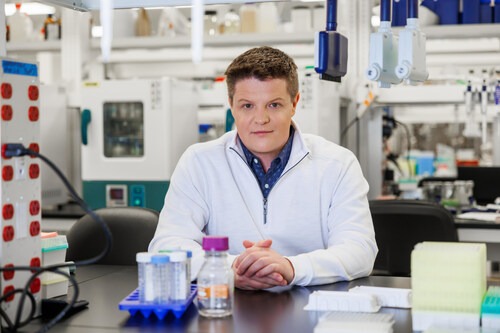
This wasn’t a cold pitch. L’Oréal had already led Debut’s $34 million Series B funding round through its venture capital arm BOLD back in 2023. The 2024 announcement was the next phase; a formal ingredient development mandate spanning brands like Garnier, Kiehl’s, Maybelline, and NYX. L’Oréal’s stated goal is to adopt 95% biobased ingredients by 2030, and Debut is part of the infrastructure to get there.
Beyond Fermentation: Making Complex Molecules in Weeks, Not Years
Debut’s Bio2Consumer™ system is notable because it goes beyond standard fermentation. It combines fermentation with cell-free technology using biological machinery outside of living cells to produce complex molecules that would otherwise be difficult, expensive, or environmentally costly to extract from nature.
The result is an ingredient development process that Debut claims can move from discovery to pre-production in as few as six weeks, compared to the years that conventional development typically requires.
For haircare specifically, this opens up possibilities in scalp actives, antioxidant compounds, repair ingredients, color-protection systems, and performance boosters for premium treatments. These are areas where brands increasingly need functional proof, not just marketing claims.
L’Oréal’s 2030 Deadline Is Creating Real Pull for This Platform
L’Oréal has committed to sourcing 95% of its ingredients from bio-based, mineral-derived, or circular origins by 2030. A platform that can produce bio-identical alternatives at scale without relying on traditional agriculture or petrochemical inputs is not just an interesting innovation story. It’s part of a supply chain restructuring that’s already underway.
In January 2025, Debut also launched BeautyORB™, an AI-powered ingredient discovery engine, alongside a manufacturing partnership with KDC/one. The stated output is two commercially deployable biotech ingredients per year, made accessible to brands of all sizes.
Debut is not asking the market to trust a promising lab result. It has a global beauty company actively pulling its ingredients toward commercialization. That’s a structurally different position.
2. Bolt Threads’ b-silk™: From One Hero Partner to a Real Customer Roster
For a while, Bolt Threads’ beauty story was essentially one story: Vegamour. The brand’s GRO Revitalizing Shampoo and Conditioner used b-silk, a vegan silk protein produced through microbial fermentation under its proprietary Karmatin™ branding. That partnership drove Bolt’s 2023 annual revenue to USD 3.4 million. A solid start, but not enough to prove a platform.
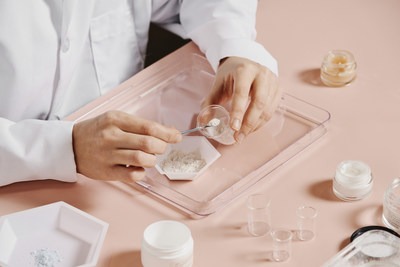
What’s happened since is more interesting.
The February 2025 partnership with Goddess Maintenance Co. was the moment Bolt’s commercial story expanded. GMCo, a brand founded by former leaders behind both Olaplex and K18, committed to a minimum USD 4 million annual supply agreement for b-silk, a multi-year, contractual commitment, not a test order. The brand launched into more than 1,300 professional retail locations through Sally Beauty’s distribution network. That’s a professional salon launch, not a DTC pilot.
Then came amika, a prestige haircare brand with strong sustainability positioning. Bolt announced it was developing a first-of-its-kind application of b-silk in an aerosol format, a genuinely novel application that opens a product category the ingredient hadn’t touched before. More brands followed, including RAD-REMEDY, a second line from Dr. Nancy Franklin that incorporated b-silk as a hero ingredient.
The Silicone Replacement Problem and Why Regulation Is Making It Urgent
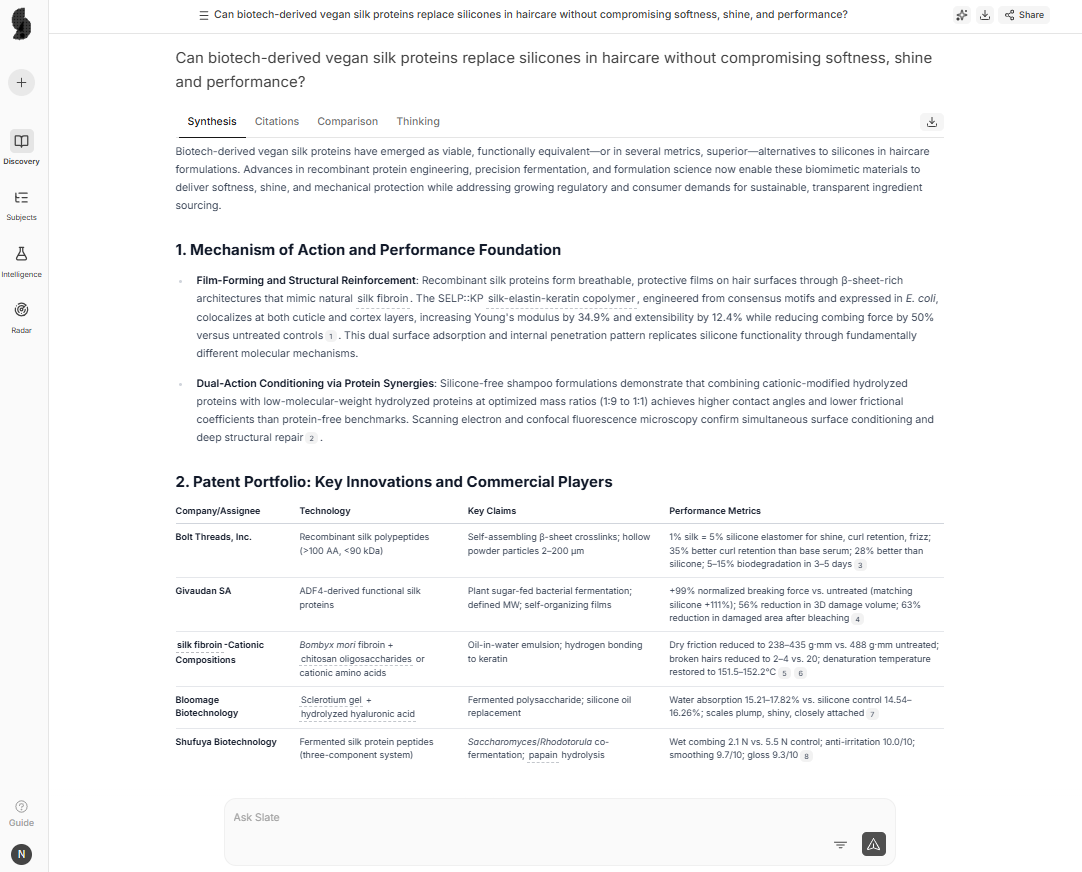
The ingredient is designed to offer the sensory and film-forming performance that silicones have traditionally delivered smoothness, frizz control, surface conditioning while being fully biodegradable and vegan.
As regulatory scrutiny of silicones grows in the EU, and as consumer demand for “silicone-free” formulations rises globally, b-silk’s functional positioning becomes commercially relevant in a way that’s driven by real market pressure, not trend chasing.
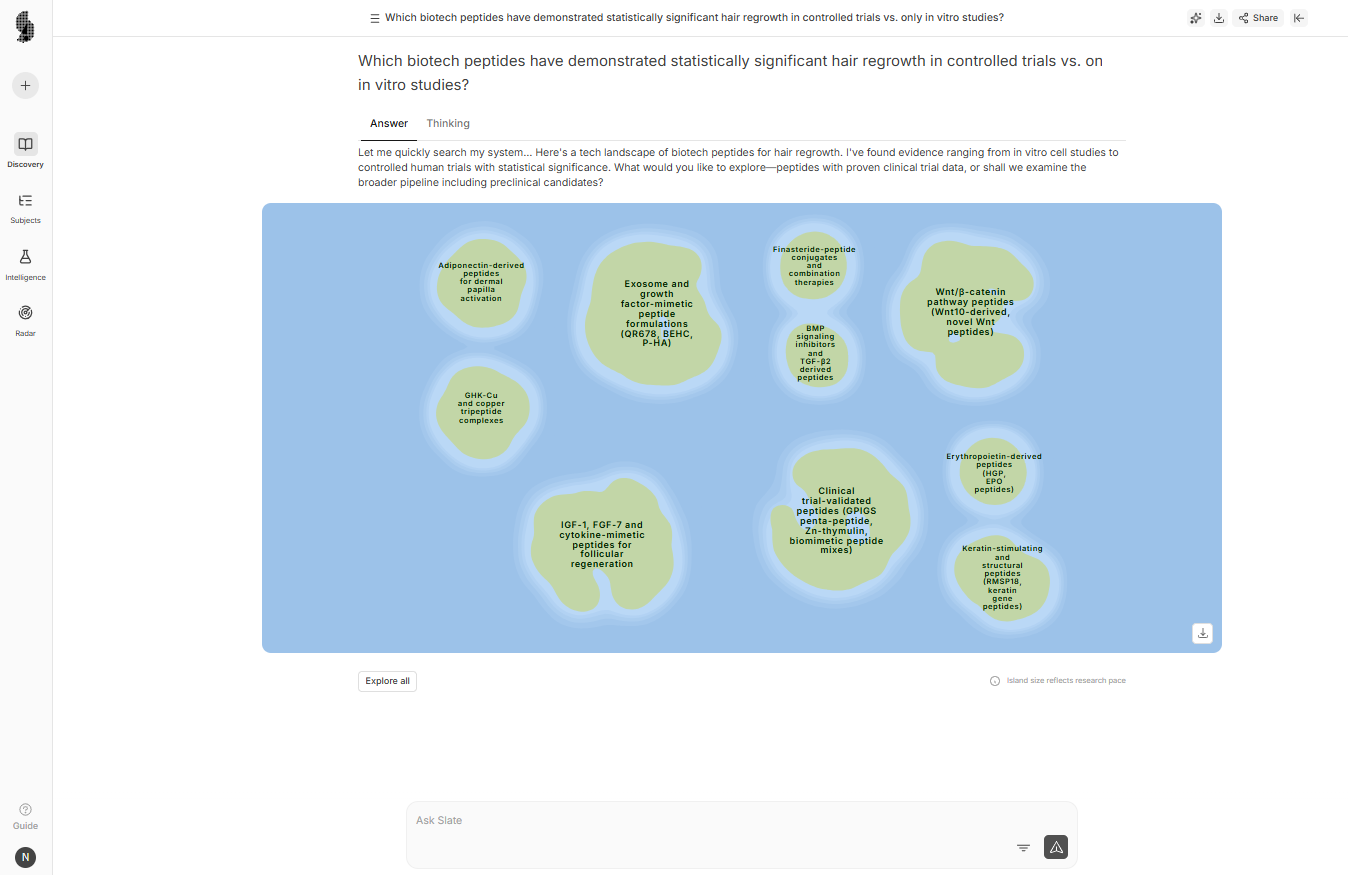
To understand whether this is a real replacement opportunity or just a clean-label claim, we asked SLATE what the research says.
Performance at Scale: The Questions That Still Need Answering
Can b-silk match silicone performance across rinse-off and leave-in formats at competitive cost? Can it maintain sensory expectations as volumes scale? These are legitimate formulation questions. But the shift from a single hero partner to a growing multi-brand customer roster suggests the platform is moving in the right direction.
Bolt’s president said clearly in 2025 that the year would be pivotal in proving the platform’s commercial impact. Based on the launches and agreements signed, that appears to be exactly what happened.
3. Evonik’s Rhamnolipid Biosurfactant Platform: The Industrial Infrastructure Play
Surfactants are not glamorous, but they are the functional backbone of every shampoo on the market. They determine how a product foams, how it lifts oil from the scalp, how it rinses clean, and how the hair feels afterward. Swap the surfactant, and you change the entire product experience.

This is why Evonik’s move into biosurfactants at industrial scale is probably the most structurally significant infrastructure development in biotech haircare right now even if it gets far less consumer press than peptide brands.
The World’s First Industrial-Scale Biosurfactant Plant, Already Running
In early 2024, Evonik became the first company in the world to produce rhamnolipid biosurfactants at industrial scale, commissioning a dedicated plant in Slovenská Ľupča, Slovakia.
The facility, which cost in the “low three-digit million euro range,” is designed to produce double-digit metric kilotons of rhamnolipids per year. The production process uses genetically modified Pseudomonas putida bacteria to ferment corn sugar; no petrochemicals, no palm oil.
The key attributes of rhamnolipids matter for haircare: they’re fully biodegradable, skin-mild, effective at cleansing, and free from the sourcing concerns that follow conventional surfactants. For brands building sulfate-free, scalp-sensitive, or sustainability-positioned shampoos, that’s a genuinely useful combination of properties.
Three Partners, One Supply Chain: From Microbial Engineering to Shampoo Bottle
In September 2024, L’Oréal, Evonik, and French biotech startup Abolis Biotechnologies signed a tri-party agreement to develop and manufacture next-generation bio-based beauty ingredients.
L’Oréal and Evonik also participated as strategic investors in Abolis’s EUR 35 million funding round. Abolis’s role is microbial strain engineering developing the micro-organisms that produce the target molecules. Evonik provides the manufacturing scale. L’Oréal provides the commercial formulation demand and brand destination.
That three-layer structure strain engineering, industrial production, and commercial beauty demand is exactly the architecture required to get a biotech ingredient from scientific possibility to shampoo bottle.
It’s a Volume Ingredient With Mass Market Reach
Most biotech haircare discussion centers on high-value actives: peptides, proteins, rare compounds. But surfactants are a volume game. They appear in massive quantities in everyday cleansing products. If rhamnolipids can compete on cost and performance at industrial scale, the market impact is far larger than any single premium active ingredient.
Evonik has already piloted rhamnolipid dish soap with Unilever and reports strong inbound demand from the personal care market. The shampoo category is a natural next destination.
4. K18’s K18PEPTIDE™: Proof That Biotech Hair Repair Can Become a Consumer Category
K18 is different from the other three platforms in one important way: it’s not primarily an ingredient supplier. It’s a finished brand. But what K18 proved about commercial biotech haircare is something the other platforms are still working toward and it’s worth understanding clearly.
Moreover, K18 built its entire brand around a single patented biomimetic peptide: K18PEPTIDE™. The mechanism is specific. Rather than coating hair with conditioning agents, the peptide is designed to reconnect the polypeptide chains inside the hair’s cortex; the internal structural chains that break down from bleach, color, heat, and chemical services. It’s repair from the inside, not the surface.
Salons First, Then 100+ Countries; Then a Unilever Acquisition
K18 built strong traction in the professional salon channel first, using stylists as validators before expanding to retail. The brand reached distribution across 100+ countries, earned 25+ industry awards, and accumulated over 20 billion TikTok views, a combination of professional credibility and consumer scale that very few biotech-led brands have achieved. In December 2023, Unilever announced an agreement to acquire K18.
That acquisition is the validation signal. Unilever is one of the world’s largest consumer goods companies. When a company of that scale acquires a biotech-positioned haircare brand, it’s not making a trend bet. It’s making a statement about where it believes the category is going.
Why K18 Won: They Sold the Problem, Not the Peptide
K18’s commercial success also offers an important lesson in how to sell biotech to consumers. The brand didn’t lead with technical complexity. It linked the peptide science to a problem every person with colored or heat-styled hair understands: my hair is damaged and I want it to actually get better, not just feel temporarily smoother. That translation from molecular mechanism to lived experience is something many biotech ingredient platforms still struggle with.
The First Biotech-to-Biotech Collab And What It Signals for the Category
K18’s limited-edition partnership with Future Society, a biotech fragrance house combined K18PEPTIDE™ with a biotech-derived scent story in a co-branded hair mask. It also marks the first time K18 has officially partnered with another biotech beauty brand. The significance isn’t the limited edition itself; it’s the signal that biotech-to-biotech collaboration is becoming a category narrative, not just an individual brand story.
What These Four Platforms Have in Common And What the Market Should Notice
Strip away the individual stories and a pattern emerges across all four:
Real financial commitments underpin every claim. USD 34 million in L’Oréal-led investment for Debut. A USD 4 million annual supply agreement for b-silk. EUR 35 million backing the Abolis-Evonik-L’Oréal tri-party deal. An acquisition by Unilever for K18. These are contractual and financial events, not announcements.
L’Oréal appears in three of the four stories. As a venture investor, a tri-party agreement partner, and a commercial formulation anchor. The world’s largest beauty company has structurally tied itself to several of these biotech ingredient bets. That’s not coincidence; it reflects a deliberate strategy to reshape ingredient sourcing ahead of 2030 sustainability commitments.
Hair is now explicitly named alongside skin. For years, biotech beauty investment was concentrated in skincare. All four of these platforms now name haircare as a primary or co-primary application area. The channel logic has shifted: scalp care has given haircare a clinical framing; damage repair has given it a molecular story; sustainability pressure has given it formulation urgency.
The shift from petrochemical and conventional natural inputs is structural, not trend-driven. Regulatory pressure on silicones, consumer scrutiny of petrochemical surfactants, and supply chain vulnerability of plant-derived extracts are creating genuine demand for what these platforms offer. The tailwind is real and compounding.
What R&D and Innovation Teams Should Actually Be Watching
The honest answer is: don’t evaluate biotech ingredients by how new they sound. Evaluate them by evidence of scale.
The most useful signals are commercial supply agreements with repeat terms, industrial manufacturing capacity that already exists, regulatory readiness across key markets, formulation performance data across multiple product formats, and consumer language that translates the science into a benefit people can feel.
That last point is harder than it sounds. A rhamnolipid biosurfactant is technically impressive. But the consumer needs to understand: my scalp feels less irritated, or my hair doesn’t feel stripped, or this shampoo cleans without the harsh ingredients I’ve been trying to avoid. The mechanism matters in the lab. The benefit matters at the shelf.
The biotech platforms that are winning in haircare aren’t winning because they have better lab data. They’re winning because they found partners willing to stress-test the ingredient against real-world constraints and the ingredient held up.
The Bigger Picture
Biotech haircare is no longer a category of interesting ideas. It is becoming a category of operating businesses, contracted supply relationships, and industrial infrastructure.
Debut shows how bio-identical ingredient platforms can reshape beauty supply chains from the inside out. Bolt shows how fermentation-made proteins can compete with conventional sensory ingredients in real product launches.
Evonik shows that biosurfactants have crossed the line from specialty lab material to industrial-scale functional ingredients. K18 shows that a biotech positioning, executed well, can become a multibillion-dollar consumer story.
The next wave of competitive advantage in haircare may not come from adding another trending botanical extract to the front of a label. It may come from partnering with the biotech platforms that have already passed the hardest test: getting someone serious to help them scale.
Those partnerships exist now. The question is which brands are paying close enough attention.
How Slate Helps Haircare Teams Spot Biotech Platforms Ready for Scale
R&D teams are not short of biotech ingredient claims. They are short of time to figure out which ones are actually worth pursuing.
Every promising platform still needs to answer harder questions before it belongs on a formulation shortlist: Does it have credible manufacturing partners? Is there patent activity showing real progress? Has any major brand or chemical company committed to it financially? Is it regulatory-ready?
Answering those questions manually across patents, research papers, startup news, supplier signals, and brand launches takes time most teams cannot afford.
That is exactly what Slate is built for.
Slate helps R&D and innovation teams pull those signals together in one place, so instead of chasing scattered sources, teams can focus on evaluation. Track which biosurfactant startups are scaling versus stalling. Map competing peptide platforms against each other. Identify which biotech ingredients already have commercial supply agreements behind them and which are still living in a press release.
In a space where every startup claims to be science-backed and sustainable, Slate helps teams find the few that are actually ready to scale before the window closes.