Mung Bean Protein
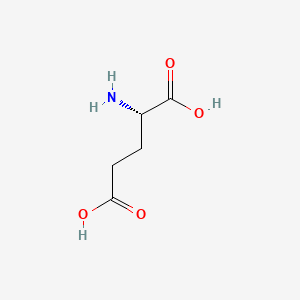
Identifiers
Functions
Where is Mung bean protein used, and what role does it play in each application?
Mung bean protein functions primarily as a structural and texturizing agent in food applications, a delivery matrix for bioactives, and a source of bioactive peptides in cosmetics. In food, it improves gel properties in low-salt chicken meatballs, forms fibrous structures in meat substitutes via directional freezing, and serves as the primary protein in plant-based yogurt. In delivery systems, it encapsulates liposomes for neurocosmetic alpha-wave enhancement, microencapsulates probiotics, and forms biodegradable microcapsule walls. In cosmetics, hydrolyzed mung bean protein yields peptides with anti-aging and anti-inflammatory claims. These roles leverage its gelation, film-forming, and encapsulation capabilities.
Which product or formulation problem does Mung bean protein address?
Mung bean protein addresses formulation challenges including salt reduction in meat products, creation of fibrous textures in plant-based meat analogues, stabilization of plant-based yogurts, and protection of sensitive bioactives. In low-salt chicken meatballs, it compensates for reduced salt by improving gel properties and forming a stable protein network. In meat substitutes, it enables fibrous structure formation through directional freezing. For probiotics, it provides a protective matrix for encapsulation. In cosmetics, it offers a plant-derived active for anti-aging and anti-inflammatory benefits. These applications solve texture, stability, and functionality problems in clean-label and plant-based formulations.
What supports the main commercial or clinical uses of Mung bean protein?
Evidence for mung bean protein's uses comes from patent applications describing specific methods and claimed benefits. Patents detail its role in improving gel properties in low-salt meatballs, forming fibrous structures in meat substitutes, serving as the primary protein in plant-based yogurt, and encapsulating liposomes for alpha-wave enhancement. Additional patents claim hydrolyzed mung bean peptides with anti-inflammatory and mitochondrial-stimulating activities for cosmetics, and its use in probiotic encapsulation matrices. These patents provide technical rationale and process parameters, but do not constitute clinical proof or market adoption. No peer-reviewed clinical or commercial data were supplied.
How is Mung bean protein used clinically?
Considered to be nature's "Brain food" by improving mental capacities; helps speed the healing of ulcers; gives a "lift" from fatigue; helps control alcoholism, schizophrenia and the craving for sugar
Which formulation trade-offs should researchers consider for Mung bean protein?
Key formulation trade-offs include pH sensitivity, hydrolysis requirements, and concentration-dependent functionality. Mung bean protein requires alkaline pH (9.0) for extraction and precipitation at pH 4.5, indicating isoelectric point sensitivity. For yogurt, pH adjustment to alkaline then neutral is needed, and concentrations of 3-4% are used. In meatballs, 5.3% concentration improves gel properties. Hydrolysis with enzymes is necessary for bioactive peptide generation in cosmetics, adding process complexity. For encapsulation, concentrations range from 1-25% depending on application. These factors affect processing costs, final texture, and bioactivity, requiring careful optimization per application.
What are the physicochemical properties of Mung bean protein?
| Property | Value | Category |
|---|---|---|
| Physical Description | Large Crystals, White crystals or crystalline powder, Solid; [Merck Index] Colorless or white solid; [JECFA], Solid, White free-flowing, crystalline powder; Yeasty, bread-like aroma | Appearance |
| Color/Form | Orthorhombic plates from dilute alcohol | Appearance |
| Odor | Odorless | Appearance |
| Taste | Umami sour taste, Acidic (glutamate-like) taste | Appearance |
| Solubility | 8570 mg/L (at 25 °C), Sparingly soluble in water; practically insoluble in ethanol or ether, In water, 8570 mg/L at 25 °C, Insoluble in methanol, ethanol, ether, acetone, cols glacial acetic acid and common neutral solvents, 8.57 mg/mL, Slight soluble in water and ether, Insoluble (in ethanol) | Formulation Relevant Properties |
| LogP | -3.69, log Kow = -3.69 at pH 7.0 | Formulation Relevant Properties |
| pH | Between 3,0 and 3,5 (saturated solution), Aqueous solutions have pH values of approximately 2, 2.7, 10.5 | Formulation Relevant Properties |
| pKa | 2.23 (at 0 °C) | Formulation Relevant Properties |
| Dissociation Constants | pK1: 2.19; pK2: 4.25; pK3: 9.67 | Formulation Relevant Properties |
| Boiling Point | Sublimes at 175 °C | Handling Relevant Properties |
Which formulation benchmark best contextualizes Mung bean protein, and what differs?
Pea protein serves as a relevant benchmark because it appears in the same patent families as mung bean protein for probiotic encapsulation and as a co-protein in meat and dairy analogues. Both are plant proteins used for structural and encapsulation functions. However, mung bean protein is distinguished by its specific use in low-salt meatballs and plant-based yogurt, where it is the primary protein, and by its hydrolysis into peptides for cosmetic anti-aging claims. These applications suggest mung bean protein may offer unique gelation and bioactive properties compared to pea protein, but direct comparative data are not provided.